
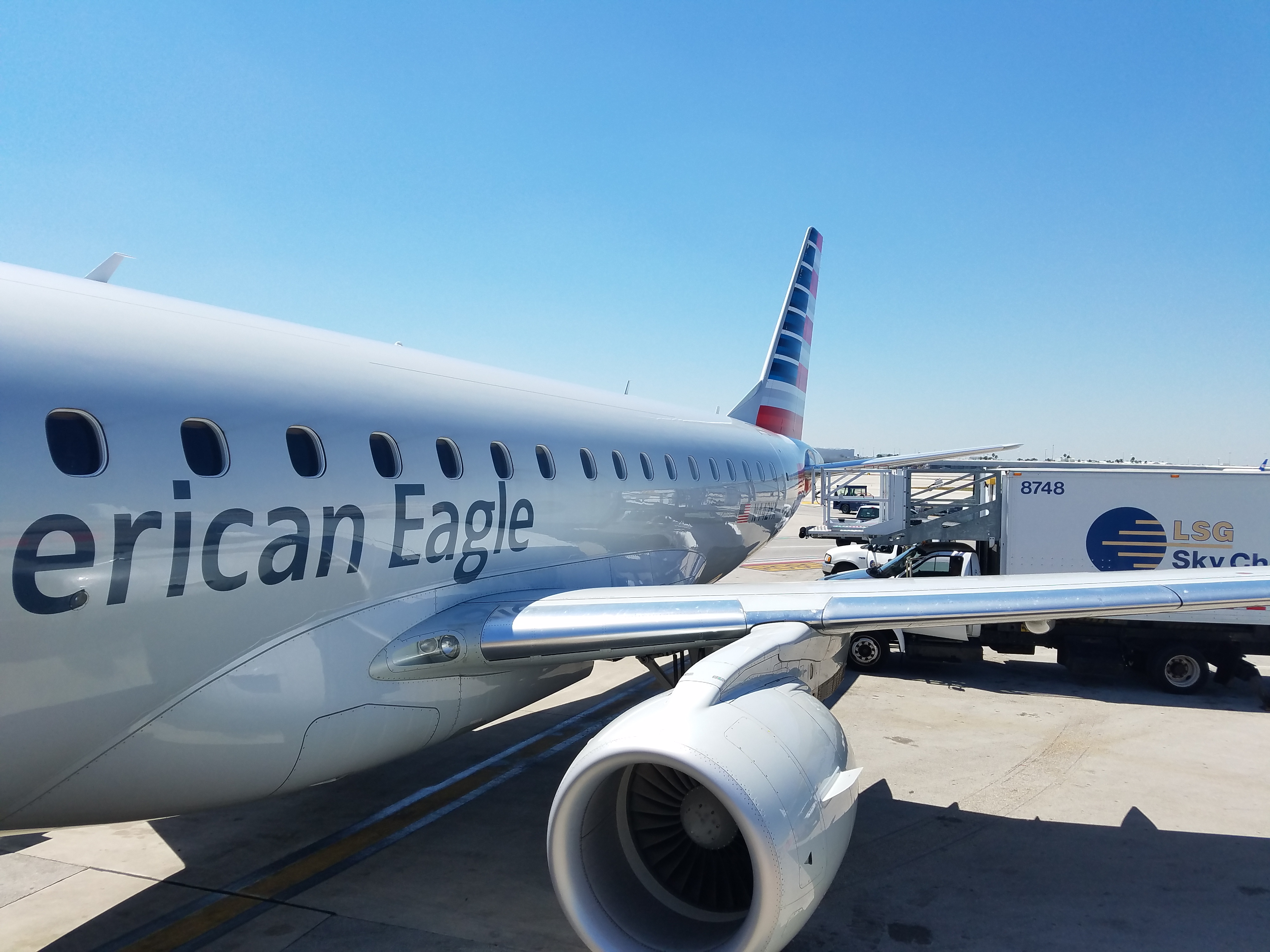
On Friday I wrote about two American Airlines Boeing 737s using the same call sign near Phoenix. They were both on the same air traffic control frequency, and so they got confused over who was being given instructions. If a pilot hadn’t caught it, things could have gotten very ugly fast. Fortunately, the two planes maintained separation as they crossed paths and it wasn’t a near-collision. But it was a real communications failure, created because American had two planes in the air with the same flight number at the same time in almost the same place. Now, we learned from aviation watchdog JonNYC that it also happened two days earlier near Providence where two American Airlines regional jets operated by their wholly-owned subsidiary PSA were using flight number AA5083. The planes were traveling in opposite directions between Philadelphia and Providence. "There was another incident just like this on August 12th involing Providence Approach, Boston Center, and 2 JIA aircraft. Approximately 5:45pm local time JIA5083 was inbound to PVD airport when the return flight from PVD to PHL departed. It caused massive confusion for about… — JonNYC (@xJonNYC) August 14, 2026 Normally the same CRJ-700 regional jet operates both legs of the flight, so two planes with the same flight number aren’t in the air at the same time. On August 12, however, the Philadelphia–Providence inbound was running more than an hour late and PSA sent another aircraft from Providence to Philadelphia to keep up the schedule. Two CRJ-700s were in the air as “Blue Streak 5083” for about 26 minutes. Boston Center warned the inbound to use caution because “your same company also has your same call sign.” The pilot asked whether another Blue Streak 5083 was already out there. The answer was yes: it had just departed Providence and was already talking to Approach. Providence Approach began identifying one aircraft as the inbound and the other as the outbound. A controller later explained that the company had filed an arrival and departure with the same call sign, producing “a lot of confusion.” A reconstruction shows the aircraft passing in opposite directions. So this was another serious identification and communications hazard, but one that air traffic control was clearly on top of. And on April 22, two other PSA flights were both using “Blue Streak 5383” near Louisville. One was arriving and the other was departing. A pilot’s reaction was blunt: “Y’all—you guys are going to get somebody killed.” A single duplicate identifier can be dismissed as an unusual mistake. Three across a parent airline and its wholly owned regional subsidiary in a short period probably deserves some scrutiny. American operates roughly up to 7,000 daily flights in peak periods and also needs numbers for codeshare flights. Since the industry largely remains limited to four-digit flight numbers, American reuses numbers on out-and-back trips that should never overlap. That works when the same aircraft flies both legs. It can be a problem when a delay and aircraft substitution split the round trip between two airplanes. But the flight number and the air traffic control identifier don’t have to remain identical. Before releasing a second plane, they should be filing a unique ATC identifier. (HT: One Mile at a Time) Topics on this page
American Airlines Had Two Planes With The Same Flight Number Again — A Risky Mistake That Needs To Stop
Full Article
Original Source
Read the full article at Viewfromthewing →KhanList aggregates and links to publicly available news content. We do not host full articles from third-party sources. Always verify important information with original sources.