
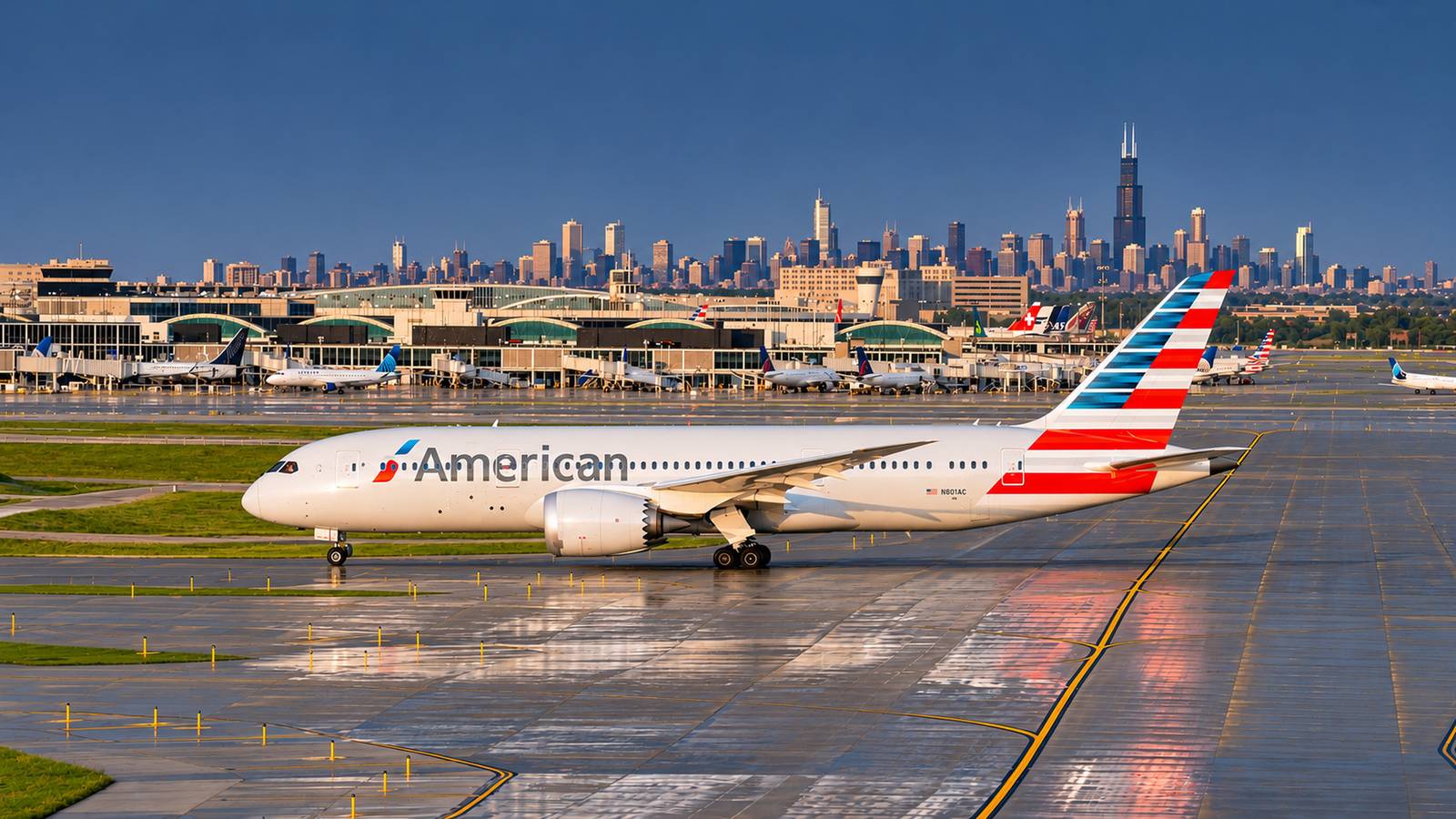
Published Nov 24, 2026, 5:32 PM EST Paul has had a career of 25+ years focused on the international technology sector, which has taken him to over 100 countries. Along the way, he developed a deep love for aviation, with a travel bucket list measured by aircraft types flown rather than destinations reached. Now he brings that avgeek passion, along with the journalism experience he accumulated early in his career, to write insightful pieces for Simple Flying. American Airlines is dropping its lawsuit against the City of Chicago and United Airlines over the controversial redistribution of gates at Chicago O'Hare International Airport (ORD). The decision follows an unsuccessful appeal last week, bringing the carrier's 18-month legal battle over the allocation of airport infrastructure toward a close. However, American is arguably in a stronger competitive position at O'Hare than when it first launched its legal challenge. The airline has recovered gate space, significantly expanded its network, and announced further investments in its third-largest hub. Nevertheless, Reuters reports that United's continued dominance in Chicago presents a considerable obstacle to American's ambitions of rebuilding a profitable operation. American Airlines Brings Its Legal Battle To An End Credit: MKPhoto12 | Shutterstock In a court filing dated November 20, as reported by View From The Wing, American requested that its entire complaint be dismissed with prejudice, meaning it would be unable to pursue the same claims again, including those for financial damages. Neither Chicago nor United opposes the motion, with each party bearing its own legal expenses under the proposed dismissal. American explained its decision in a statement to View From The Wing: “We stand by our decision to advocate for a fair process, and today, we believe the best way to continue delivering on that commitment is to look ahead.” The dispute originated in O'Hare's 2018 Airline Use and Lease Agreement (AULA), which allows gates to be redistributed according to airlines' flight activity. American argued that delays in delivering additional gates in Concourse L meant that a contractually agreed expansion period had not been fulfilled, precluding any redistribution until 2027. Unsurprisingly, the City of Chicago and United disagreed. Date Development 2018 Chicago adopts a new lease agreement, allowing periodic gate redistribution based on airlines' shares of departures. November 2023 Delta's relocation to Terminal 5 triggers a protected expansion period. American's anticipated additional Concourse L gates remain unavailable. February 2025 At United's request, Chicago begins redistributing gate space based on 2024 flight activity. May 2025 American sues Chicago in federal court, seeking to prevent redistribution until April 2027. June 2025 Chicago finalizes the new allocations, with American losing four gates and United gaining five. July 2025 United joins the federal case, raising jurisdictional issues. American withdraws that case and files a state court complaint on July 16. September 2025 Following a seven-day hearing, the court denies American's request for an injunction to block the redistribution. October 2025 The revised gate allocations take effect, strengthening United's position at O'Hare. American appeals the denial of its preliminary injunction. November 2025 Chicago and United submit their formal responses to American's complaint. December 2025 Proceedings on the underlying complaint are suspended pending resolution of the appeal. November 2026 The appellate court upholds the injunction denial, citing the balance of harm to airlines, passengers and airport operations. November 2026 American moves to permanently dismiss its complaint, including its outstanding damages claims. Sources: Illinois Appellate Court ruling, American's dismissal motion and Chicago Department of Aviation. Notably, the appellate court did not definitively determine whether Chicago had breached its contractual obligations. Rather, it concluded that the potential disruption from reversing the redistribution outweighed the harm that American faced. The airline could have continued pursuing compensation, but its commercial circumstances at O'Hare have changed considerably since it filed the original complaint. American Has Already Won Back Lost Ground In Chicago Credit: Ceri Breeze | Shutterstock American's aggressive expansion at O'Hare has already yielded tangible results. In June, Chicago confirmed that American had earned additional gate space through its increased flight activity, reversing much of the previous year's losses. Separately, the carrier strengthened its position by paying $30 million to acquire the preferential-use lease hold rights for gates G8 and G10 from Spirit Airlines under its Chapter 11 proceedings. United CEO Scott Kirby had previously vowed to prevent American from gaining further gates at United's expense, targeting 750 daily departures from Chicago. However, the Federal Aviation Administration (FAA) intervened over congestion concerns, forcing United to cut more than 100 daily departures. Reuters reports that those flight restrictions have subsequently been extended through October 2027, limiting United's ability to overwhelm American through additional frequencies. American's Chicago Operations Before Lawsuit Latest Position Daily departures 480 Over 500 Destinations 150 Over 185 Net gate position Baseline +1 gate* Gates acquired from Spirit — 2 *Net gate position reflects four gates lost, three regained, and two acquired American's expansion has also strengthened Chicago's long-haul connectivity. The carrier launched flights to Naples and Honolulu last year, with nonstop service to Maui commencing on December 17. Furthermore, its return to Tokyo Narita in March next year will give American its 11th long-haul route from O'Hare, underscoring its ambitions to rebuild Chicago as an international gateway. United Still Has The Upper Hand At O'Hare Credit: George Wirt | Shutterstock Despite American's progress, considerable financial and competitive challenges remain. United's faster post-pandemic recovery has enabled it to establish a substantial market share advantage. More concerningly, a Deutsche Bank analysis reported by Reuters in February highlighted the enormous disparity between the financial performance of the two airlines' respective Chicago operations. Chicago Performance Metric United Airlines American Airlines Passenger market share (2025) 48.0% 33.4% Estimated annual revenue $10 billion $5 billion Estimated 2025 operating margin 5% -9% to -10% Implied annual operating profit/loss $500 million -$500 million United is also strengthening its customer proposition through its United Next fleet modernization program and the rollout of free Starlink connectivity, which is scheduled for fleetwide completion by the end of 2027. Meanwhile, O'Hare's infrastructure expansion will unlock significant additional growth opportunities, with 19 new gates in Concourse D in 2028 and a further 14 in Concourse E in 2030. However, American is making substantial customer experience investments of its own. Its new Concourse L Admirals Club will open in 2027, doubling the existing lounge's footprint, while premium cabins are now available on every Chicago departure. Having successfully defended its ability to compete at O'Hare, American's next challenge will be translating its expanded presence and improved passenger experience into sustainable profitability.
American Airlines Drops Chicago Gate Lawsuit, But Doubles Down On Turf War With United
Full Article
Original Source
Read the full article at Simpleflying →KhanList aggregates and links to publicly available news content. We do not host full articles from third-party sources. Always verify important information with original sources.