
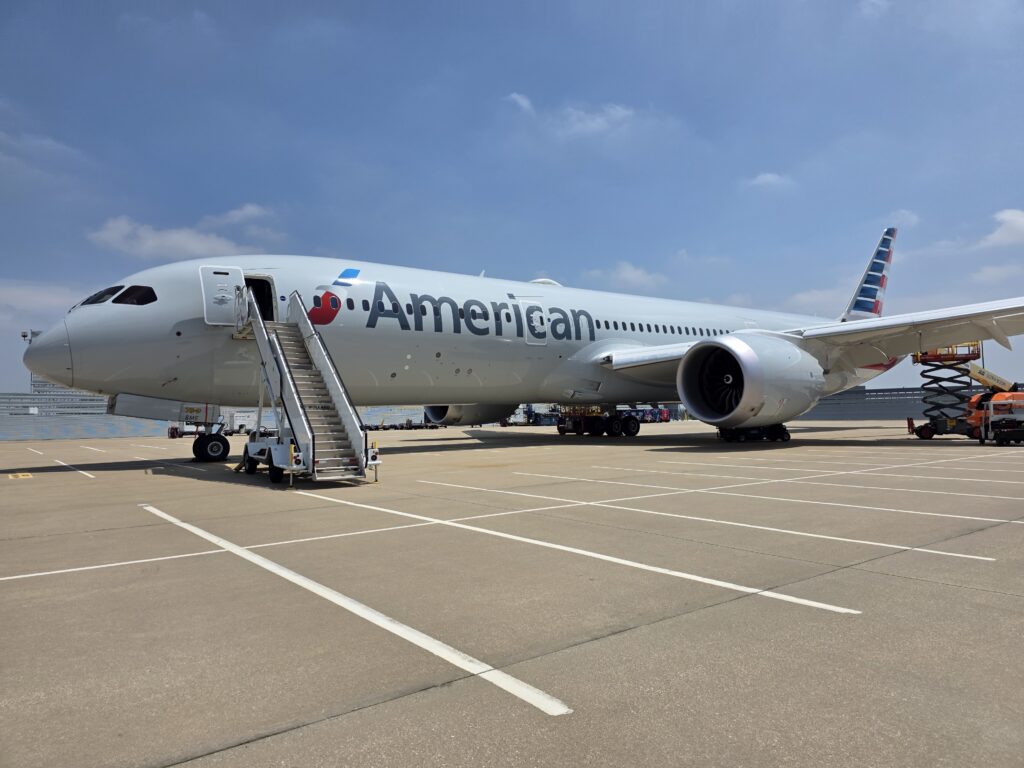
American Airlines could announce its next widebody aircraft order as soon as this week – after close of business Wednesday, but most likely early Thursday morning before markets open alongside their quarterly earnings release. The airline has been shopping for new long haul planes for months. Now the question is whether they’ll buy aircraft that fit the network they’ve been running, or commit to something more ambitious. I’ve argued that the Airbus A330-900 makes the most sense because of their routes, availability of the planes, and cost. But I wouldn’t dismiss an A350 order, including the much larger A350-1000, if American gets the right price and intends to fill the plane with a lot more premium seats. Aviation watchdog JonNYC has discussed an announcement around earnings or the employee meeting afterward. Chief commercial officer Nat Pieper told Cranky Flier that he expects a deal within the next couple of months, describing another 50, 60 or 70 aircraft arriving from 2030 onward. Up to 65 planes was reported in September. And that could be split between firm orders and options. I’m also hearing that American has been looking at the Boeing 787-9 and 787-10, along with the Airbus A350-900 and A350-1000 – and not the A330-900. This comes from someone who’s shared accurate information with me before, but I don’t vouch for this specifically. Pieper Wants A Different Long Haul Network My case for the A330-900 has been that much of its flying is across the Atlantic or down to South America. They don’t need the largest aircraft or the most range, and Airbus could make the economics attractive enough to overcome the cost of adding another fleet. Pieper himself just called the A330 family the “perfect Atlantic airplane.” So there’s still a case for buying those planes, putting them on suitable Europe and South America routes, and freeing up 787s for longer flying. But Pieper also wants Los Angeles to become American’s Pacific gateway again. The 787-9 can do much of this already. How I’d Think About The Aircraft Much of the published analysis has favored the 787 or A330. I’d look at the candidates this way: Airbus A330-900: Still a sensible workhorse for much of American’s existing network. A lower purchase price or better delivery positions would be the reasons to choose the plane, while leaving the longest Pacific missions to the 787s. Boeing 787-9: The easiest choice since American already has the pilots and maintenance operation. It can add routes without committing to the largest aircraft on each departure. Boeing 787-10: I’ve been skeptical of buying too much capacity. It offers more space while retaining much of the existing 787 operation’s commonality. That’s attractive on substantial Atlantic and South America routes, even if it isn’t as flexible as the -9 for the longest missions. Airbus A350-900: The less aggressive Airbus choice if American wants more premium cabin space and long haul flexibility. A family order could give American smaller and larger versions for different routes. Airbus A350-1000: The hardest to justify as a blanket replacement for 777-200s. I can see it much more readily as part of a mixed fleet, serving selected routes with substantial premium demand and giving American room to expand its Pacific operation. The 777-300ERs move to Heathrow completely. The Boeing alternatives have also improved. Higher takeoff weights for the 787-9 and 787-10 were certified in March, giving airlines more payload or range. The 777X is tougher. It adds both a very large aircraft and the uncertainty of a new program. Pieper’s preference for letting other airlines work through a new type’s early problems would argue against it. The A350-1000 Case Depends On The Cabin And The Deal Japan Airlines puts just 239 passengers on its A350-1000: six in first class, 54 in business class, 24 in premium economy and 155 in coach. American’s newest premium 787-9s carry 244. American could use the extra floor space for more premium seats, rather than a huge increase in coach passengers. It would still be paying to fly a larger airplane. American would need enough additional premium revenue to justify it, including outside peak travel periods, and potentially without using the plane to Heathrow, if they concentrated their 777-300ER fleet there. A350s then go to Tokyo, Sydney and additional Pacific flying from Los Angeles. The 777-300ER refurbishment brings 70 business class suites and 44 premium economy seats. Meanwhile, putting newer, more fuel-efficient aircraft on longer Pacific flights would give American more flying hours over which to earn back their higher ownership cost if scheduled efficiently. It still doesn’t tell us what plane eventually replaces the 777-200s, though those will be around the fleet for a while since they’re getting new cabin interiors. American’s current widebody fleet is all-Boeing. Airbus could make a really aggressive offer to get back in, and Pieper has said Boeing’s commonality advantage can be overcome economically. Boeing and Airbus have huge order backlogs. It’ll be interesting to see when the new planes they order arrive. Robert Isom has said that backlogs don’t matter, because American Airlines is an important enough customer that airframe manufacturers will find the planes to sell to them. Topics on this page
American Airlines Could Order Up To 70 Long Haul Jets This Week—Making A Bigger Bet On Business Class And Asia
Full Article
Original Source
Read the full article at Viewfromthewing →KhanList aggregates and links to publicly available news content. We do not host full articles from third-party sources. Always verify important information with original sources.