
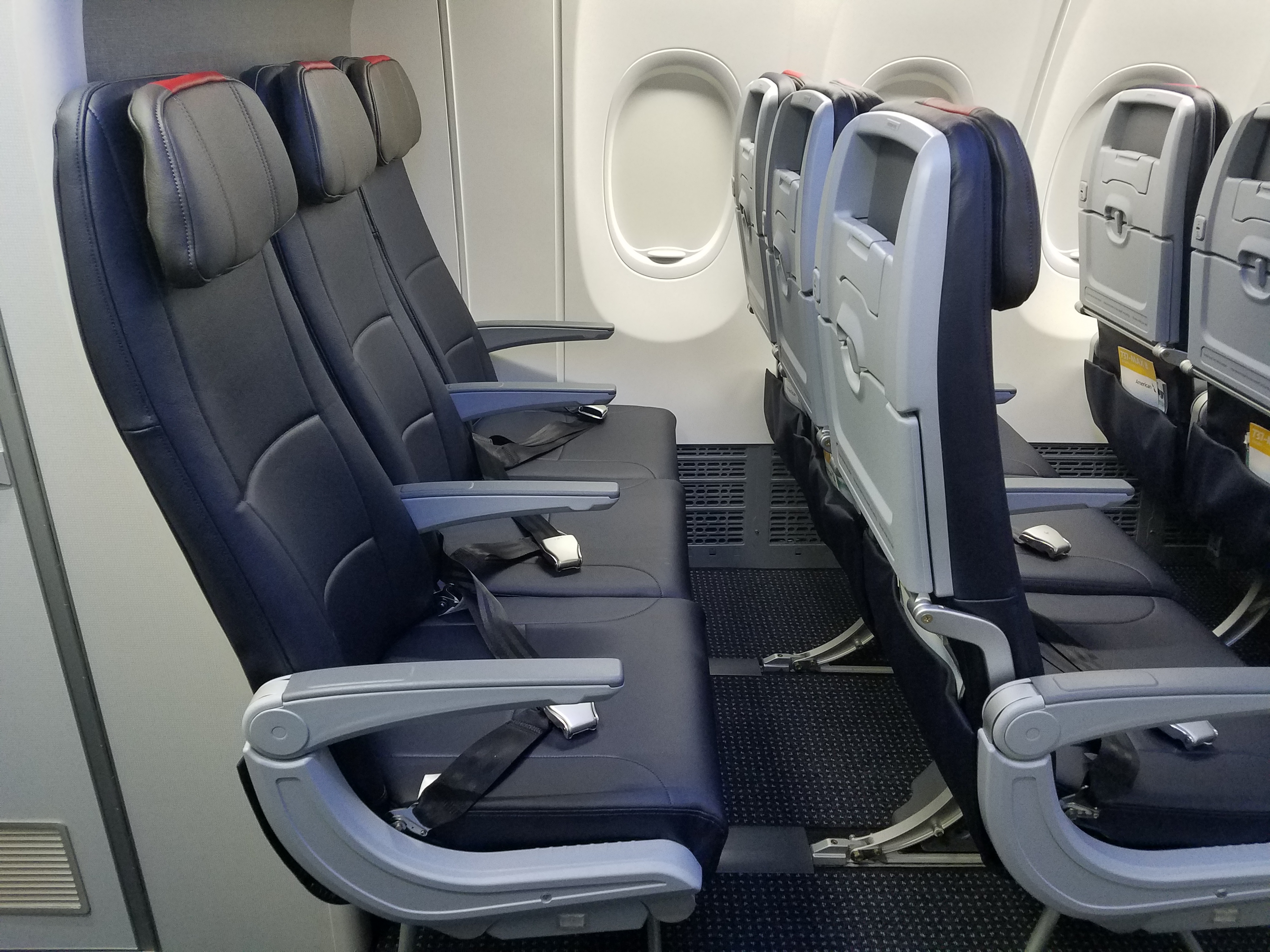
American Airlines CEO Robert Isom now says the airline is “selling too much Basic Economy.” That’s an extraordinary admission after years spent competing for the lowest-fare customer, and American has already begun changing both its fare rules and its aircraft to get passengers to spend more. At the Morgan Stanley Laguna Conference, Isom said that buy-up has improved by five percentage points, and that 30% of American’s seats generate 50% of its revenue. They expect to increase premium seating by roughly 40% by the end of the decade. This isn’t only about selling more first class. American has made Basic Economy less attractive at the bottom while adding more Main Cabin Extra in the middle. That gives customers a smaller step up instead of asking them to jump all the way from the cheapest coach fare to the front cabin. They’re reversing the mistake that underlied their entire strategy for the past 13 years – focused on competing in the race to the bottom with Spirit and Frontier as the consumer was looking to pay more for a better experience. American Is Making Their Cheapest Product Worse – On Purpose American announced last November that Basic Economy tickets would stop earning AAdvantage miles and Loyalty Points. The change took effect for tickets purchased beginning December 17, 2025. Then, for Basic Economy tickets purchased May 18, 2026 onward, AAdvantage elites lost seating benefits and upgrades. A loyal customer was no longer valuable each time they flew. They became their fare on the day of travel. Honoring elite benefits on Basic Economy recognized that a business traveler is also a leisure traveler. They earned their status on high fares and are still a valuable customer on the weekend with their family when they’re price-sensitive. And awarding a small number of miles on a cheap ticket was a low-cost way to bring a new customer into AAdvantage – at least crediting their first trip. The way to understand what American is doing is focusing on revenue rather than just cost, finally, for better and worse. While the narrative is ‘premium’ that is a piece of the underlying revenue strategy. The airline thinks Basic Economy has been too easy to buy. It gave customers, especially elites, too much of an incentive to buy the product they were selling at the lowest price (even though it did less to earn status). That’s what Isom means when he says they’re selling too much Basic Economy. American isn’t planning to stop offering its lowest fare class. They just want fewer customers to choose it. Main Cabin Extra Fills The Missing Middle American has also had too few better seats to sell. Delta and United don’t rely only on convincing coach passengers to buy first class. They sell extra legroom coach as an intermediate product, capturing more revenue from customers who won’t pay for the front cabin but will spend something for more space and a better trip. American is finally building out that rung, which they’ve had too little of. The airline says the share of premium seating on narrowbody departures will grow from about 25% today to roughly 40% in the coming years, including both a larger first class cabin and more Main Cabin Extra. American is adding another row of first class to Airbus A319s and A320s, plans 24 first class seats on Boeing 737 MAX 10s, and will reconfigure Airbus A321neos with more first class. But they’re also retrofitting the majority of the narrowbody fleet with more Main Cabin Extra, which comes with extra legroom, earlier boarding, dedicated overhead bin space and a complimentary drink. Main Cabin Extra narrows the size of the next purchase decision. The customer sees Basic Economy, regular Main Cabin, extra-legroom Main Cabin Extra and first class not simply a cheap seat in back and an expensive seat up front. More inventory also matters because American can’t sell a buy up that isn’t available. Today Main Cabin Extra is often difficult to find, especially for families whose children can’t sit in exit rows. The policy changes and cabin changes work together: Basic Economy no longer earns miles or Loyalty Points. Elites buying Basic Economy no longer receive complimentary Preferred or Main Cabin Extra seats and upgrades. Regular Main Cabin restores access to those status benefits. More Main Cabin Extra gives customers a lower-priced upgrade before first class. (Delta has pitched extra legroom as being the upgrade for a decade.) Larger first class cabins create more of the seats that produce disproportionate revenue. American has a narrative for how it will close the margin gap with Delta and United. Adding premium seats gives customers the products they want to buy for more money. Isom says something many observers have noted for a dozen years – that American is “the airline with the greatest potential” to be better and do better than it’s done. They haven’t taken advantage of that potential for the entire period they’ve led the airline until now. To do this, American is “doing everything possible to lean into improving customer experience” and “every week something is coming out of American” and that’s improved customer perception (NPS scores). And since basic economy changes, they’ve “seen a 5 percentage point buy up.” He recognizes they’re “in the early stages from a customer experience perspective” – because “seat back video is going to take a few years” and it’ll be over a year before “Starlink wifi is on a singificaint chunk of our fleet” and they still have “work to do from a reliability perspective.” He doesn’t note the gap in employee perception and service delivery relative to peers. The amount of work to do, and the time it takes in this industry, presents a risk that an economic downturn could cut short the investment. Being late to all this means not only that there’s a long period before current investments yield the needed results, but also a risk that they won’t be able to complete the investments, even though the see a clear payoff in an incremental $1.5 billion in pretax profitability from their Citibank cobrand alone. Topics on this page
American Airlines Admits It Sells Too Much Basic Economy, Says 30% Of Seats Generate Half Its Revenue
Full Article
Original Source
Read the full article at Viewfromthewing →KhanList aggregates and links to publicly available news content. We do not host full articles from third-party sources. Always verify important information with original sources.