
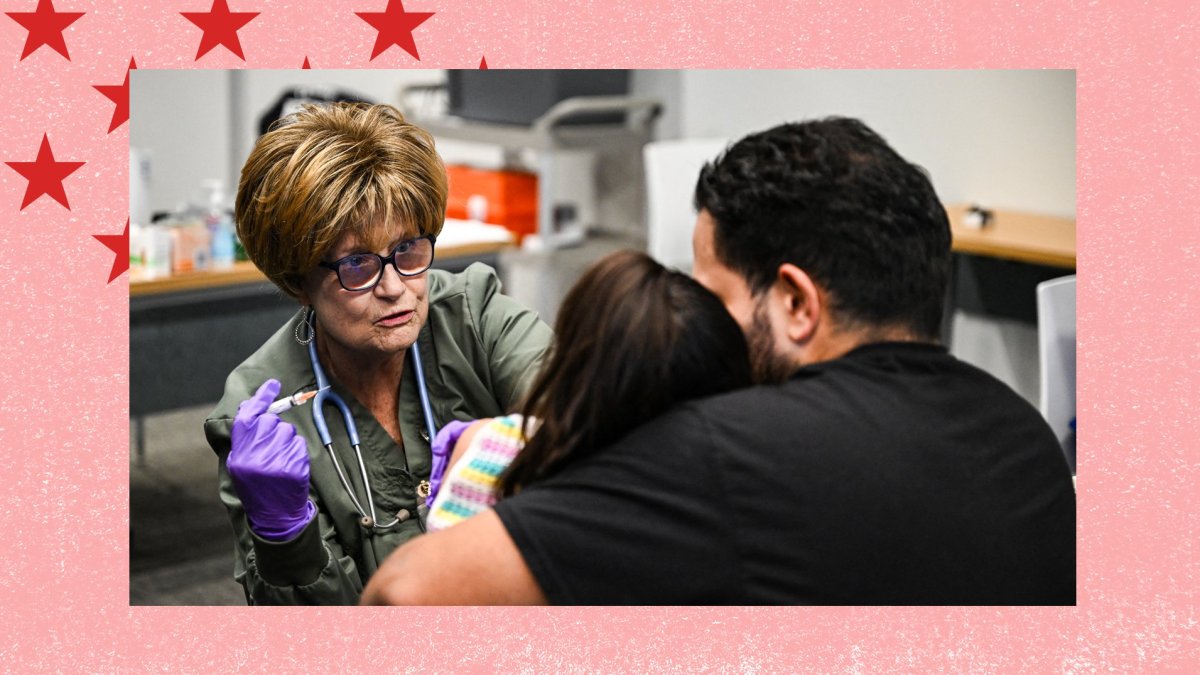
Welcome to Trump’s America, The i Paper’s World Insight series presenting the sharpest, deepest thinking on an era-defining shift in history and politics, investigating how Donald Trump and his administration have changed the US and the world – and where we go from here. • $120,000 should be a great salary. In these US states, it isn’t• Maga’s worst nightmare: a child-free, unmarried female president• The more America spends on healthcare, the sicker it gets Among a certain subset of Americans, the most honoured adjective these days is “crunchy”. Crunchy moms and dads have strict rules for raising a family. Toys must be wooden (no microplastics, please). Beef must be grass-fed. Veggies, organic. Eggs, cage-free. Nappies, cloth – no paper. Only “raw milk” of course; none of that pasteurised stuff. And for the crunchy set, vaccines, including the preventive jabs that have been given to American children for decades, should be avoided, even if it means the kids are left vulnerable to disease. Shorts Opposition to childhood vaccines – the anti-vax movement, in common parlance – has become so widespread that the US is now experiencing significant outbreaks of preventable maladies like mumps, measles and whooping cough that were rare, or officially eliminated, a few years ago. The result has been a spurt in absenteeism in some school districts, not only because of children who are sick but also because parents are afraid to have their healthy offspring mingle with contagious classmates. “The costs of that absenteeism are just not among the sick kids, but all the kids who are kept out of school as a precaution,” notes Dr Thomas Dee, of Stanford University’s School of Education. The reigning hero of Crunchy America is the outspoken anti-vaxxer Robert F Kennedy Jr, the US Secretary of Health and Human Services (HHS) – a position that roughly matches Britain’s Health Secretary. Running the nation’s health department would seem an unlikely job for a vaccine critic (though Kennedy disputes that he is anti-vaccine). To land that spot in Donald Trump’s administration, he pulled off one of the wildest U-turns in recent political history. A scion of America’s most prominent Democratic family, the son and namesake of a liberal hero, Kennedy Jr ran for president in 2024 as a ferocious critic of the Republican candidate, Trump. But late in the campaign, when it became clear that Trump was likely to win, Kennedy abruptly reversed course. Ending his own campaign, RFK Jr overnight became a full-fledged champion of Trump and his Make America Great Again movement. In a tribute to Maga, Kennedy calls his crunchy effort “Make America Healthy Again” (Maha). It was as if Euan Blair suddenly showed up as a Reform candidate and started praising Nigel Farage. Kennedy’s flip-flop was rewarded. He was given the health portfolio in Trump’s government, even though most of the medical and public health establishment opposed him. Some of Trump’s fellow Republicans in the US Senate, concerned about Kennedy’s anti-vaccine activism, were reluctant to confirm his nomination to be HHS Secretary. To win their votes, those senators said, Kennedy promised that he would not mess with America’s existing vaccine regime. But then he did. Once in office, Kennedy fired all the members of the government’s Advisory Committee on Immunization Practices, which traditionally urged parents to get their kids vaccinated. He stacked the committee with fellow vaccine doubters and encouraged them to probe the “safety” of childhood vaccines. The Advisory Committee began issuing scary warnings about some widely-used shots. In August, with Kennedy applauding at his side, Trump issued an executive order that cuts the number of childhood vaccines recommended by the federal government from 17 to 11. Parents can still get the other six shots for their kids, but at significant cost; health insurance policies generally don’t cover vaccines lacking the federal recommendation. The cost could run into hundreds of dollars per child. And Trump proposed that the standard MMR vaccine, given to one-year-olds to prevent measles, mumps and rubella, should be divided into three separate shots, meaning at least three trips to the doctor’s office – in a country where people have to pay out of pocket for most visits. This anti-vaccine alarm runs counter to decades of studies showing the jabs to be safe and effective. But the anti-vaxxers have had an impact. The number of American children getting the shots has been declining for several years; vaccination rates have fallen even more since Trump’s second term began. Meanwhile, the US has seen a spike in contagious diseases that were sharply controlled before, including influenza and Covid-19. In 2020, the US Centres for Disease Control and Prevention recorded 13 cases of measles in the entire country. Nine months into 2026, the number for the year is more than 3,470. “And it’s only September,” notes Dr Paul Offit, of the Children’s Hospital of Philadelphia. “This is going to get much worse with colder weather… The message should be, ‘Let’s get our kids vaccinated.’ But you never hear that from the Secretary of HHS.” The fear of vaccines reflects a broader distrust of science, the food industry and the big drug companies among the crunchy segment of the population and some political conservatives. The concerns are not new, but they have become more common because of the widespread anger over government demands for school closures and mask-wearing during the Covid pandemic. The national “Measles Tracker” maintained by the Johns Hopkins Bloomberg School of Public Health shows that vaccine refusal, and the resulting outbreaks of the disease, tend to blossom in certain communities and religious groups. Upscale neighbourhoods that house the “crunchy” – places like Boulder, Colorado and Austin, Texas – fall below the recommended immunisation rates because of vaccine resistance. Lancaster County, Pennsylvania, with a large Amish population (“the Pennsylvania Dutch”, they’re called) has kindergarten vaccination rates considerably below the 95 per cent considered necessary to preserve “herd immunity”. In Spartanburg, South Carolina, home to many Eastern European immigrants, Slavic Christians have invoked the state’s “religious exemption” to avoid vaccinating their kids – and measles cases have surged dramatically. Mennonite communities in Texas and Oklahoma and orthodox neighbourhoods around New York City also report lower vaccination rates and higher rate of measles. The problem for public health experts is that measles, a highly contagious condition, doesn’t honour county borders. So these localised outbreaks tend to spread. “Measles outbreaks have been reported in multiple states, raising concerns about continued spread, increases in hospitalizations and deaths,” warns the Johns Hopkins tracker. As long as Trump and Kennedy are overseeing the national health apparatus, this situation seems unlikely to change. But how long will Kennedy keep his job at Health and Human Services? Recently revealed documents suggest that Kennedy lied to Congress during the hearings to confirm his appointment to HHS. Asked about a trip he made to Samoa, Kennedy declared that the visit had “nothing to do with vaccines”. But The Guardian and The Associated Press uncovered a letter Kennedy sent to Samoa’s prime minister before the trip, in which he states that his plan is to study the use of vaccines there. Kennedy has denied lying about that trip. But if Democrats take control of Congress in the November’s mid-term election, as expected, he could face serious problems holding on to his job. For now, though, the federal government’s health apparatus is seriously sceptical about vaccines. Many Americans are paying attention, and contagious disease is spreading. So here’s a bit of travel advice: If you’re planning a trip to the US anytime soon, make sure you’ve had all your jabs.
America stopped trusting vaccines. Now the diseases are back
Full Article
Original Source
Read the full article at Inews →KhanList aggregates and links to publicly available news content. We do not host full articles from third-party sources. Always verify important information with original sources.