
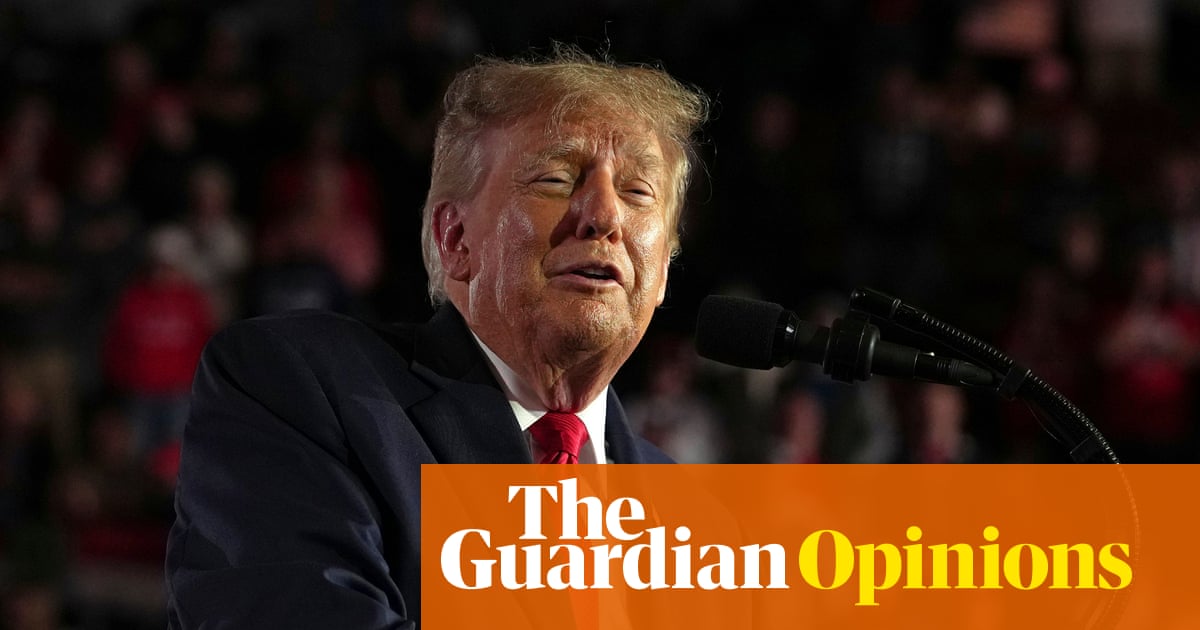
In a sense, history has already been made. We do not know the result of the election yet, but over the last two months, Americans have endured the worst speeches ever given by a president of the United States.It is far from a simple matter to adjudicate – there have been so many bad speeches over the years, going back the founders, some of whom dreaded speaking in public. George Washington’s inaugural address did not begin promisingly, with a halting first sentence: “Among the vicissitudes incident to life, no event could have filled me with greater anxieties than that of which the notification was transmitted by your order, and received on the 14th day of the present month.”But it feels like we have entered new territory, with speeches that are far worse than convoluted, or dull. Instead, they are routinely overflowing with vitriol against perceived enemies, groundless predictions of victory, and delusions of grandeur.At their best, they can offer a form of entertainment to the Maga supporters who still line up, in dwindling numbers. At their worst, they provide evidence of a president whose faculties are failing him.It used to be vitally important for any White House speechwriter, under any previous administration, to factcheck a speech, because it would be unthinkable to state a known falsehood in a presidential address. Now, it is impossible to rely on anything communicated from the most powerful office in the world, whether in the torrent of rally speeches now ending, or in the ceaseless drip of social media posts every night.Donald Trump has succeeded in lowering the bar even further than where it was in his first term, or even in the first year of his second term.In the past, a White House would routinely put every presidential utterance on its website, believing it to be in the interest of the American people. But the current gatekeepers refuse to put Trump’s rally speeches online, as if conscious that they are lowering the dignity of the office. Instead, they must be read in other places.The media has reported with some bemusement on the strangeness of Trump’s 28 rallies, but the problem is more serious than that. Many of the speeches make little sense. The president often loses his way.In North Carolina, Trump told the story of Mike Dukakis and Willie Horton twice in the same speech. There are non-sequiturs (“only a Hispanic could survive that fall”). Or threats to rename oceans and rivers. Or boasts about the “freaking fortune” the oil industry is making from the Iran war. Or casual pardons issued to polluters from the stage (making one lucky recipient “as clean as a newborn baby’s ass”).As that comment suggests, it has been a race to the bottom. There has been a lot of profanity (in Ohio, he said: “We’re going to win, and we’re going to win big. And we’re going to shove it up their ass.”) At other times, he has referred (repeatedly) to the firmness of Jon Husted’s posterior.Then there are the insults to foreign countries (“Norway sucks”) political rivals and Robert DeNiro (“a moron”). The juvenile nicknames: Talafreako, Annie Trannie, Dumocrats. The taunts to hecklers (“shut up, loser!”), who are coming out in ever greater numbers, drawn to the spectacle of this bonfire.It is not simply that Americans have a president who, as if defensive, brags about acing his cognitive tests (“I’m a freaking genius”). There is also the absence of any moral leadership of any kind, on issues ranging from our foreign policy to domestic concerns.We rarely hear of defending democracy; instead, we have seen a palpable decline in US support for Ukraine, and last week offered refuge to an election-denier, Flávio Bolsonaro, who lost by more than 4m votes to Lula. Our own elections have been under constant attack, even before they can be held. We declare “ceasefires” that are routinely ignored. We have no idea what the plans are for Iran.This is the American Carnage that was promised in Trump’s 2017 inaugural. It goes far beyond mere rhetorical chaos; instead, it threatens the irreversible decline of the presidency itself, and the great nation it is supposed to represent. It’s a striking setback during a year that was supposed to be all about celebrating America’s 250th birthday and the enlightened ideas enshrined within our founding creed, the Declaration of Independence.The founders anticipated some of these problems – Washington warned that the “baneful effects” of excessive partisanship would “enfeeble” the nation. His successor, John Adams, worried that the country would only be as moralistic as its leaders. In 1798, he wrote: “Avarice, Ambition and Revenge or Galantry, would break the strongest Cords of our Constitution as a Whale goes through a Net.”Of course, they also wanted “energy in the executive”, as Alexander Hamilton put it in Federalist 70, and to be fair, it does require a lot of energy to speak for nearly two hours at a rally. But is that serving the interests of the nation, or even of the Republican party?It could be argued that the Trump brand is now so toxic that it does more harm than good for a candidate to appear at a rally with him. The wheels are coming off the bandwagon.Historians often debate the best presidential speeches; they rarely worry about the bad ones. In fact, many have been failures.William Henry Harrison’s inaugural address in 1841 was so long (8,445 words) that it essentially killed him (he died not long after delivering it). James Buchanan refused to take a stand on slavery in 1857 and promised to “cheerfully accept” the dreadful Dred Scott decision. Jefferson Davis (not quite a president) promised “no aggression upon others” shortly before the Confederacy attacked Fort Sumter, launching the American civil war.The 20th century brought more duds. Barry Goldwater’s convention address in 1964 has often been cited as an embarrassing example of extremist rhetoric, attacking international communism as well as the US government. But a close reading indicates many passages that appear downright calm compared with the constant fusillades of the Trump rallies.Goldwater called for “the flowering of an Atlantic civilization, the whole of Europe reunified and free, trading openly across its borders” and offered a definition of his party that was eminently reasonable: “Balance, diversity, creative difference – these are the elements of the Republican equation.”Richard Nixon had well-known problems with the truth, and, like Trump, hated his enemies. But a casual glance at his rally speeches in the fall of 1970 show nothing like the invective of 2026 – simply cautious statements about balancing the budget, offering tax relief, and restoring law and order.It will take time to heal from the nonstop airing of grievances over the past two months – the Festivus Campaign of 2026. The next two years may be difficult in Washington, with a lot of blaming and shaming if the Republicans perform as poorly as expected. But if early indications are accurate, there will be a far greater balance in Washington, and that is a beginning.In other ways, too, democracy has been making a comeback, with surprising victories for progressive campaigns in Brazil and Serbia, and elegant speeches delivered in the last few days by the leaders of those causes, Lula and Radomir Sajčić.They do not demonize their opponents; they simply accept the challenges of building peace and prosperity at home, promote unity and promise to get to work for the people.In the final weeks of 2026, it would be difficult to think of a better way to vindicate the long-ago promises of the Declaration of Independence, that a better day is possible for a people willing to role up their sleeves and work together. Ted Widmer, a former White House speechwriter, is the editor of American Speeches, and the recently published The Living Declaration: A Biography of America’s Founding Text, both published by the Library of America
America has been witnessing the worst speeches in presidential history | Ted Widmer
Full Article
Original Source
Read the full article at Theguardian →KhanList aggregates and links to publicly available news content. We do not host full articles from third-party sources. Always verify important information with original sources.