
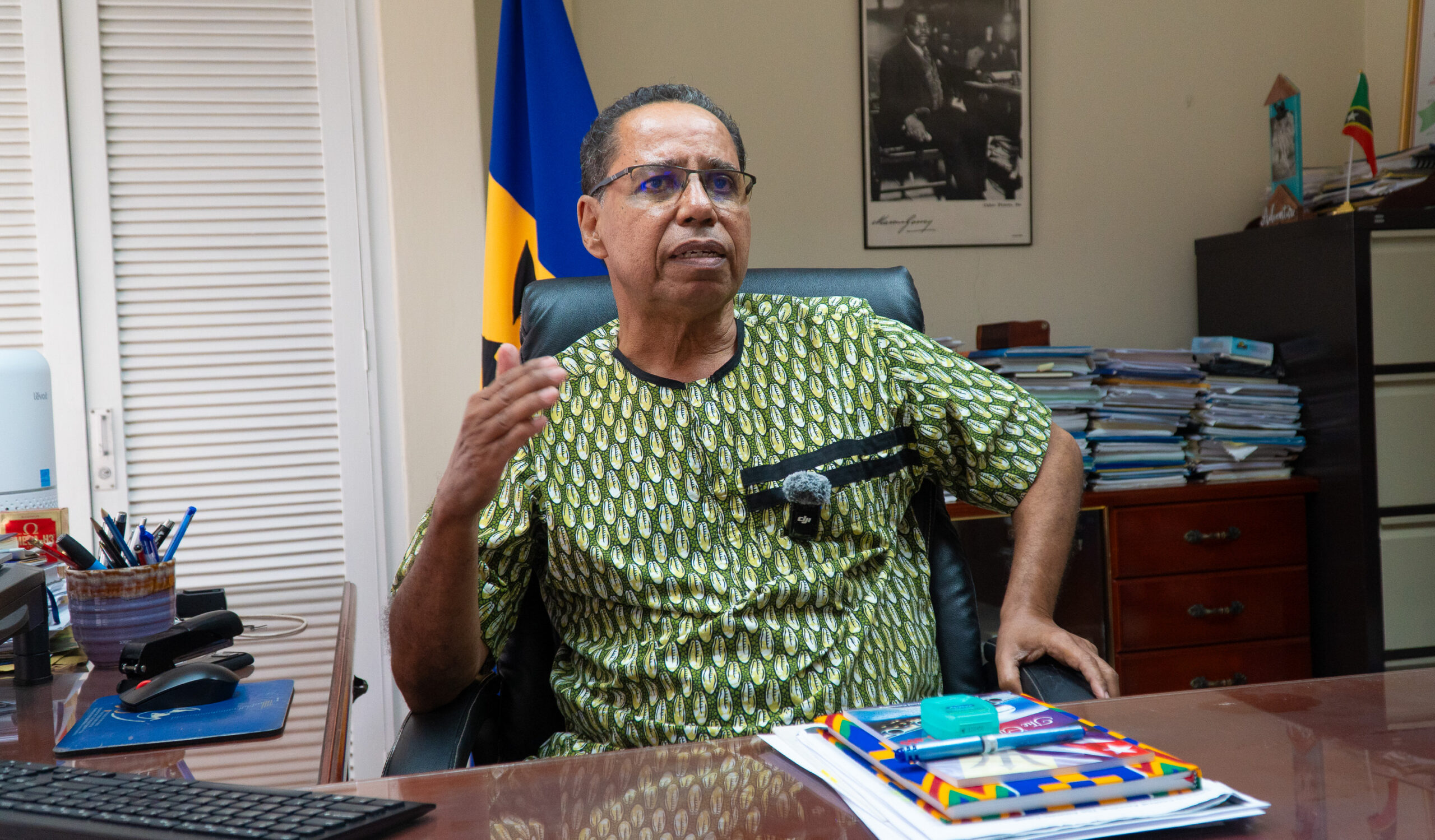
Barbados' Ambassador to CARICOM David Comissiong (Photo by: Carol Williams) Ambassador to CARICOM David Comissiong has challenged the notion that Barbadians are not a people who migrate, arguing that generations of Bajans have left these shores in search of opportunity and helped shape societies across the Caribbean, the Americas and Africa. Speaking about the history and impact of the Barbadian diaspora, Comissiong said outward migration has been a defining feature of Barbados for much of its post-emancipation history. “Most contemporary Barbadians have this idea about Barbadians not being a people that migrate outward to other countries,” he said. “And this is so peculiar because this is actually the opposite of Barbados’ historical record.” The ambassador said difficult social and economic conditions following emancipation drove many Barbadians to seek opportunities elsewhere. With a dense population, limited access to land and an economy dominated by sugar plantations, many saw little prospect of improving their circumstances at home. “That was a recipe for life being very exploitative, very miserable for a large mass of Black people, therefore motivating them to try to leave the island, to search out greener pastures.” According to the envoy, author and activist, Barbadians migrated in large numbers to destinations such as Guyana, Trinidad, Panama, Cuba, Venezuela, Colombia and Brazil, often taking with them skills developed in the island’s sugar industry. You Might Be Interested In Comissiong cited the work of historian Professor Winston James, who estimated that between 1860 and 1920 some 140 000 Barbadians migrated, with more than 100 000 settling overseas permanently. “In virtually every Caribbean territory, you will find evidence of Barbadian migration,” he said. Barbados’ Ambassador to CARICOM David Comissiong (Photo by: Carol Williams) The ambassador argued that many of those migrants went on to play influential roles in their adopted countries and pointed to established Barbadian communities across the Caribbean, Latin America, North America and Africa. Among the examples he cited was a group of Barbadian migrants who settled in Liberia in 1865 and whose descendants later occupied prominent positions in public life, including the presidency. “Not only did they produce three presidents, they produced judges, secretaries of state, educators, the whole gamut of achievers,” he said. Comissiong also argued that Barbados’ educational tradition helped many migrants succeed abroad and rise to leadership positions in public life, business and the professions. While outward migration remained common well into the 20th century, improvements in living conditions following the 1937 labour rebellion and subsequent social and political reforms reduced the pressures that had pushed many Barbadians to leave, he said. The ambassador said a greater appreciation of the country’s migration history would help Barbadians better understand their contribution to the wider world. Referring to the belief that migration is largely something experienced by Barbados rather than undertaken by Barbadians, Comissiong said: “I want to disabuse them of that.” He argued that the accomplishments of Barbadians abroad should be recognised as part of the nation’s heritage. “Your heritage is international,” he said in a message to Barbadians. “You went all over the world, and you made contributions all over the world.” (CW)
Ambassador challenges migration myth
Full Article
Original Source
Read the full article at Barbadostoday →KhanList aggregates and links to publicly available news content. We do not host full articles from third-party sources. Always verify important information with original sources.