
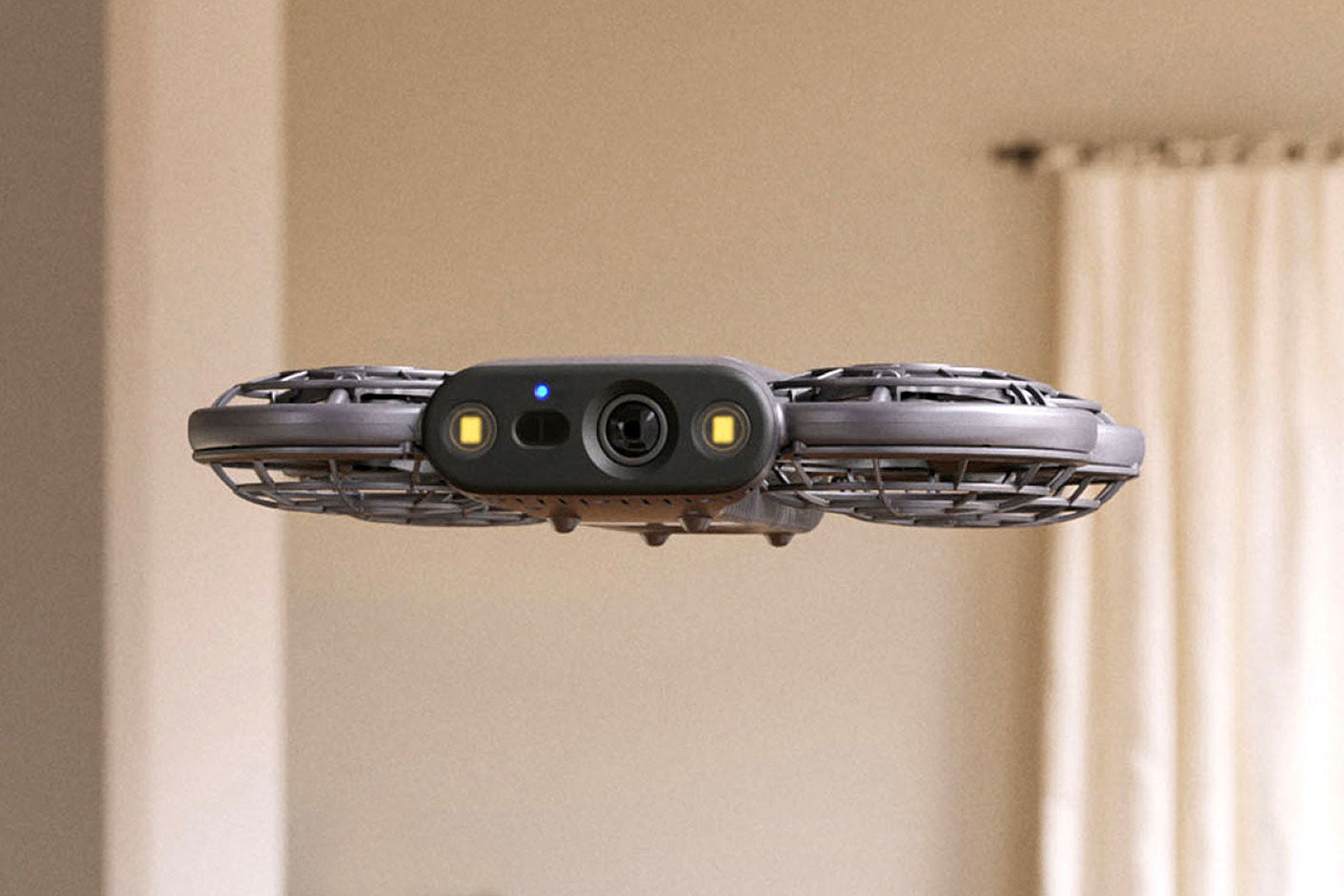
Users There is no reason your living room needs air support. Amazon Sign up for the Slatest to get the most insightful analysis, criticism, and advice out there, delivered to your inbox daily. Black Friday is officially upon us, and in the age of voracious consumerism, the stuff is getting really weird. There’s the clip-on tablet stand that you can attach to a snack bowl, as if you were an adult who also wanted to feel like an iPad baby sitting in a large stroller. There’s the horse–shark hybrid plastic toys, for all those times you wished you had that to snuggle with in the cold winter nights. And now, there’s Amazon’s Ring drone camera, the flying indoor surveillance tool, which the security camera company began rolling out earlier this month. Yes, everyone’s two favorite brands are bringing you the at-home security you’ve always wanted and constantly been requesting: a flying drone that you can operate remotely, even at night, to cover every single inch of your home in the name of complete and total security. The new video drone will start shipping next year and starts at $249.99. Here you go, finally! Now stop begging for it, please! Of course, security matters. Home burglaries have been on the decline year over year, and a huge reason for that is the development of surveillance technology. Alarms, anti-theft devices, and electronic security systems have all expanded over the past few years at the same time that most of the world started carrying a camera on them at all times. No one wants to get robbed, and now, there are dozens upon dozens of ways to secure your house—which brings us to the drone camera: The product teaser that was released on Nov. 10 shows a burglar stepping inside a home and effectively getting weirded out by the presence of an indoor drone before fleeing the house. So even if a robber managed to outsmart your outdoor security cameras, automated floodlights, motion-sensor alarms, Ring camera, and updated locks, they could still come face-to-face with a drone in the middle, catching them up-close, with every pore and makeup smudge visible. But it’s not like the Ring drone camera is some kind of superpowered security tool. According to Business Insider, it only has eight minutes of flight time before it needs to go recharge in a dock with its camera turned off. On top of that, it can only patrol a few preset paths inside your home. It’s effectively an air Roomba, except with less stamina and zero cleaning ability Why is this necessary at all? Surely, a high-profile celebrity or extremely rich person would spend far more than a measly $250 insuring all their priceless valuables, and the average person living in a regular neighborhood wouldn’t need a tiny reserve force that only lasts for eight minutes to protect against a burglar. There’s also just generally less valuables to steal inside peoples’ houses now. Nearly half of Americans don’t use cash anymore, let alone keep a stash of it in their kitchen. Millennials and Gen Zers are also often renting, which means they’re also less likely to inherit family heirlooms or expensive jewelry purchases—other items that might be susceptible in a home invasion. Homes now are often filled with flat-packed furniture, secondhand clothing, and pets who would get incredibly agitated by a whirring, floating machine buzzing around the perimeter of their house. So what would a drone do for these homes? Get a really good look as to whether their burglar threads their eyebrows? It doesn’t really seem to fit the vibe. Our technology is morphing into a vast, pulsating network of shared information: Uber wants to deliver your groceries, Spotify wants to do your full-body scan, Meta wants to fill out your apartment application form. Now, Amazon wants to see the inside of your home from midair in the name of home security. But we are all too aware of what we lose when there is so much surveillance in our lives. Ring cameras were the original predecessor to Flock cameras, where the line of feeling powerful in overseeing your own property slowly evolved into a mass community policing tool. The content panopticon—panopticontent—has shifted the very fabric of how we interact with one another, from the way we dress to the way we flirt to the way we act in public. All of it is different now. Call me a doomsday prepper, but I’m not convinced that there’s a real utilitarian case to invite Amazon’s Ring and its sensors into your home. I know we were all begging Amazon to release a drone inside our homes, because we all keep our valuables nailed at eye level in our living rooms and nothing else can watch our valuables like an indoor drone can. I know we all wanted to go over to our friends’ houses to water their plants while they were on vacation and see some plastic machine recording our faces in the doorway. I know, I know! I’m just putting it out there that the flying remotely operated surveillance machine sold by one of the biggest tech conglomerates in the world is maybe not the best thing you could add to cart this week. May I suggest two-factor authentication instead? Amazon Drones
Amazon Has Found a Way to Make Your Home More Dystopian
Full Article
Original Source
Read the full article at Slate →KhanList aggregates and links to publicly available news content. We do not host full articles from third-party sources. Always verify important information with original sources.