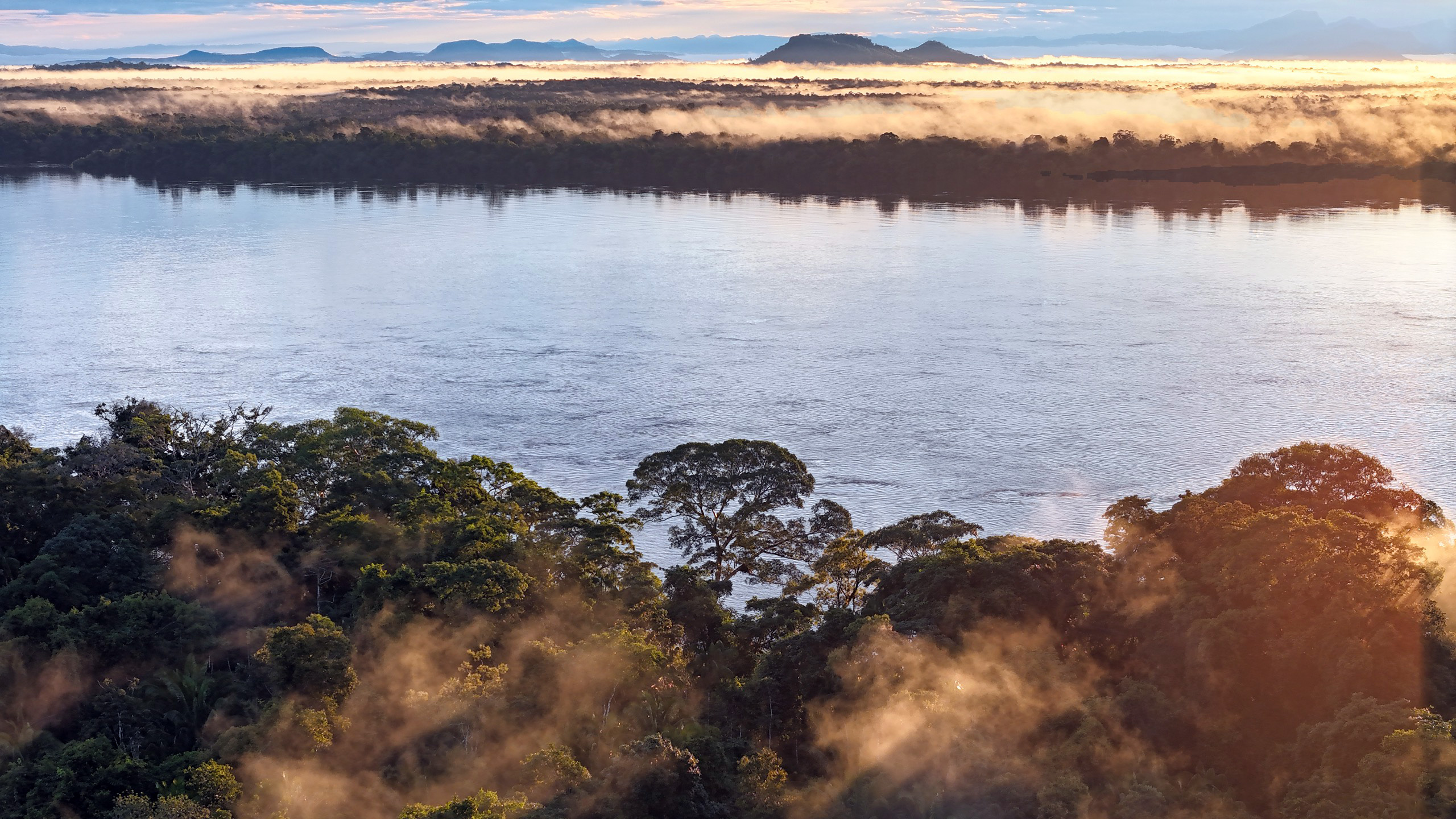
INPE’s DETER system recorded 2,874 sq km of Amazon deforestation alerts from August 2025 through July 2026, down 36% from the previous year and 55.6% below the preceding 10-year average.The total is the lowest since 2013 when earlier DETER data are included. If the trend is confirmed by the higher-resolution PRODES system, Brazil could record its lowest official Amazon deforestation rate since monitoring began in 1988.The decline has coincided with stronger environmental enforcement under President Luiz Inácio Lula da Silva. Alerts also fell in the Cerrado, Caatinga, Atlantic Forest, and Pampa, with the Cerrado reaching a five-year low.Despite the decline in clear-cutting, the Amazon remains vulnerable to logging, drought, forest degradation, and fire, which can cause substantial ecological damage without immediately appearing in deforestation statistics. Deforestation in the Brazilian Amazon has fallen to its lowest level in 13 years, according to new satellite data from Brazil’s National Institute for Space Research (INPE), continuing a decline that began after President Luiz Inácio Lula da Silva returned to office in 2023. INPE’s DETER alert system detected 2,874 square kilometers (1,110 square miles) of deforestation in the Amazon between August 1, 2025, and July 31, 2026. That was 36% below the previous 12-month period and 55.6% below the average of the preceding decade. The total is the lowest since INPE introduced the current DETER system in 2015. Including data from its predecessor system, the last time alerts were lower was the 2012/13 deforestation year, when 2,766 sq km were recorded. Accumulated deforestation for Aug 1-Jul 31 in recent years according to INPE’s DETER alert system. Image by Mongabay DETER is designed as a rapid-response system for enforcement agencies. It uses satellite imagery to identify new forest clearing quickly enough for authorities to investigate and intervene. It differs from PRODES, INPE’s higher-resolution annual monitoring system, which provides Brazil’s official deforestation rate. Preliminary PRODES figures for the year ending July 31 are expected in October or November. PRODES data for the year ending July 2025 had already put Amazon forest loss at its lowest level in 11 years. The latest DETER figures indicate that clearing fell further during the following year. If PRODES shows a decline similar to that recorded by DETER, Brazil could register its lowest official Amazon deforestation rate since the current monitoring series began in 1988. Data from INPE’s DETER and Imazon’s SAD detection systems showing deforestation in the Legal Amazon (“Amazonia”). Image by Mongabay Independent monitoring has generally shown the same direction of change. Imazon, a Brazilian nonprofit that operates its own satellite-based alert system, has also reported declining forest clearing in recent years. Its system uses different methods from DETER but provides another measure of changes in forest loss. The decline has coincided with renewed environmental enforcement under Lula. His government has increased enforcement operations, strengthened monitoring, resumed efforts to protect Indigenous territories, and pursued agreements with municipalities where deforestation is concentrated. Brazil has pledged to eliminate illegal deforestation by 2030. A river in the Amazon in July 2026. Photo by Rhett Ayers Butler / Mongabay Deforestation alerts also fell in the Cerrado, a tropical savanna that has experienced high rates of agricultural conversion. DETER registered 5,119 sq km of alerts during the latest period, down 7.8% from the previous year and the lowest total in five years. INPE also released consolidated PRODES data for three other Brazilian biomes covering August 2024 through July 2025. Deforestation fell 34.3% in the Caatinga, to 2,290 sq km; 15.3% in the Atlantic Forest, to 402 sq km; and 41.7% in the Pampa, to 305 sq km. The results were announced as INPE marked its 65th anniversary. Claudio Almeida, coordinator of the institute’s BiomasBR program, said the release showed INPE’s capacity to maintain technological independence in monitoring Brazil’s landscapes and serve as an international reference for satellite-based environmental monitoring. “The numbers presented today are historic,” Astrini said in a statement, arguing that they show Brazil can meet its commitment to end and reverse deforestation by 2030. Annual deforestation in the Legal Amazon (Amazonia) from 1988-2025, according to a preliminary estimate from Brazil’s national space research institute, INPE. Clear-cutting is also only one form of forest damage. Logging, drought, edge effects, and understory fires can affect standing forest without immediately registering as deforestation. Such degradation can reduce carbon storage and biodiversity and make forests more vulnerable to future drought and fire. Fire remains a concern during the Amazon dry season. Burning used to clear vegetation or manage pasture can spread into neighboring forests during hot, dry conditions. The severe 2023-24 drought showed that fire and ecological damage can increase even as the area being completely cleared declines. Banner image: Mist rising from the Amazon rainforest in July 2026. Photo by Rhett Ayers Butler / Mongabay Credits Topics
Amazon deforestation alerts fall to lowest level since 2013, Brazilian data show
Full Article
Original Source
Read the full article at News →KhanList aggregates and links to publicly available news content. We do not host full articles from third-party sources. Always verify important information with original sources.