
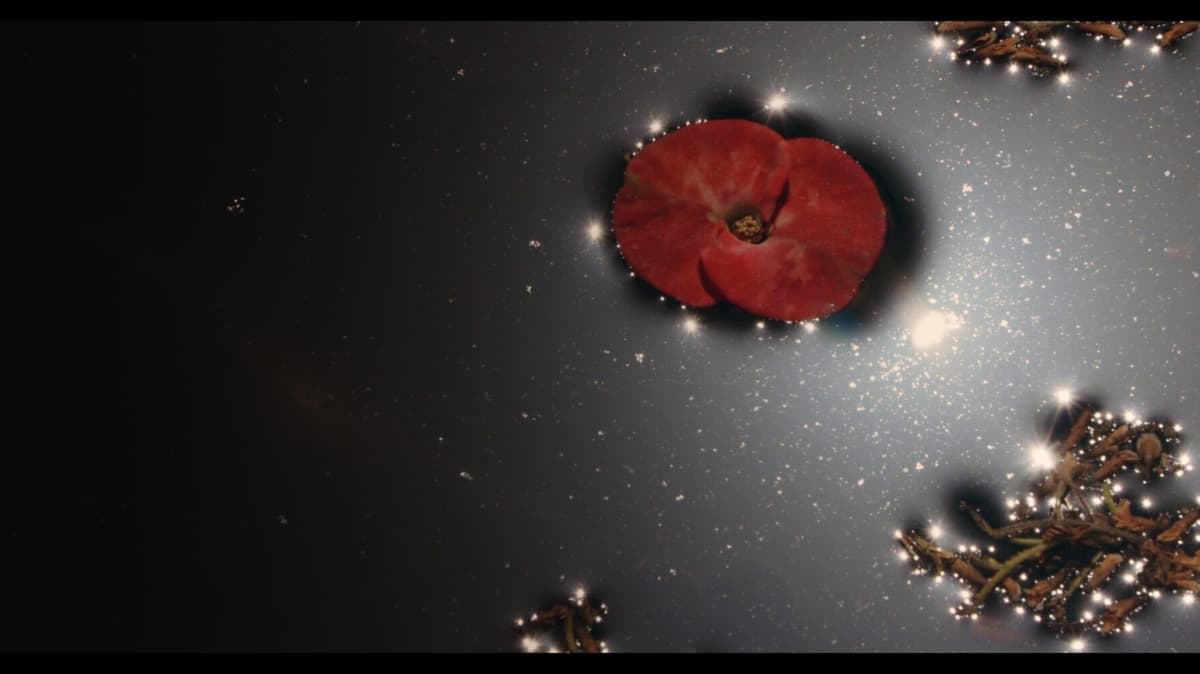
Amar Kanwar, The Peacock's Graveyard, 2023. (Film still) Digital video installation, 7 screens, dimensions variable, 28 mins, 16 sec. Courtesy of the artist and Marian Goodman Gallery.This is a transcendent show full of revelations, the kind of show that could change your life – if you let it. Amar Kanwar is a New Delhi-based artist working predominantly in the moving image and for his first London show in 8 years, he’s presenting three films, one feature length alongside two multi-screen film installations. Now these movies aren’t exactly Avengers: Doomsday – we’re talking slow, contemplative parables about the Indian subcontinent. It requires caffeinated Londoners to let go of the hyped-up, logged-on, rat-bot race and adjust to a more meditative pace: a big ask. And also, the entire point. Kanwar wants people to escaped what he calls the “illness” of contemporary life, when “somebody gets too full of themselves that arrogance takes over the mind”, and his brilliance is in connecting this to stories of the partition of India in 1947, which still reverberates through the generations and that illustrates in the starkest, most violent terms, what happens when people close their ears and start pointing fingers. In order to bring visitors into this space of letting go of themselves to immerse themselves in his work, Kanwar has made the Serpentine North space so dark when you enter that you can’t see your own shoes. When a gallery assistant loomed out of the shadows towards me, the Standard almost had a coronary; later, a woman fell over a large chair. Despite such giggles, it creates a mood and a process by which to give up your usual phone-faced identity and open up. This is not one of those shows where among the art on the walls there’s a bit of video in a room to check out for a couple of minutes, get the gist, and move on. You really must sit and watch these films, ideally going right to the front seats for the full experience. The centrepiece feature, Such a Morning (2017), is an elliptic parable of a mathematics professor who leaves his job to move into a train carriage in the woods, where he starts seeing visions and begins writing a dream almanac. An eclipse seems to have been his trigger to escape the world, watched over by crows; he covers the train windows up, and it’s all shadows and feet, and the motion of clouds, the moon. It is slow, slow, slow, but with text accompanying the images on the screen, which poetically suggest apocalyptic happenings, personal devastation, spiritual reckoning, the film is entirely gripping once you adjust to the pace. Amar Kanwar, Such a Morning, 2017. (Film still). Digital video, 4K, colour, sound, 85 min. Courtesy of the artist and Marian Goodman Gallery.In fact, it becomes apparent that what appears to be a boring film about a man sat in the dark in the woods, is in fact a work of profound brilliance about staring into the heart of darkness, which carefully utilises conventional film techniques to keep you hooked – close-ups and jump-cuts, which suddenly have renewed power due to the back to basics approach – and tells a story of a man leaving the modern world behind in a saintly search for answers, or new questions. We also see an old woman sat in a house alone, with a rifle. We don’t know if she’s protecting herself or waiting to kill someone. But this is not a consoling, peaceful world of solitude. Threat is present, violence simmering. As sunlight starts to bleed in, shot like water running over his hands, the professor eventually starts to write letters back to the world, with new insight. Brilliantly, the film bleeds out across the walls outside the room, with scraps of paper bearing further letters and further footage, lighting the way to the other films.The Peacock’s Graveyard (2023) is an installation film divided into several parables playing out over 7 screens which blends history and folklore with personal stories, and questions arrogant received truths and how we think about thought – what Kanwar calls ‘the soup of the mind’, that minestrone of media, memory, trauma, fantasy which swirls in our skulls from moment to moment. Working in a similar manner is a new work, The Charcoal Man, which ends the show and is perhaps the highlight. Again it utilises lyrical parables, but becomes a devastatingly effective melding of newsreel footage, old movies, and narrative text. The rhythm of it playing across the screens is quite extraordinary, as it dovetails the assassination attempts made on Ghandi in the late 40s, with personal stories of ordinary people. As it builds in tension and danger, it becomes a hypnotic piece of work. Kanwar seems to be making the point that our minds are a place where the past and present co-exist. In a sense, this historical work is nothing of the sort – its narrative and effects remain. The importance of the Partition to Indian people has not gone away, its external and internal echoes are still felt. And the British colonial role in the civil war slaughter cannot be swept away either. And in illustrating this, Kanwar’s warnings for our current era are all too apparent. Not just in the dangers of trying to ignore the past but what happens when people sink into division, prejudice and vengeance. What happens if you’re so wrapped up in your own world that you can’t stop to listen to anyone else? This is a vital exhibition – find your seat in the dark, slow down and let it in.
Amar Kanwar: This exhibition will change your life, if you let it
Full Article
Original Source
Read the full article at Standard →KhanList aggregates and links to publicly available news content. We do not host full articles from third-party sources. Always verify important information with original sources.