
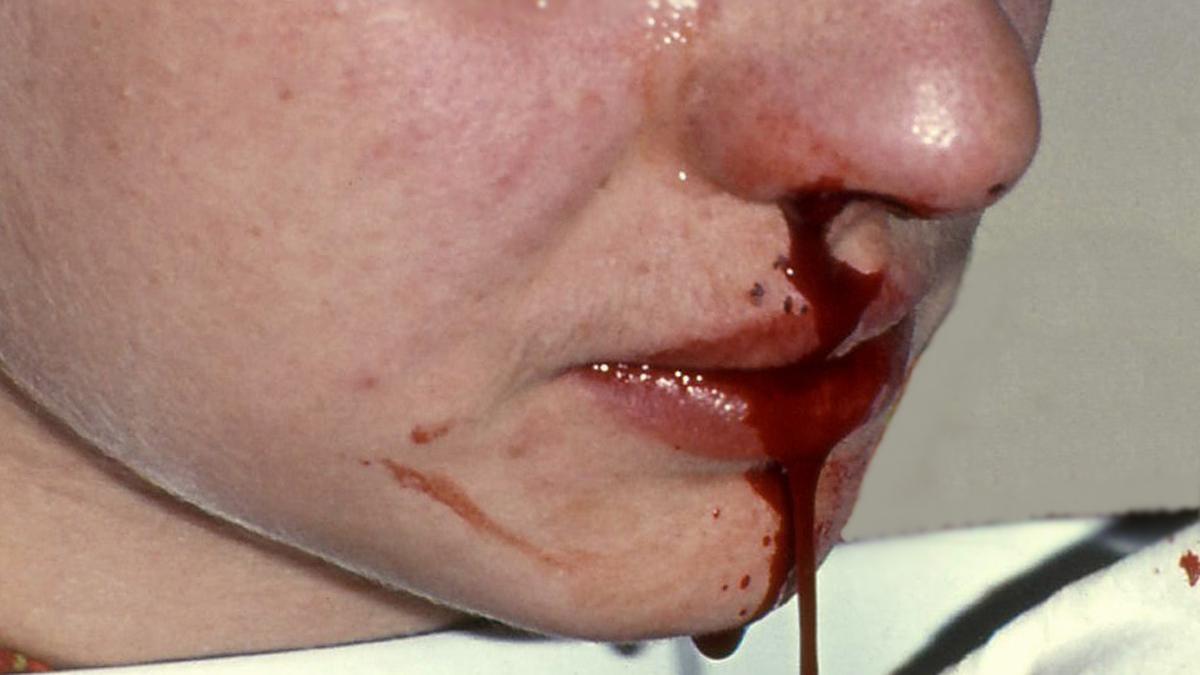
Common causes of a nosebleed include the inside of the nose becoming dry, usually due to a change in temperature, picking the nose, or blowing the nose too hard | Photo Credit: Wikipedia Commons It always creates apprehension because the sight is somewhat gory, but a nosebleed, in general, isn’t a cause for major concern. Occurring mostly in the under 10s and the over 45s, nosebleeds are very common: about 60% of the population is estimated to experience one in their lifetime. They can occur in one or both nostrils, but usually affect one. The medical term for a nosebleed is epistaxis.How do they occur?Our noses are lined with a moist, delicate tissue, the nasal mucosa. This lining cleans the air that we breathe in, and also warms and moistens the air. The mucosa is made of many tiny blood vessels, lying to close to the surface. These blood vessels can easily be irritated, injured and broken. When they break, they cause a nosebleed.There are two types of nosebleeds: anterior and posterior. An anterior nosebleed, which is the most common type, starts at the front of the nose. These types of nosebleeds can mostly be treated at home. A posterior nosebleed takes place place deep at the back the nose, may cause heavier bleeding and could result in blood going down the back of the throat. This type of nosebleed requires medical attention.Why do they occur?Common causes include the inside of the nose becoming dry, usually due to a change in temperature, picking the nose, or blowing the nose too hard.When the air is very dry, it causes the nasal mucosa, which is meant to be moist, to dry out, making it prone to crusting and bleeding. Dry air can occur in hot places with low humidity, areas of high altitude and in air-conditioned or heated spaces. People with upper respiratory infections, sinus infections, allergies or other ailments such as rhinitis may also sneeze, cough or blow their nose frequently, making them more prone to bleeds. The frequent use of medications such as antihistamines, nasal sprays or blood thinners, could also make people vulnerable to nosebleeds, as could breathing in strong fumes.Nosebleeds can also occur due to injuries to the nose, the insertion of objects into the nose, a deviated septum, recreational drug use as well as less common causes such as having blood disorders, alcohol use, nasal polyps or tumours.Being pregnant may also increase the chances of nosebleeds.When to see a doctorIn general, nosebleeds aren’t serious and can be treated at home. In some circumstances, however, it is best to consult a medical professional. You should see a doctor if: the nosebleed has followed an injury or accident; if there is heavy bleeding or the bleeding lasts longer than 30 minutes; blood has been swallowed; if there is a feeling of weakness, dizziness, lightheadedness or if you have breathing difficulties, chest pain or a rapid heart rate. A doctor should also be consulted if the person with the nosebleed has other health issues such as a bleeding disorder, or high blood pressure, or if the person is a child under two years old.How to stop a nosebleedTo stop a nosebleed, there are some first-aid measures that can be taken: Sit upright so the head is above the level of the heart, lean forward slightly Breathe through the mouth and gently blow the nose to clear it Use the thumb and index finger to pinch the both nostrils shut. Do this for 10 minutes. Use an icepack on the bridge of the nose at the same time as the pinching Check in 10 minutes, and if the bleeding has not stopped, repeat the pinching for another 10 minutes Once the bleeding has stopped, lean forward and clean the nose with lukewarm water See a doctor immediately if the bleeding does not stop in 30 minutes Preventing nosebleedsUsing a humidifier in the house especially in dry air conditions, trimming children’s fingernails, managing allergies, using a nasal saline spray or petroleum jelly to keep the inner lining of the nose moist and avoiding smoke exposure can all help prevent nosebleeds. Published - September 19, 2026 10:38 am IST
All you need to know about: nosebleeds
Full Article
Original Source
Read the full article at Thehindu →KhanList aggregates and links to publicly available news content. We do not host full articles from third-party sources. Always verify important information with original sources.