
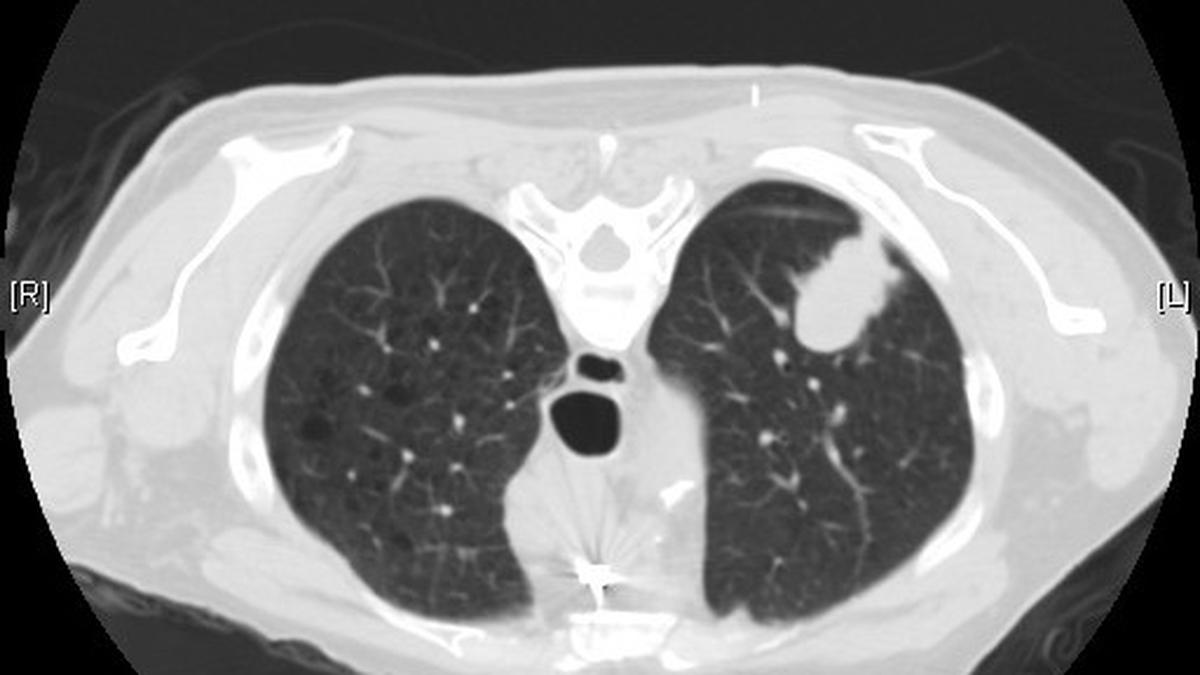
Pope Leo XIV, 71, was diagnosed with lung adenocarcinoma after doctors detected a small, localised nodule in his lung during medical examinations. He underwent surgery on October 13 at Rome’s Gemelli Hospital, where surgeons removed the lower lobe of his right lung. Two days after surgery, doctors reported good recovery in the operated lung.According to the Global Cancer Observatory, an estimated 2.48 million people were diagnosed with lung cancer worldwide in 2022, and approximately 1.82 million died from the disease that year. A 2025 analysis by the International Agency for Research on Cancer (IARC), the cancer agency of the World Health Organization (WHO), estimated that 1.26 million new cases of lung adenocarcinoma occurred worldwide in 2022, accounting for about half of all lung cancer cases.What is lung adenocarcinoma?Lung adenocarcinoma is a type of non-small cell lung cancer (NSCLC), the most common category of lung cancer. It develops from glandular cells that produce substances such as mucus, which helps keep the airways moist. The cancer usually begins in the outer parts of the lungs, in cells lining small airways or the tiny air sacs called alveoli, where oxygen enters the bloodstream.The disease develops when changes in the DNA of these cells disrupt the normal controls on cell growth and division. The affected cells multiply uncontrollably and form a tumour that can invade surrounding lung tissue. As the cancer progresses, cells may enter the blood vessels or lymphatic system and spread to lymph nodes or other organs, including the brain, bones, liver and adrenal glands.Lung adenocarcinoma is not a single, uniform disease. Tumours can have different genetic changes that affect how they grow and respond to treatment. Some changes allow cancer cells to keep multiplying by activating specific growth pathways. Others may make the tumour sensitive to particular medicines. This biological variation is one reason why doctors need to examine the characteristics of each tumour when planning treatment.Adenocarcinoma can grow slowly in some people, while other tumours are more aggressive. Its behaviour depends on factors such as the tumour’s cellular features, genetic changes and stage at diagnosis.Who is at risk?Smoking is a major risk factor for lung cancer, but it is not the only one. Lung adenocarcinoma can also develop in people who have never smoked.Exposure to outdoor air pollution, particularly fine particulate matter, is another important risk factor. These tiny particles can travel deep into the lungs, where prolonged exposure may contribute to inflammation, cellular damage and changes that increase the risk of cancer. The 2025 IARC analysis highlighted the contribution of air pollution to the global burden of lung adenocarcinoma.Other risk factors include second-hand tobacco smoke, radon and certain substances encountered at work, such as asbestos. A family history of lung cancer may also be relevant.Having one or more risk factors does not mean that a person will develop cancer. People without known risk factors can also develop the disease.What are the symptoms?Lung adenocarcinoma may not cause noticeable symptoms in its early stages. In some cases, it is detected during imaging performed for another reason. When symptoms develop, they can resemble those of common respiratory illnesses.A persistent or worsening cough, chest pain, breathlessness, coughing up blood, unexplained weight loss and fatigue are among the symptoms that may occur. Some people may also develop repeated respiratory infections or a change in their voice.If the cancer spreads beyond the lungs, symptoms may depend on the organs affected. Spread to the bones, for instance, may cause pain, while involvement of the brain may lead to headaches or other neurological symptoms.These symptoms can also occur in conditions other than cancer. However, persistent or unexplained symptoms should be assessed by a doctor.How is it diagnosed?Doctors begin by assessing a person’s symptoms, medical history and risk factors, followed by a physical examination. A chest X-ray may reveal a suspicious area, while a computed tomography (CT) scan provides more detailed images of the lungs and can help identify the size and location of a tumour.Depending on the findings, further imaging may be needed to determine whether the cancer has spread. A positron emission tomography (PET) scan can help identify areas of suspected cancer activity. Magnetic resonance imaging (MRI), particularly of the brain, may be recommended in certain cases.Imaging alone cannot confirm lung adenocarcinoma. A definitive diagnosis generally requires a sample of cells or tissue, obtained through a biopsy or a procedure such as bronchoscopy. The sample is examined by a pathologist to determine whether cancer is present and identify its type.Once the diagnosis is confirmed, doctors determine the stage of the disease. This involves assessing the size of the tumour, whether nearby lymph nodes are affected and whether the cancer has spread to other parts of the body. Lung cancer is commonly classified into stages I to IV, with stage IV indicating that it has spread to distant parts of the body.Doctors may also recommend molecular testing of the tumour. These tests look for genetic changes that may help guide treatment, including alterations in the EGFR gene and changes involving ALK, ROS1 and other genes. Testing for a protein called PD-L1 may also help doctors assess whether immunotherapy is likely to be useful.What are the treatment options?Treatment depends on the stage of the cancer, the tumour’s characteristics, the person’s general health and whether the cancer can be removed safely. Different treatments may be used alone or in combination.For early-stage lung adenocarcinoma that has not spread beyond the lung, surgery is often the main treatment. Depending on the tumour’s size and location, surgeons may remove a small section of the lung or an entire lobe. For people who cannot undergo surgery, stereotactic body radiotherapy, which delivers radiation precisely to the tumour, may be an option.When the cancer has spread to nearby lymph nodes or structures, treatment may involve a combination of surgery, chemotherapy, radiotherapy, immunotherapy or targeted drugs. Treatment before surgery may help shrink the tumour, while treatment afterwards may reduce the risk of the cancer returning in selected patients.For advanced lung adenocarcinoma, molecular test results can help doctors choose the most suitable treatment. If the tumour has a specific genetic alteration for which an effective medicine is available, targeted therapy may be recommended. These drugs act on particular molecules or pathways that help cancer cells grow.Immunotherapy works differently. It helps the immune system recognise and attack cancer cells. Depending on the tumour’s characteristics, it may be used alone or alongside chemotherapy. Chemotherapy remains an important option for patients whose tumours do not have a genetic alteration that can be treated with targeted drugs. Radiotherapy may also help control the disease or relieve symptoms.Advances in diagnosis and treatment have expanded options for some patients, including those with advanced disease. However, outcomes vary widely, and survival statistics cannot predict an individual person’s response to treatment.When the cancer cannot be cured, treatment may still slow its progression, prolong life and improve quality of life. Supportive and palliative care can help manage pain, breathlessness, fatigue and other symptoms. It can be provided alongside cancer treatment and is not limited to end-of-life care.Can it be prevented?Not all cases of lung adenocarcinoma can be prevented, but reducing exposure to known risk factors can lower the risk of lung cancer. Avoiding tobacco, stopping smoking, reducing exposure to second-hand smoke, improving air quality and limiting exposure to carcinogens are important measures.Screening with low-dose CT can help detect lung cancer before symptoms appear in certain people at high risk, particularly those with a substantial history of smoking. Recommendations depend on factors such as age, smoking history and local clinical guidance. Screening is not recommended routinely for everyone, and a normal chest X-ray does not rule out lung cancer.Recognising persistent symptoms and ensuring timely access to diagnostic tests can help people receive appropriate care earlier.
All you need to know about: lung adenocarcinoma
Full Article
Original Source
Read the full article at Thehindu →KhanList aggregates and links to publicly available news content. We do not host full articles from third-party sources. Always verify important information with original sources.