
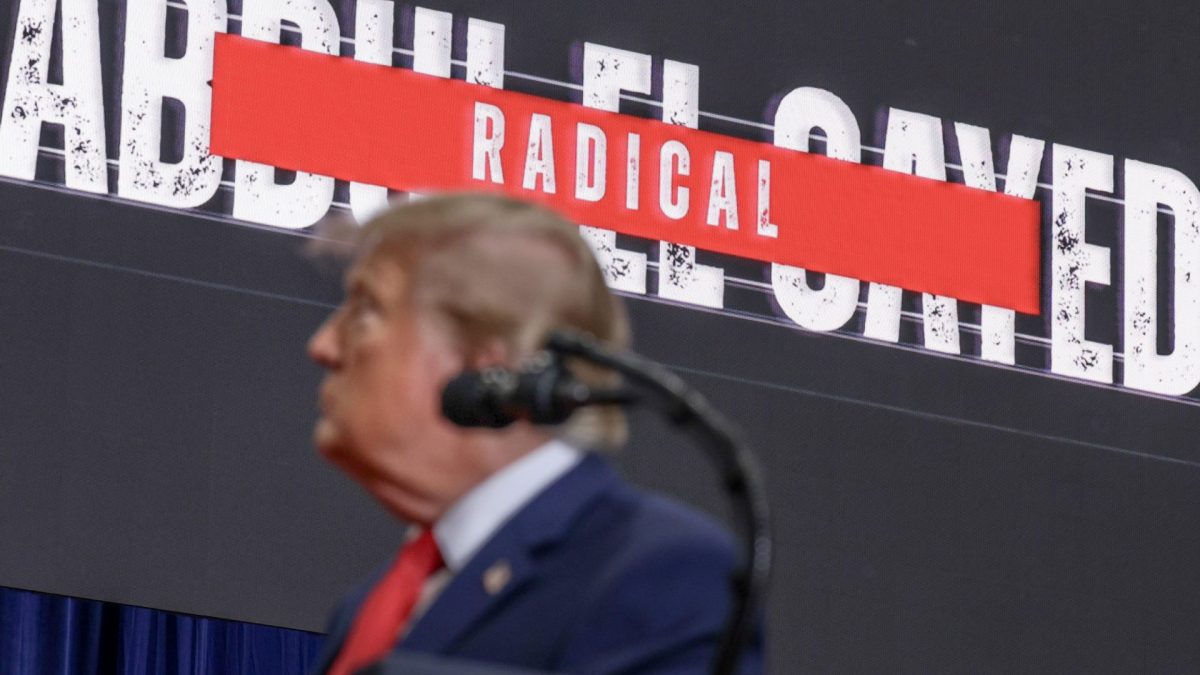
Even by the ugly standards of the Trump era, the campaign ahead of next week’s congressional midterm elections has been especially horrid. During a campaign rally in Michigan, Donald Trump slandered the Democratic Senate candidate Abdul El-Sayed as a “jihadist” and a “Muslim Brotherhood member.” Earlier this month, Trump used a anti-transgender slur to attack Democratic South Carolina Senate nominee Dr Annie Andrews, a highly regarded paediatrician who has treated adults for gender identity issues at the hospital she practises at in Charleston. And two weeks ago, immigration agents raided the Washington, DC home of the Minnesota congresswoman Ilhan Omar, purportedly in connection with a criminal fraud investigation concerning immigration paperwork. Omar, a frequent subject of Trump’s racist abuse, complained that the administration was attempting “to target political enemies and weaponise law enforcement”. In a bygone era, we used to refer to hard-hitting campaigns as “political slugfests”, “bruising battles” and “no-holds-barred contests”. However, this is the politics of the switchblade and the broken bottle, the gutter and the cesspool. Trump’s personal attacks on political opponents have been especially vicious. Trump has set the tone. This is his business model and brand. Shorts El-Sayed, a left-wing Democrat fighting to become the US’s first-ever Muslim senator, has been singled out more than any other candidate. El-Sayed, Trump has blasted, is a “jihadist” who was “on the side of the terrorists” and would “have to go through a metal detector before he’s allowed to go into the Senate”. Stopping El-Sayed reaching the US Senate has been likened by Trump to preventing Al-Qaeda hijackers boarding flights ahead on September 11th. Trump has claimed this Michigan-born former public health official is “a Muslim Brotherhood guy, 100 per cent”, and mockingly calls him “Mohammed.” Trump told a rally in Tennessee: “Somebody said, ‘His name isn’t Mohammed, it’s Abdul’. To me, it’s Mohammed. I’m the President. I can call him whatever the hell I want. To me, he’s Mohammed, and he’s a radical jihadist’.” Democratic nominee for Senate Abdul El-Sayed during a campaign event in Detroit (Photo: Paul Sancya/ AP) In the face of Trump’s Islamophobia, El-Sayed had proven himself a tough, counter-punching opponent. “My name is not the reason you can’t afford your gas,” said El-Sayed, focusing attention on the cost of living issues that have made Trump so unpopular. “I don’t care how he pronounces my name, I don’t even care that he remembers my whole name because he can just go on and call me ‘senator’ after November. That’ll be Senator Muhammad to you, bro.” Anti-Muslim demagoguery has long been an essential part of Trump’s arsenal. In 2015, during his first presidential campaign, he promised “a total and complete shutdown of Muslims entering the United States”. Ilhan Omar, the first Somali-American to win election to Congress, who became a naturalised US citizen in 2000, has been a frequent target of his misogyny and racism. During a rally in Ohio this month, Trump called her “a disaster” and told his moshpit of Maga faithful: “She comes in from a country without laws, without police, without military, where all they do is shoot each other. And she comes into our country, and she says, ‘I have a constitutional right’.” US Congresswoman Ilhan Omar’s home was raided by ICE agents this month (Photo: Oliver Contreras / AFP via Getty Images) In the Texas Senate race, Trump has taken aim at James Talarico, who stands a chance of becoming the first Lone Star state Democrat to win election to the US Senate since 1988. “TalaFREAKo,” Trump has labelled him, as well as claiming, in this famously carnivorous state, that he’s a vegan. Recently, Talarico, who is not vegan, took a break from campaigning to recover from flu. His absence fuelled Trump’s attacks. “I hear the guy has disappeared,” Trump claimed during a rally in Texas. “He’s sick because he’s forced to eat meat for political reasons and he’s throwing up all over the place.” “Where do you think they hid that little socialist?” the Republican Senate candidate Ken Paxton chimed in. Vice-President JD Vance has insinuated that Talarico is gay. “I love you too sir,” replied Vance after a male supporter voiced his admiration during a rally in Texas. “In a totally platonic way, to be clear. I’m the Vice-President, not James Talarico.” In the Ohio gubernatorial race, Trump backed a controversial attack ad made by GOP nominee Vivek Ramaswamy featuring the estranged mother of the Democratic candidate Amy Acton. On camera, Donna Arthur, who stood by the man criminally charged with raping her daughter as a child, claimed that Acton lied about her past. Acton alleged that, between the ages of nine and 12, her mother’s second husband sexually assaulted her, and her campaign has provided documents showing that he was charged with rape and was indicted by a grand jury, but fled before he could be tried. Amid calls from senior Republicans to pull the ad, Trump described it as “very powerful” and noted on Truth Social: “Frankly, anybody whose mother spoke about a daughter in that way would normally lead to the daughter being precluded from serving in Office, let alone the Office of Governor.” President Barack Obama greets Democratic Ohio gubernatorial candidate Amy Acton at a campaign rally on Saturday (Photo: Sue Ogrocki/ AP) Trump, like most presidents in midterm elections, is expected to suffer setbacks. Only four times since the Civil War in the mid-19th century has the presidential party not lost ground. This time, the stakes are especially high. If the Democrats win control of the House of Representatives, which is likely, and the Senate, which is now a possibility, they will be able to conduct investigations into alleged corruption within his administration and have subpoena power to pursue those inquiries. With a majority in the House, the Democrats could also impeach Trump for a third time (previously only two presidents were successfully impeached, Bill Clinton in 1998 and Andrew Johnson 130 years earlier – Richard Nixon resigned before the House voted). The closer the elections have come, the more desperate and savage Trump’s personal attacks have been on opponents. The fact usually safe Republican Senate seats are now competitive may also have stoked Trump’s hateful rhetoric. In Kansas, for example, he took aim at Democratic challenger Adam Hamilton, a well-liked pastor and the founder of the country’s largest United Methodist congregation. Trump called him a “bad person” and a “disgrace”. At the same rally, Trump resumed his attacks on El-Sayed and Omar, and promised the incumbent Republican senator Roger Marshall would fight against what he called “hostile third-world migrants”, “jihadists” and “communists”. Kansas has not returned a Democrat to the Senate in 94 years. Ordinarily, Trump would not even have had to campaign in this Republican bastion. It is hard to recall an uglier midterm congressional campaign, and worryingly we may be watching a prelude of what lies ahead. With the Republicans expected to suffer setbacks, Trump may try to disrupt the vote by dispatching federal agents to polling stations, interrupt the count, and contest results that go against the Republican Party. Meanwhile, Senior Democrats, including Senate Minority Leader Chuck Schumer and House Minority Leader Hakeem Jeffries, last week filed a lawsuit in federal court to prevent the Trump administration from usurping states’ authority to administer elections or trying to intimidate state and local election officials into complying with illegal demands. Presently, he is attacking Democrats. After polling day on Tuesday, the man who refused to accept his defeat in the 2020 presidential election could mount another assault on democracy.
All the ways Trump is trying to neuter his enemies
Full Article
Original Source
Read the full article at Inews →KhanList aggregates and links to publicly available news content. We do not host full articles from third-party sources. Always verify important information with original sources.