
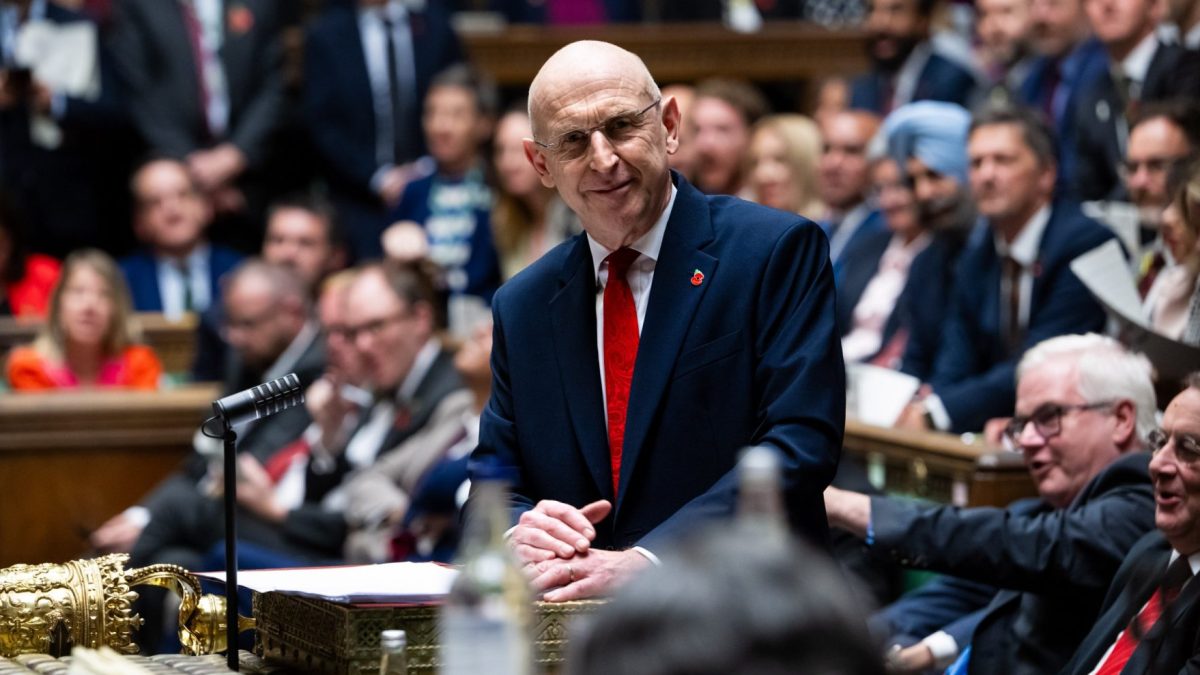
Working people will face hidden tax rises following the Chancellor’s Budget, despite his focus on offering “breathing space” for those struggling with the cost of living. John Healey promised to make Britain “more resilient” to global shocks and to help families with “everyday costs”, announcing a £100 payment to help with energy costs for 20 million households and a tax break for low income pensioners. But the Office for Budget Responsibility (OBR) has still warned living standards will be challenged by higher energy costs and a ballooning tax burden in the wake of the pandemic. Shorts The decision to keep income tax thresholds frozen until 2031 means millions of earners will be dragged into higher tax brackets, and millions more will pay tax for the first time. Meanwhile, the public will end up paying for the Chancellor’s decision to remove green levies from energy bills, and taxes on banks and landlords are likely to be passed onto consumers. Professor David Miles, a member of the OBR’s governing Budget Responsibility Committee, said that during the pandemic, Government borrowing massively increased because of the disruption to the economy and the interventions that were launched to help households and businesses. He said there is “no easy way” to close the gap between Government spending and tax revenue after the pandemic blew a hole in public finances. Prof Miles said that after the pandemic, the “lion’s share” of closing the deficit had come from tax hikes. He said the tax increase has already been “very substantial”, adding: “If you go ahead a couple of years, 6 per cent more of GDP is going in tax.” Here are all the hidden tax rises in Wednesday’s Budget. Energy bills The Chancellor announced a series of pledges to curb rising energy costs, promising the beginning of “radical reform of energy to reduce bills in the future”. This includes a £100 payment towards energy costs for up to 20 million households in council tax bands A to D, paid directly into bank accounts, and the removal of gas standing charges next year “or as soon as possible after”, Healey said. However, these fixed daily charges on gas bills will be shifted onto the price consumers pay for each unit of energy. Ministers want to extend the reforms to electricity standing charges in due course. The Treasury has claimed that 60 per cent of households will save an average of £45 a year. But the savings will only come after the big projected rise to energy bills in January. While lower users will gain the most, higher users – which includes large, low-income families – are likely to pay more than they currently do. Healey also promised to drive down energy bills in the longer term by removing the link between green levies and the cost of gas and electricity for the consumer. In his Budget speech, he said: “We will introduce a new Cost Control Framework to drive down all aspects of energy bills and I will scrap the upcoming Gas Shipper’s Obligation – a levy to fund hydrogen projects – and instead back those projects directly from government.” This means that the expected green levy on energy bills will not be introduced as planned. But if the Government commits to publicly funding hydrogen projects, the money will come out of general taxation. The cost would therefore hit taxpayers’ pockets in some way or another, though it is not clear yet exactly how. Millions pushed into higher tax bands Millions of people face being dragged into paying more income tax after the thresholds remained frozen at this year’s Budget. The Institute for Fiscal Studies (IFS) – the nation’s leading economics think-tank – warned that it was a “fiddly” Budget, with “very little that will move the dial on growth”. The effect, known as fiscal drag, occurs when tax thresholds remain frozen while wages rise – meaning people pay more tax as a greater proportion of their income becomes taxable or they are pushed into higher tax bands. Analysis for The i Paper by tax consultancy Blick Rothenberg suggests that frozen income tax thresholds will leave people earning between £20,000 and £50,000 facing a tax hit of £717 in 2026-27, rising to £814 in 2027-28. For someone earning £60,000, the estimated figure rises from £2,079 to £2,177, while those earning between £70,000 and £100,000 face a hit of £2,151 this year, increasing to £2,443 next year. Middle-income pensioners The Chancellor announced, as had been trailed earlier this week, that pensioners with income less than the full amount of the new state pension (£13,036.40 a year from 6 April 2027) would not have to pay income tax. However, middle and higher income pensioners face a squeeze due to related tax rules. Healey said that to avoid a “cliff edge” once a pension income exceeds the allowance, the Government would “gradually” reduce the allowance as income increases. The Government said this means those earning between £13,037 and £13,319 will receive “some Pension Tax Allowance and pay less income tax than you otherwise would”. But Sir Steve Webb, former pensions minister under the coalition-era government, said this means around 200,000 low-income pensioners are going to face a marginal income tax rate of 53 per cent. For each extra pound above the cut-off, they pay 20p in income tax and lose 33p in the tax rebate that those on lower incomes get, meaning each extra pound costs 53p in total, he said. Higher housing costs The Chancellor announced that the surcharge on bank profits would be temporarily doubled from 3 to 6 per cent and that landlords face a 4 per cent tax on rental profits and property income. But critics are warning higher costs will be passed onto renters and onto people securing mortgages. The OBR said Healey’s extra 2 per cent property tax increase, coming on top of 2 per cent announced by Rachel Reeves last year, “collectively risk leading to a steady rise in rents”. The UK’s economic forecaster said landlords “are likely to pass on more of these costs to renters in the long-run through a combination of some current landlords leaving, thereby giving more price setting power to remaining landlords, and greater long-run flexibility to raise rents”. The body warned that potential landlords are now also “less likely to enter the market, reducing long-run rental supply”, which risks a “long-term rise in rents” if demand outstrips supply. Former Tory Chancellor Sir Jeremy Hunt said increasing the bank levy will “make mortgages more expensive and the cost of living worse”. He wrote on X: “Bankers are an easy target but it is also risky: banks in London already face a total tax rate of 46 per cent, compared with 39 per cent in Frankfurt and just 28 per cent New York. Less profitable financial services [equals] lower long term tax revenue.” Announcing the tax, Healey thanked banks for their contribution to the economy, but said he needed to raise the surcharge “to pay for immediate support on energy bills”. “I’ve made my choice at this Budget: Asking a bit more of our banks to support ordinary people,” he said.
All the hidden tax rises and costs in the Budget
Full Article
Original Source
Read the full article at Inews →KhanList aggregates and links to publicly available news content. We do not host full articles from third-party sources. Always verify important information with original sources.