
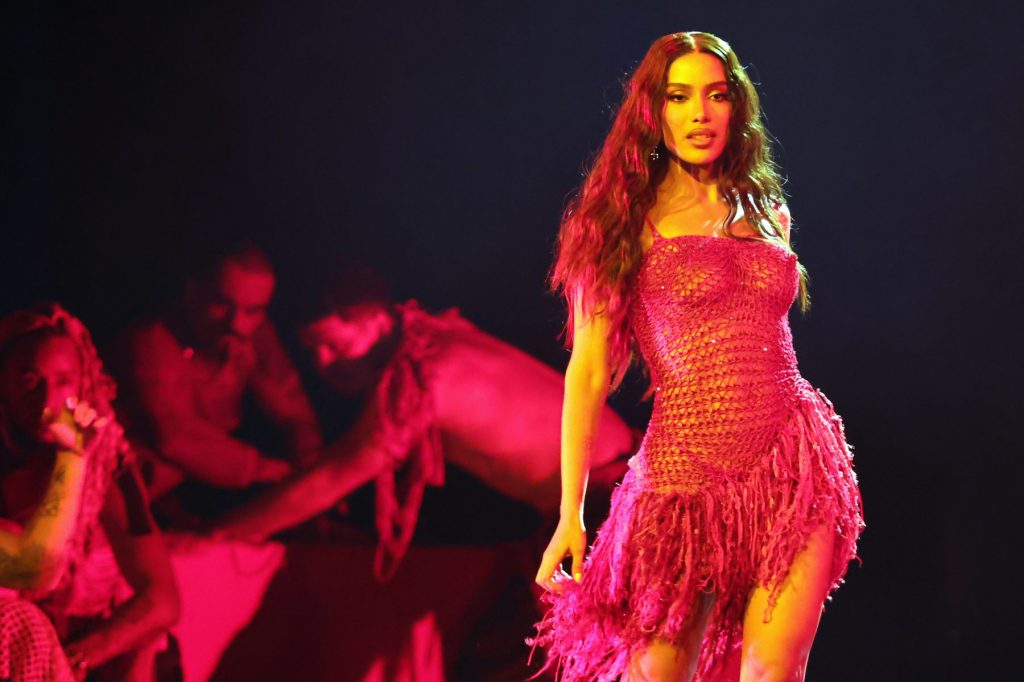
Which artists stood out at this year's ceremony? 11/13/2026 Anitta performs onstage during the 27th Annual Latin GRAMMY Awards at MGM Grand Garden Arena on November 12, 2026 in Las Vegas, Nevada. Kevin Winter/Getty Images for the The Latin Recording Academy The 2026 Latin Grammy Awards brought together some of the biggest names in Latin music for a night celebrating the sounds, stories and artists shaping the global music landscape. Presented Thursday (Nov. 12) at the MGM Grand Garden Arena in Las Vegas, the 27th annual ceremony featured a star-studded lineup spanning reggaetón, música mexicana, salsa, pop, rock and beyond, with performances that showcased the genre’s ever-expanding reach. Hosted by Roselyn Sánchez, the three-hour telecast welcomed a mix of established icons and rising stars, including Karol G, Rosalía, Daddy Yankee, Juanes, Carín León, Anitta, Feid, Milo J, Mon Laferte, Bad Gyal and Nathy Peluso, among many others. The evening also paid tribute to two towering figures in Latin music: the late salsa legend Willie Colón, whose groundbreaking contributions helped define the New York salsa movement, and the late Mexican songwriting icon José Alfredo Jiménez, honored in celebration of the centennial of his birth. Beyond the marquee names, the award ceremony reflected the breadth of contemporary Latin music, bringing together artists from across generations, countries and musical traditions. From the enduring influence of tropical rhythms to the continued evolution of urbano and the international rise of música mexicana, the lineup offered a snapshot of a musical landscape that continues to defy expectations. If you want to see a complete list of the winners, we got you. If you want to read what happened inside the Person of the Year event, who this year is Daddy Yankee, head here. But if you want to know which performances left the strongest impression, check out our list below, ranked. Carín León, Juanes & Vivir Quintana Keep It Simple Three distinctive voices from across Latin America came together for a performance that had more musical promise than memorable moments. Carín León, sporting his signature wide-brimmed hat, opened with “Desde Que Te Tengo,” bringing his unmistakable nasal twang to the stage. Juanes, looking effortlessly cool in a leather jacket, delivered a polished vocal performance on “Humano,” joined by Mexican singer-songwriter Vivir Quintana, whose deep vibrato, striking streak of white hair and all-black ensemble made her a compelling presence. The stripped-down instrumentation gave each artist room to shine, though the collaboration never quite developed the chemistry or dramatic momentum needed to stand out in such a competitive lineup. Rawayana, a Double Dose of Venezuelan Groove Rawayana brought their genre-blurring Venezuelan sound to the Latin Grammys with a medley of “Bendito” and “Inglés en Miami.” Backed by their live band and a sizable dance ensemble, the group leaned into the rhythmic versatility that has become its calling card. The pairing offered a lively change of pace, highlighting the band’s ability to move between Caribbean influences and contemporary alternative pop. Grupo Frontera, Heartbreak With a String Section Grupo Frontera brought their signature música mexicana sound to the stage with “Bye” and “Ojitos Bellos.” The arrangement incorporated violins, violas and cello alongside the band’s familiar instrumentation, adding an orchestral dimension to their emotionally driven repertoire. Rather than radically reinventing their sound, the performance emphasized the melodic sensibility that has helped make the Texas-based group a major force in contemporary regional Mexican music. Feid Bridges Reggaetón and Hip-Hop Feid assembled a hip-hop-minded lineup for a medley of “Se Puso Feo,” “Poder” and “Gracias,” joined by Baby Ranks, Divino, Lil Supa and legendary producer DJ Premier. The combination connected contemporary urbano with reggaetón’s earlier generations and hip-hop’s foundational influence. With DJ Premier behind the decks, the performance’s most intriguing element was its cross-generational cast. Xavi Puts His Música Mexicana Versatility on Display Xavi showcased two sides of his música mexicana repertoire with “Dosis” and his Latin Grammy-winning “No Capea.” His expansive live band brought together accordion, bajo quinto, tololoche, guitars and brass, while a dozen dancers added a choreographed dimension to the set. The instrumentation reflected the increasingly flexible sound of a younger generation of Mexican music stars, blending traditional regional elements with a contemporary stage presentation. Silvana Estrada’s Feminine Force Armed with her string instrument and a voice capable of stopping time, Silvana Estrada brought the richness of her Mexican folk roots to the Latin Grammys stage. Wearing a shimmering pistachio-green gown, the singer-songwriter delivered a deeply affecting rendition of “Dime,” accompanied by the warm interplay of cuatro venezolano, acoustic guitar, upright piano and woodwinds, with additional strings enriching the arrangement. Estrada demonstrated why she’s become one of the most compelling voices in contemporary Latin folk, pouring raw emotion into every note while honoring the traditions that shaped her artistry. Jorge Drexler Lets the Words Do the Talking Sometimes the simplest performances have the most to say. Jorge Drexler brought the poetic brilliance of his songwriting to the Latin Grammys with “Las Palabras,” a stripped-down number that drew from Uruguay’s rich murga tradition. Accompanied by a marimba player and a 12-member chorus, some sporting traditional murga-inspired face paint, the singer-songwriter let the music breathe through gentle harmonies and rhythmic finger snaps. A translucent stage floor added a subtle visual dimension, but the real spectacle was his lyricism. “La gente pasa, pero las palabras quedan,” he sang, celebrating language’s enduring power. It was a beautiful reminder that Drexler’s greatest instrument has always been his poetry. Elena Rose’s Warrior-Goddess Moment Elena Rose summoned the energy of a Greek warrior goddess for “Alma,” surrounded by female dancers outfitted in metallic silver armor, helmets and swords. With her signature platinum-blonde hair cascading past her waist, the Venezuelan singer commanded a stage illuminated by dramatic flashes of lightning. The gladiator-inspired choreography gave the performance a fierce, mythological edge. Camila Fernández Keeps the Mariachi Tradition Alive Camila Fernández embraced her family’s musical heritage with a traditional rendition of “Serpiente de Cascabel,” backed by a full mariachi ensemble. Pregnant and radiant onstage, the Mexican singer delivered a beautiful, assured vocal performance, letting the genre’s familiar instrumentation take center stage. While the presentation offered no surprises, there was something meaningful about watching a woman carry the mariachi tradition forward with such conviction. Banda Los Recoditos Keep It Classic Banda Los Recoditos represented the enduring power of banda sinaloense with “Zúmbale.” Featuring their full 16-member ensemble, the performance placed the genre’s unmistakable brass and percussion at the forefront. Amid a ceremony filled with elaborate collaborations and stylistic crossovers, their appearance offered a straightforward celebration of one of música mexicana’s most recognizable traditions. Kany García’s Enchanted Fairytale Straight out of an enchanted storybook, Kany García transported the Latin Grammys audience into a whimsical world of childhood wonder and heartfelt storytelling. Dressed in a dreamy pink feathered gown, the Puerto Rican singer-songwriter performed “La Niña Que Fui” against the backdrop of a quaint cottage, with a little girl perched on its entrance steps and the warm glow of a bonfire adding to the magical atmosphere. Accompanied by delicate keyboard melodies and nylon-string guitars, García delivered an intimate, emotionally rich performance that reflected her gift for turning personal narratives into universal experiences. The fairytale-like setting offered a fitting visual complement to her poignant lyrics, evoking the tenderness of reconnecting with one’s younger self. Mon Laferte’s Femme Fatale Fantasy traight out of a vintage crime noir, Mon Laferte transformed the Latin Grammys stage into a smoky, seductive scene dripping with drama. With her bleached curls, bold tattoos, red lipstick and black dress, the Chilean singer embodied the femme fatale aesthetic of her latest era. A cigarette in hand and a circular spotlight casting an old-Hollywood glow, she sang with every ounce of heartbreak, surrounded by a dozen dancers in white bodysuits striking stoic poses. The theatrical tension built until her final, aching wail of “Fatale!” — a deliciously dramatic finish that felt ripped from the silver screen. Karol G’s String Orchestra Moment Trading urbano rhythms for the elegance of música mexicana, Karol G delivered a striking reinterpretation of “Ese Hombre Es Malo,” opening with a sweeping string arrangement before introducing the unmistakable strumming of huapango and the bright accents of wind instruments. The Colombian superstar looked every bit the leading lady in a shimmering, figure-hugging gold gown that flared at the bottom, with a charro-inspired jacket seamlessly incorporated into the design. But it was her voice that commanded attention. Singing in a higher register towards the end, with controlled vibrato and impressive conviction, she embraced the song’s traditional influences without sacrificing her own identity. Elegant, assured and refreshingly unexpected, the performance revealed another dimension of La Bichota’s artistry. Willie Colón’s Salsa Legacy Takes Center Stage The late Willie Colón’s towering salsa legacy received a spirited tribute that brought together generations of tropical music talent. La India, dazzling in a shimmering black gown with dramatic ruffles, delivered powerhouse vocals, while Fonseca and fellow performers carried the celebration through classics including “Idilio” and “El Gran Varón.” Images of Colón alongside Celia Cruz illuminated the backdrop, honoring one of salsa’s most iconic partnerships. Nathy Peluso, looking fabulous in a polka-dot dress, brought her commanding salsera energy alongside Luis Figueroa for “Usted Abusó.” With a roaring brass section, infectious percussion and a cast spanning musical generations, the tribute was a joyful reminder of why Colón remains one of salsa’s defining architects. Rosalía’s Divine Opening Rosalía opened the 2026 Latin Grammys like a Greek goddess descending from Mount Olympus. Dressed in a shimmering gold gown, the Spanish superstar delivered an elaborate medley from her album LUX, commanding the stage with regal presence atop a crown-like structure. Around her, dozens of dancers moved in mesmerizing synchronization, their intricate choreography punctuated by rhythmic clapping and dramatic formations that gave the performance an almost ritualistic quality. Blending classical grandeur with contemporary flair, Rosalía transformed the opening number into a spellbinding spectacle, setting an ambitious tone for the night ahead. From Rock to Ranchera, José Alfredo Lives On A century after his birth, the late, great José Alfredo Jiménez’s songs proved remarkably adaptable in a tribute that bridged rock, pop and traditional Mexican music. The Warning kicked things off with a muscular, guitar-driven rendition of “Te Solté la Rienda,” bringing a welcome jolt of rock energy to the ranchera classic. Reik followed with “La Media Vuelta,” before Sofía Reyes and Yami Safdie joined forces for “Si Nos Dejan,” with musical director Edgar Barrera on electric guitar. But Camila Fernández brought the tribute home, honoring her grandfather’s musical lineage in a full mariachi ensemble, complete with an oversized sombrero, for “El Rey.” Her spirited cry of “¡Arriba José Alfredo, y mi tata también!” made the moment especially personal. A fitting celebration of a songbook that continues to transcend generations — and genres! Milo J Brings South America’s Murga Tradition to Life There was something almost theatrical about Milo J’s performance, which unfolded like a dream somewhere between a neighborhood carnival and a surreal stage play. Performing “Solifican12” and “Gil,” the young Argentine artist was joined by the formidable murga troupe Agárrate Catalina, whose painted faces and elaborate headpieces brought a striking visual and musical dimension. Dressed in a loose brown ensemble and an Andean-style knit cap, Milo delivered his verses with a deep, arresting voice that seemed to carry wisdom beyond his years. Argentine producer Gustavo Santaolalla, seated with a charango, added a beautiful folkloric texture. With a vintage car, a rooftop set piece and swirling wind instruments completing the scene, the performance was an imaginative meeting of contemporary Argentine music and South American tradition. Anitta’s Hypnotic Fire Water and fire collided in Anitta’s spectacular Latin Grammys performance, which showcased the Brazilian superstar’s almost superhuman athleticism and magnetic stage presence. Dressed in an ornate gold ensemble, she began singing in Portuguese with “Ternura” and “Desgraça” against a cascading waterfall backdrop, evoking the spiritual and cultural imagery of her EQUILIBRIVM era. The atmosphere soon turned fiery as she launched into “Choka Choka,” her collaboration with Shakira, and “Meia Noche”, surrounded by dancers whose movements recalled Afro-Brazilian dance traditions. With a mischievous, almost demonic cackle, Anitta sent the energy into overdrive, effortlessly singing while executing increasingly frenetic choreography. As the male and female dancers converged around her for an explosive finale, she threw herself to the ground in a breathtaking display of physical prowess. Daddy Yankee’s Victory Lap Through Reggaetón History Leave it to the Big Boss to turn his Latin Grammys Person of the Year celebration into an eight-minute journey through reggaetón history. Draped in a massive Puerto Rican flag and sporting an embroidered white jacket and a sparkling Michael Jackson-esque glove, Daddy Yankee commanded a sprawling medley that moved from an Old San Juan-inspired village to a graffiti-covered garage. Bizarrap manned the turntables, Bad Gyal brought diva energy to “Dura,” and Feid joined the action as classics like “Despacito,” “Rompe” and “Lo Que Pasó, Pasó” kept the audience singing along. The international guest lineup, including Diljit Dosanjh, French Montana and LL Cool J, underscored reggaetón’s global reach, with Dosanjh’s Punjabi rhythms fitting surprisingly naturally into the mix. By the time LL Cool J traded verses with Yankee on the explosive “Gasolina” finale, the entire production felt like a coronation. Few artists could make such an ambitious spectacle feel so effortless — or remind an entire arena just how many anthems they’ve given the world. Get weekly rundowns straight to your inbox Sign Up
All the 2026 Latin Grammys Performances, Ranked
Full Article
Original Source
Read the full article at Billboard →KhanList aggregates and links to publicly available news content. We do not host full articles from third-party sources. Always verify important information with original sources.