
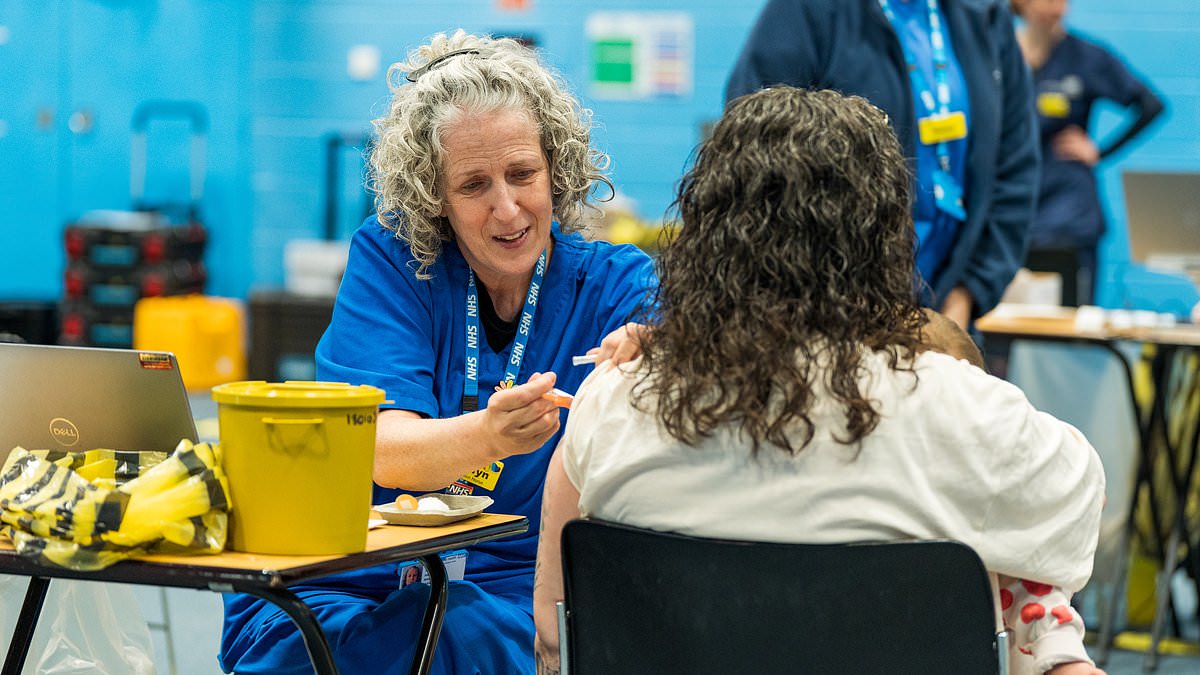
Teenagers should be offered a vaccine on the NHS to protect against deadly meningitis B (menB), Government advisers have recommended.Experts from the Joint Committee on Vaccination and Immunisation (JCVI) today said youngsters should get the jab at around 15 years old.It comes after a series of outbreaks of meningitis, with the most serious being in Kent in March this year which tragically left two teenagers dead.The new appeal needs approval from the Government and is separate from an announcement last month on a summer vaccination programme, which still stands.Around one million Year 13 pupils and those under 25 starting university this autumn are being offered the menB vaccine on the NHS this summer.On top of this, the JCVI – an independent group of scientific experts from England, Scotland, Northern Ireland and Wales – is now recommending that children who had the menB vaccine as babies should get a booster at around age 15.This would apply to children born on or after May 1, 2015, with the first group becoming eligible in 2030. The vaccine protects against meningococcal B bacteria, which can cause serious, life-threatening problems including inflammation of the lining of the brain and sepsis. All teenagers should be offered a vaccine on the NHS to protect against deadly meningitis B (menB), Government advisers have recommended This can lead to life-changing disabilities such as amputations, hearing loss and brain damage, and in some cases can prove fatal.The bacteria that cause the disease can be spread through close contact with an infected person.Juliette Kenny, 18, died in the Kent outbreak and her family have been campaigning for teenagers and young people to be routinely given access to the menB vaccine.The Kent outbreak was the fastest-growing and largest seen in the UK, and other smaller clusters of meningitis in young people since then have been bigger than expected.Children who missed the vaccine as babies should be offered two doses in the new JCVI recommendation.The experts also support offering two doses of the vaccine at around age 15 to children born on or before April 30, 2015.These children were not offered the vaccine on the NHS as babies, so vaccinating them as teenagers would protect them when they are next at higher risk of disease.Recommendations for a catch-up programme – so that anyone who misses their vaccine can still be vaccinated – have also been made.The emergency rollout to Year 13 pupils agred between 17 and 18 and those under 25 starting university this autumn will still go ahead, with two doses being offered to those in this group.Students in their first year of university have a risk that is about seven times higher than that of young people of a similar age who do not go to university.Young people are being offered their first dose from July 20 with a second dose given in August. Two doses, at least 28 days apart, are needed for full protection.Juliette Kenny, 18, tragically died in March after contracting meningitis Professor Wei Shen Lim, chairman of the JCVI, said: 'Following the meningitis outbreaks in early 2026, a one-off programme for two-doses of menB vaccine is being offered to eligible young people this summer. 'We encourage everyone who is eligible to book an appointment online to receive the vaccine at a local pharmacy, in time for the second dose to be received before heading off to university or college.'For protection, two doses of the menB vaccine are necessary, at least 28 days apart.'Additionally, JCVI has now also provided Government with a recommendation and additional considerations for a future routine menB adolescent vaccination programme for those aged around 15 years.'(The Department of Health) will now consider this with a decision to be made in due course.'Data suggests the menB vaccine is highly effective, providing strong protection for at least five years after vaccination.Cases of menB tend to peak in October to November each year.Dr Shamez Ladhani, consultant epidemiologist at the UK Health Security Agency, has said previously the likely reason why there have been more meningitis clusters this year is that population immunity against menB is currently low.'The most likely explanation is that we actually have had 25 years of declining cases of menB disease,' he said.'Now, meningococcal disease goes through cycles of 20 to 30 years.'It goes down when you have good population immunity, and then that immunity goes down and new strains appear where the population doesn't have immunity against these strains, and then cases start going up again.'Dr Tom Nutt, chief executive of Meningitis Now, described the recommendation as a 'significant moment in the fight against meningitis'.He added: 'We have consistently called for the vaccination of this age group, who remain at increased risk of MenB disease.'Today's recommendation is an important step towards ensuring that far more young people are protected from this devastating disease.'Dr Nutt called for the programme to be 'implemented as soon as possible to ensure that every eligible young person can benefit from this potentially life-saving vaccine without unnecessary delay'.He said: 'Behind today's recommendation are countless families whose lives have been forever changed by meningitis.'Many have channelled their grief, loss and lived experience into tirelessly campaigning for change, determined that other families should never have to endure what they have been through.'Today we remember all lives lost to meningitis and recognise this landmark step takes us closer to a world where no-one has to experience this devastating disease.'
All teenagers should be given meningitis B jab, health watchdog urges, following deadly Kent outbreak
Full Article
Original Source
Read the full article at Dailymail →KhanList aggregates and links to publicly available news content. We do not host full articles from third-party sources. Always verify important information with original sources.