
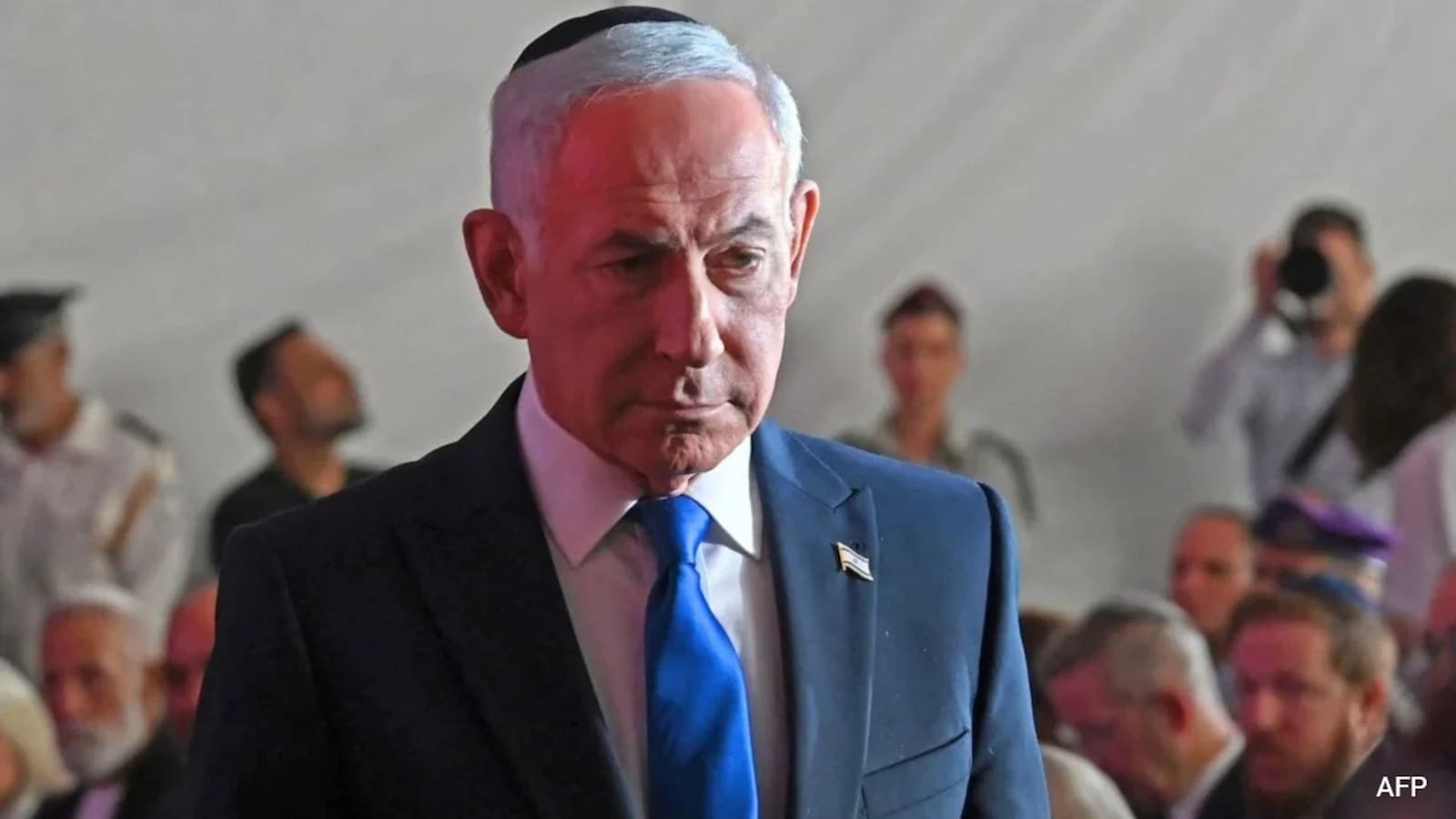
Tel Aviv: Israelis are heading to the first national elections since Hamas' October 7, 2023, attack in what is widely seen as a referendum on Prime Minister Benjamin Netanyahu's leadership. The vote is seen as the most consequential in the Jewish nation's 78-year history, as the results could mark the end of the decades-long political career of Netanyahu --Israel's longest-serving leader. Netanyahu, his party and his governing coalition are locked in a tight contest even after becoming the first Israeli legislature since 1988 to complete a full four-year term without early dissolution.When Will Israel VoteIsrael will vote tomorrow, October 27, to choose all 120 members of the 26th Knesset. Election Day is a public holiday in Israel, with polls scheduled to open at 7 am local time and close at 10 pm in most parts of the nation. Hours will be slightly reduced in some small communities, hospitals and prisons. All Israeli citizens aged 18 or older who are registered to vote and have a valid identification, like a passport, driver's licence or Israeli identification card, will be allowed to vote. But unlike many democracies, Israel does not have a postal voting system, and citizens who are not present in the country would not be allowed to cast a vote. Official results are due on 4 November. How The System WorksIsraelis vote for a party list, not a candidate. Every party creates a ranked list of its candidates on a single ballot, letting voters elect the party or the slate. The leader of the party with the most votes could become the country's next prime minister, though it is not automatic. Israel's electoral system uses nationwide proportional representation. To gain a place in Parliament, a party must receive at least 3.25 per cent of the valid votes. About 10 parties are expected to clear that electoral threshold.A party needs at least 61 seats to form the government, and no party has ever won that alone. After the vote, parties get 28 days, extendable by up to 14, to assemble a coalition. If nobody manages it, the country votes again. This is the sixth election since 2019, which is why "who finishes first" matters less than "who can reach 61". How the Government Formed?In Israel's 78-year history, no single party has ever won a majority. This means parties must form a governing coalition of at least 61 lawmakers. Within seven days after the election results are announced, Israel's president, who mostly plays a symbolic role, meets the elected representatives of different factions.The president will assign a member of the Knesset, who is usually the leader of the party or faction that has won the most seats, to form a government. That candidate is then given 28 days to negotiate with other factions, forge alliances and get the Knesset's approval in a vote of confidence to form the government. If they fail to do so, the party or the coalition can request a 14-day extension to the deadline.If that effort fails, the president can select another candidate, and the process will be repeated. If the second try fails as well, the third selected candidate would be granted 14 days to form a government. If that fails as well, new elections would be announced.Who Are The Main Contenders?In power for much of the time since 2009, after a first stint as prime minister in the 1990s, Netanyahu has become the face of Israel abroad and a polarising figure at home. Supporters hail Netanyahu as "King Bibi" and see him as the strong leader Israel needs to defend itself in a hostile region. But wanted by the International Criminal Court over alleged war crimes in Gaza, which he rejects, and on trial in Israel on corruption charges which he denies, he is fighting for his political life. Opinion polls have pointed to a sharp drop for his Likud party since the October 7 attack, which shattered Netanyahu's security credentials.Netanyahu has relied on two ultra-Orthodox Jewish parties, United Torah Judaism and Shas, for his political survival for years. Their demands for their community to be mostly exempt from compulsory military service, along with their low participation in the workforce and reliance on state benefits, have angered many Israelis, all the more so at a time of war.Among Netanyahu's rivals is former military chief Gadi Eisenkot, who lost a son in Gaza combat. Eisenkot, 66, has projected an image as a political outsider, soldier and security hawk whose humble background and family sacrifices stand in vivid contrast to Netanyahu's decades in high office and lingering corruption cases. He heads a new centrist party called Yashar, Hebrew for "straight" or "honest".Former Prime Minister Naftali Bennett, 54, a right-wing former commando, former Netanyahu aide and high-tech millionaire, is another strong contender for the top post. Bennett has joined forces with centrist former premier Yair Lapid. Their new party is called Together, and its messages have focused on healing a traumatised nation and getting the country back on track. Their alliance, despite being on opposite ends of the political spectrum, ousted Netanyahu in a 2021 election.Former Defence Minister Avigdor Lieberman, 68, who was once a close ally of Netanyahu, is not standing opposite him. Even more hawkish than his former boss, Lieberman quit Netanyahu's government in 2018, accusing the prime minister of being too soft on Palestinian militants in Gaza, and has become one of Netanyahu's sharpest critics. His party, Israel Our Home, draws much of its support from the country's ex-Soviet immigrant community.Former general Yair Golan, 64, hailed for his rescue of people from one of the Hamas October 7 attack sites, is leading the Democrats against Netanyahu. His party was founded on the moribund remnants of Israel's historical Labour Party and smaller left-wing Meretz.Parties which are not clearly aligned with either side could tip the balance in favour of Netanyahu or his rivals. They include Raam and the Joint List, the two parties that represent Israel's 20% Arab minority. Along with them are a new right-wing party called People of Israel and a centre-right party called The Reservists, both of which have been wavering in opinion polls.
All About Israel's High-Stakes Election To Decide Netanyahu's Future
Full Article
Original Source
Read the full article at Ndtv →KhanList aggregates and links to publicly available news content. We do not host full articles from third-party sources. Always verify important information with original sources.