
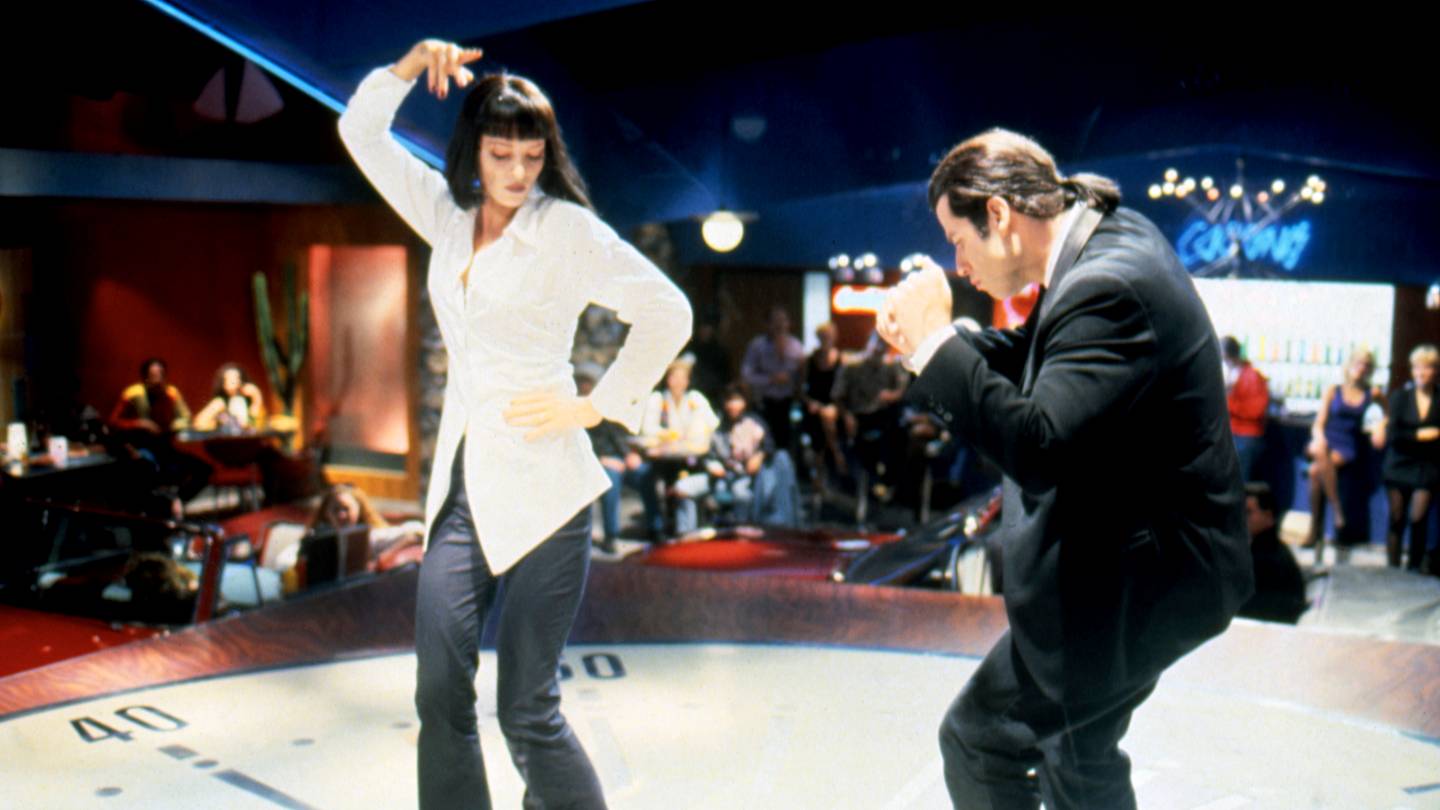
There are few filmmakers who have turned their personal taste in movies into as recognizable a cinematic language as Quentin Tarantino. His films are all love letters to the movies he grew up watching—be they spaghetti Westerns, kung fu epics, exploitation cinema, or pulpy genre films—many of which were movies that didn’t usually receive much recognition from critics. Sure, he might borrow a lot of the ingredients, but he rearranges them into something that’s distinctly his own, and often uses familiar genre conventions to explore the mythology of Hollywood. He also has a knack for making seemingly throwaway conversations feel as important as a shootout, and for turning a well-placed needle drop into an event in itself.Tarantino's opinions about modern cinema may have become increasingly controversial in recent years, but the films themselves remain a formidable body of work. With his self-imposed ten-movie limit still hanging over him, it might be several more years until we see his final one. But this also makes it a good time to revisit his filmography to rank every one of his movies. 9. Death Proof (2007)Death Proof is Tarantino at his most deliberately “trashy,” and that is both part of its appeal and maybe one of its limitations. It was made as part of the double feature Grindhouse alongside Robert Rodriguez's Planet Terror, and the film recreates the rough edges of exploitation cinema with its scratched prints, missing reels, and abrupt edits.The first half of the movie lures viewers into expecting the familiar rhythm of a 1970s slasher, with Mike (Kurt Russell) preying on a group of unsuspecting women. Then the second half subverts the trope and introduces a new group of women who are not helpless victims; they’re physically capable and more than willing to turn the tables on Mike. Death Proof is probably the least good film in Tarantino's filmography, but even then, it's a very solid movie.8. Kill Bill (2003–2004)Tarantino considers Kill Bill to be one movie, much to the dismay of many fans. But fine, we'll indulge him. Both chapters are excellent, although Volume 1 has a slight edge thanks to the narrative excitement of the Bride's revenge missions. The film is a sprawling tribute to the cinema that shaped him, taking inspiration from Shaw Brothers’ kung fu movies, Japanese samurai films, spaghetti Westerns, and even a bit of anime. The influence of the Japanese revenge classic Lady Snowblood is especially noticeable. Volume 2, meanwhile, slows things down and has a bit more of a spaghetti Western vibe (with plenty of martial arts). 7. Jackie Brown (1997)Jackie Brown is probably Tarantino's most underrated film, partly because it arrived after Pulp Fiction and might not have lived up to those same expectations. Adapted from Elmore Leonard's novel Rum Punch, it trades in the elaborate criminal mythology of his previous movie for a more grounded story about a flight attendant (Pam Grier) trying to outsmart a dangerous gunrunner, along with the law enforcement agents watching him. The film is also a homage to blaxploitation cinema of the 1970s. The ensemble cast is exceptional, especially Robert De Niro’s performance as a miserable, increasingly frustrated ex-convict. 6. The Hateful Eight (2015)Following Django Unchained, Tarantino returned to the Western genre with a pretty claustrophobic film. The Hateful Eight traps a collection of bounty hunters, fugitives, and strangers inside a Wyoming haberdashery during a blizzard.Where Django Unchained is a grand adventure driven by liberation and revenge, this film is cynical and aggressively unpleasant. Its characters are rarely trustworthy, even the “protagonists.”The movie was shot in Ultra Panavision 70mm, a very wide format with a 2.76:1 aspect ratio that had largely disappeared from mainstream filmmaking at the time. The expansive landscapes surely look spectacular, but the wide frame also helps make the cramped interior scenes visually striking and allows several characters to fit in the same composition.Ennio Morricone's score goes to great lengths to add a huge sense of dread and isolation, which won him his first competitive Academy Award for a film score. The third act gets a little messy and maybe reveals its hand a bit too soon, but the performances, cinematography, and music keep this a hugely entertaining Western.5. Reservoir Dogs (1992)A debut feature film rarely showcases a filmmaker's defining style and personality as confidently as Reservoir Dogs did. Made on a modest budget, Tarantino's first movie follows a diamond heist that goes wrong, although the actual robbery is never shown. Instead, the film moves between the surviving criminals' warehouse hideout and flashbacks that slowly reveal how the operation fell apart. This narrative device tells viewers exactly what kind of storytelling Tarantino likes—the mechanics of the crime matter less than the people and the air of suspicion involved, and the conversations that expose them. Who needs to see how the robbery went when the aftermath is this much more entertaining?The opening scene is also a perfect example of the filmmaker's approach to dialogue. The characters talk about everyday nonsense with the confidence of people who have known one another for years.4. Pulp Fiction (1994)Calling Pulp Fiction Tarantino's magnum opus is hardly an original observation, but its reputation as a fan favorite is well deserved. The film takes a collection of Los Angeles crime stories and rearranges them into a nonlinear puzzle, and allows characters to disappear from the narrative only to return in unexpected places. Thanks to this, Vincent Vega can abruptly die in the middle of the story, and an encounter in a diner that occurs early in the film's chronology can become its final scene. The structure isn’t all that easy to pull off, but the movie does it. John Travolta's career-reviving performance as Vincent, Samuel L. Jackson's Jules, Uma Thurman's Mia, and Bruce Willis's increasingly desperate Butch form a cast that understands the film's rhythm instinctively. Other Tarantino films may surpass it in individual sequences or performances, but only some capture so many of its highs at once. 3. Inglourious Basterds (2009)Few Tarantino films contain as many scenes that could stand alone as masterclasses in sheer tension as Inglourious Basterds. Christoph Waltz's Landa is a major reason so many of these scenes work, but Mélanie Laurent, Michael Fassbender, Diane Kruger, Brad Pitt, and the rest of the ensemble are equally memorable in their own ways.You might not realize that the film is around 70% non-English. German, French, and Italian are all naturally woven into the dialogue. The tavern sequence (with Michael Fassbender’s character) is especially effective since the characters' ability to pass as someone they're not depends on getting small linguistic and cultural details right.Instead of playing out like a standard World War II drama, the movie subverts expectations by letting the characters rewrite history in an explosive finale inside a movie theater, and ends on a fittingly high note. 2. Once Upon a Time in Hollywood (2019)Anyone expecting your usual fast-moving Tarantino movie might find Once Upon a Time in Hollywood surprisingly patient and tame in comparison. Much of the film follows actor Rick Dalton and his stunt double, Cliff Booth, through an ordinary stretch of life (and its mundane tasks) in late-1960s Los Angeles. Leonardo DiCaprio and Brad Pitt have terrific chemistry, with Rick's insecurity and Cliff's unshakable cool creating a friendship that feels genuine. The film's recreation of 1969 Hollywood is pretty detailed, from its billboards and radio broadcasts to the television shows and movie theaters spread across the city. Just like with Inglourious Basterds, the movie eventually rejects the historical record in favor of a revisionist ending, turning the Manson family into the targets of a violent finale that completely pays off. 1. Django Unchained (2012)Django Unchained is Tarantino’s absolute best. Here, he’s operating with the confidence of a filmmaker who knows exactly how to make a scene land. Its story of a formerly enslaved man teaming up with a bounty hunter to rescue his wife from a plantation owner has the makings of a grand Western adventure, but the film's greatest scenes are often the individual encounters. The writing is also among Tarantino's strongest. The film also borrows heavily from the Italian Western tradition, beginning with Luis Bacalov's theme and drawing on the visual language of Sergio Corbucci's 1966 classic, Django. Its soundtrack is particularly interesting. Rather than having a traditional score, it combines older Western compositions with blues, soul, and even contemporary hip-hop. The modern tracks might seem an odd fit on paper, but they give the film an energy that fits with its revisionist approach to history. When "100 Black Coffins" starts playing, it's hard to imagine a more fitting choice.Few movies have turned a familiar genre into such a wildly elevated narrative experience.
All 9 Quentin Tarantino Movies, Ranked
Full Article
Original Source
Read the full article at Mentalfloss →KhanList aggregates and links to publicly available news content. We do not host full articles from third-party sources. Always verify important information with original sources.