
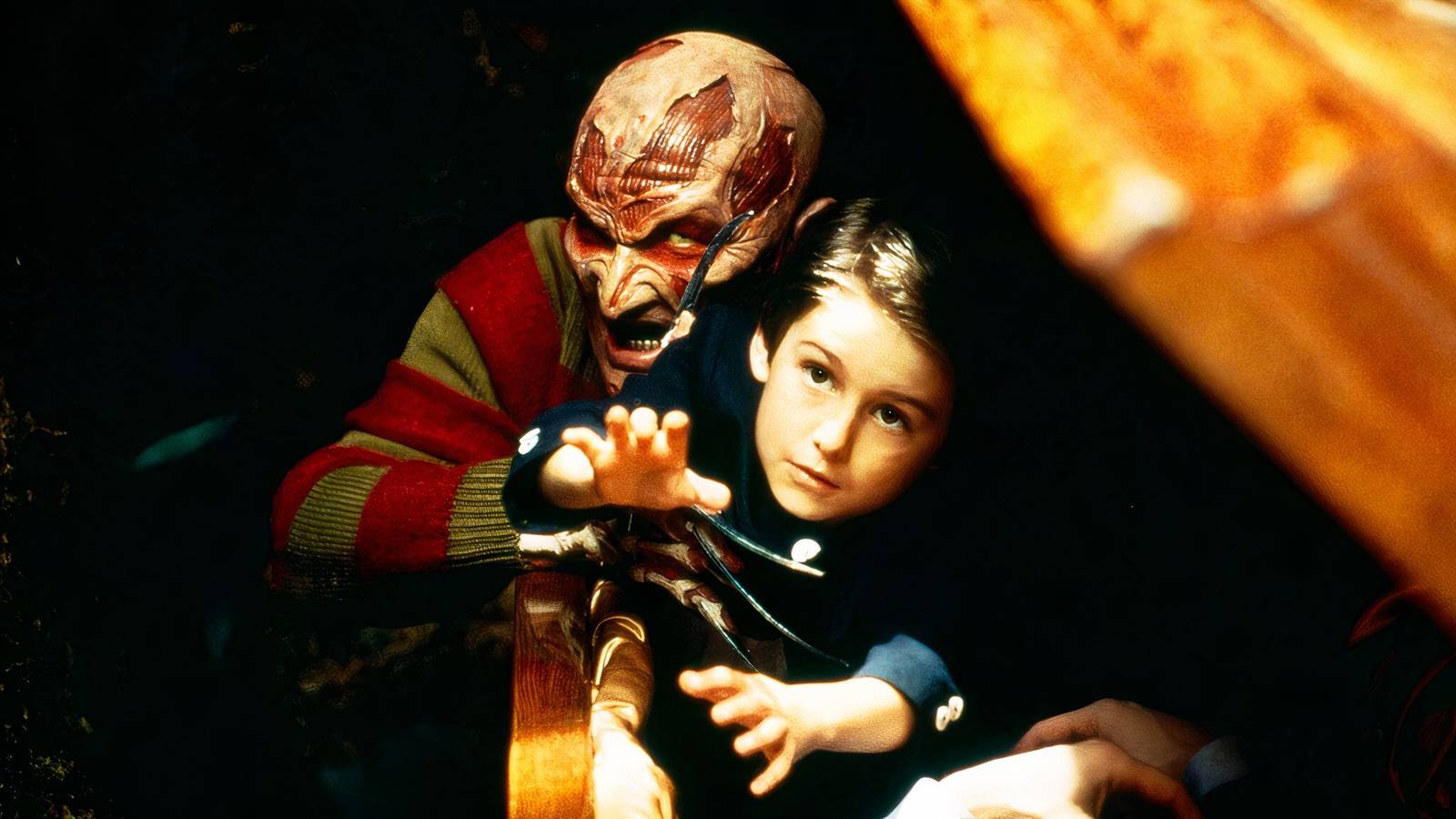
Published Oct 3, 2026, 2:30 PM EDT Padraig is a Senior Features Writer and has been part of Screen Rant since 2017. Padraig is a writer, editor and retired Game of Thrones extra who has been writing about movies and TV online for over a decade. He has also written for The Irish Times, Den Of Geek, Little White Lies and many more. It's pronounced Paw-rick, BTW. It's simple enough to rank the A Nightmare on Elm Street saga by quality, but how do they stack up in terms of scares? A glut of slasher movies followed the success of John Carpenter's groundbreaking Halloween in 1978, leading to the subgenre almost burning itself out. That changed with one Wes Craven movie: A Nightmare on Elm Street. The incredible hook for this 1984 slasher saw a group of teens being stalked in their dreams by a vengeful, badly burned killer dubbed Fred Krueger (Robert Englund). Craven's original Nightmare on Elm Street movie injected the genre with a supernatural twist, and Freddy himself soon became an icon. In hindsight, it's bizarre to track how such a monstrous figure became so beloved throughout the decade. That largely speaks to the talent of Robert Englund, who managed to make Krueger both terrifying and funny. While fans await word of a possible Nightmare on Elm Street reboot, October is the perfect month to revisit the series. Like any horror saga it has its share of duds, and it's interesting to chart how, once the series turned Freddy into a comedian, how quickly any genuine fear drained out of it. 9 A Nightmare On Elm Street 4: The Dream Master (1988) Renny Harlin (Die Hard 2: Die Harder) directed the fourth entry, The Dream Master, and intentionally set out to make Freddy the lead character. Harlin wanted to double down on the humor and visual effects that the third entry pioneered, in addition to fully embracing the colorful MTV style that was so popular at the time. The result is arguably the most dated and garish A Nightmare on Elm Street, which is still jolly good fun. It's filled with likable characters and creative setpieces, but one thing it's definitely not is scary. Like, at all. Some of the kills are gooey and gross, but this 1988 sequel has little genuine tension. It's the entry that officially made Freddy the star over his teenage victims - for better and worse. 8 A Nightmare On Elm Street (2010) This 2010 remake of A Nightmare on Elm Street always had a steep task to live up to the original. That includes recasting Englund with Jackie Earle Haley, who tries his darnedest to bring some new to the character. The 2000s were a famous era for classic horror titles getting glossy remakes, and while some were great (like 2004's Dawn of the Dead ), it must be said that A Nightmare on Elm Street 2010 is one of the worst. It's an ugly and suspense-free outing, which also introduces an incredibly distasteful element to Freddy's crimes for good measure. The remake suffered from director Samuel Bayer's noted lack of passion for the material, as he famously turned it down multiple times before producer Michael Bay convinced him it was a smart career move. A Nightmare on Elm Street 2010 is an inert mess, but it does have a couple of creepy elements. For instance, the concept of micronaps - where people fall into a dream state despite technically being awake - adds an inventive wrinkle. Also, Freddy revealing to a victim he just killed that he can still "play" with him as his brain will remain active for another six minutes is an especially haunting line. 7 Freddy Vs Jason (2003) Freddy vs Jason is one of the most famous escapees from development hell. The project took ten years to arrive after it was teased in the final scene of Jason Goes to Hell: The Final Friday, and multiple screenplays were developed and rejected. The result is a flawed one, riddled with bad dialogue and faulty plotting, but it's still an enjoyable romp. The third act is worth the ticket price alone, where Freddy and his Friday the 13th rival Jason Voorhees hack each other to pieces. Like Renny Harlin before him, director Ronny Yu is interested in kinetic energy and visuals first, with scares being a distant second. Freddy vs Jason has competently staged scenes of characters being stalked and/or slashed, but it's never terrifying. It more than delivers in the gore and action departments, but outside occasional moments - like a room full of comatose patients with bandaged eyes suddenly sitting up - there are few chills to be had. 6 Freddy's Dead: The Final Nightmare (1991) The sixth Nightmare on Elm Street was intended to close out the flailing franchise. The underperformance of the fifth film and the cancelation of the shoddy Freddy's Nightmares TV show made it clear to New Line that it was time to kill Krueger for good. Thus, The Final Nightmare really dives into the dream slasher's origins and how he became what he became. The movie is an odd duck, playing like a loving parody of the series rather than a straight-ahead horror movie. The issue is, it's rarely very funny, while Freddy himself has become a glorified game show host. Freddy's Dead also has a lame 3D finale, which hasn't aged well since few modern viewers have ever seen it in that format. Credit where it's due, director Rachel Talalay stages some intense setpieces. The scene where Freddy stalks a deaf teenager is the movie's cruel highlight, and flashbacks to Freddy's childhood and teen years are quite unnerving. The ultimate irony of Freddy's Dead: The Final Nightmare is that it's surprisingly good when it actually leans into the horror instead of the misfiring humor. 5 A Nightmare On Elm Street 2: Freddy's Revenge (1985) A Nightmare on Elm Street was a shock success for the cash-strapped New Line Cinema in 1984, and they pushed to get a sequel made ASAP. Hence, Freddy's Revenge followed the next year, where Freddy attempts to take over the body of teenager Jesse Walsh (Mark Patton). Wes Craven didn't want a sequel to happen, and quickly backed out after reading the script, which he felt broke several established Freddy rules. The result is one of the most fascinating, clunky and queer-coded slashers of the 1980s. It's a strange movie that works better as an exploration of a teenager figuring themselves out than as a horror film. Freddy himself becomes a metaphor for Jesse's "hidden" side, but it must be said that the slasher is genuinely menacing in this divisive outing. Freddy hasn't fully evolved into the jokester of later instalments, and the makeup on Englund is incredible. Also, Freddy's Revenge features one of the most disturbing, showstopping effects scenes of the franchise, where Freddy literally comes out of Jesse's body to kill another luckless victim. The film is a mess, but there are nuggets of horror nestled inside. 4 A Nightmare On Elm Street 5: The Dream Child (1989) A Nightmare on Elm Street 4 was a giant success, becoming the highest-grossing of the original series. That said, there was a critical backlash to how funny it became, so The Dream Child was meant to right the ship. Director Stephen Hopkins attempted a gothic fairytale vibe with his entry, which is both visually splendid and utterly incoherent. A Nightmare on Elm Street 5 started filming without a complete script, and boy does it show. It barely makes sense, but it is held together by returning "dream master" Alice (Lisa Wilcox) and Hopkins' visual flair. While the body count is small, The Dream Child has a mean-spirited tone, with each death being prolonged and painful. This lends the sequel a quiet menace, and gives Freddy himself more of an edge. A Nightmare on Elm Street 5 could never be labeled a good movie, but it was at least an earnest attempt to make Krueger a threat again. 3 Wes Craven's New Nightmare (1994) A couple of years before Wes Craven's Scream made meta humor a thing, he tried a similiar fourth wall-breaking approach with this seventh entry. New Nightmare marked Craven's return to the director's chair after a falling out with New Line over previous sequels, with the company giving Freddy's creator total control over this entry. The plot sees the lead of the original A Nightmare on Elm Street, Heather Langenkamp, being stalked by a demon molding itself on Freddy. Unfortunately, New Nightmare wasn't much of a hit, and was accused of being too long and cerebral for general audiences. Now, of course, it's considered the best of the sequels, and is the most experimental and daring installment in the Nightmare on Elm Street canon. It attempts to interrogate and understand why audiences crave horror movies in the first place, while also reinventing Freddy, who is labeled The Entity in New Nightmare. It's not 100% successful, but it does have a restrained sense of dread and some unnerving setpieces. 2 A Nightmare On Elm Street 3: Dream Warriors (1987) The second-best A Nightmare on Elm Street is also, fittingly enough, the second scariest. Dream Warriors established the formula most of the sequels would take too, after Freddy's Revenge left many viewers underwhelmed. It has the best cast of teen protagonists and the best nightmare sequences of the saga, while Freddy has just the right level of humor and menace. The result is a sequel that is a very enjoyable hang whilst also injecting real scares into proceedings. The late, great director Chuck Russell made his $5 million budget seem like four times that amount, packing his installment with inventive sequences like the human marionette scene, or Snake Freddy chasing after Kristen (Patricia Arquette). It lacks the stark, slow-burn horror of Craven's original, but that's not the tone Russell is chasing. He wanted A Nightmare on Elm Street 3 to be an adventure that leans into the fantasy potential of the concept, with strategic lashings of humor and scars to keep audiences on edge. 1 A Nightmare On Elm Street (1984) It should come as little surprise that, yes, A Nightmare on Elm Street remains the scariest A Nightmare on Elm Street movie. Craven's film overcomes its low budget and occasionally stilted acting to be a pure terror machine. Far from the quippy comedian of later sequels, "Fred" Krueger is presented here as a cruel prankster who delights in tormenting victims before moving in for the kill. This 1984 supernatural slasher is loaded with both thematic and visual ideas too. The basic premise involves the sins of parents being inherited by their children, whose dreams are literally killing them. Craven's masterwork has many iconic moments too, from Johnny Depp's Glen being eaten by his own bed to Tina's (Amanda Wyss) being dragged to her death across a ceiling. A Nightmare on Elm Street is janky along the edges, and some of the effects hold up poorly, but the franchise was never better than its debut. Later outings may have made Freddy the star, but he was at his creepiest right here. Movie(s) A Nightmare on Elm Street, A Nightmare on Elm Street 2: Freddy's Revenge, A Nightmare on Elm Street 3: Dream Warriors, A Nightmare on Elm Street 4: The Dream Master, A Nightmare on Elm Street: The Dream Child, Freddy's Dead: The Final Nightmare, New Nightmare, Freddy vs. Jason, A Nightmare on Elm Street TV Show(s) Freddy's Nightmares First Film A Nightmare on Elm Street Genres Horror, Slasher Cast Robert Englund, Heather Langenkamp, Patricia Arquette, Jackie Earle Haley, Johnny Depp, Lisa Wilcox, Mark Patton, John Saxon, Amanda Wyss, Ken Sagoes Character(s) Freddy Krueger, Nancy Thompson, Kristen Parker, Jesse Walsh, Alice Johnson, Tina Gray, Dr. Neil Gordon, Kincaid, Joey Crusel, Amanda Krueger The Nightmare on Elm Street is a horror franchise that began with the 1984 film directed by Wes Craven and centers on Freddy Krueger, a former child killer who, after being burned alive by the parents of his victims, returns as a vengeful spirit who kills teenagers in their dreams.
All 9 A Nightmare On Elm Street Movies Ranked By Fear Factor
Full Article
Original Source
Read the full article at Screenrant →KhanList aggregates and links to publicly available news content. We do not host full articles from third-party sources. Always verify important information with original sources.