
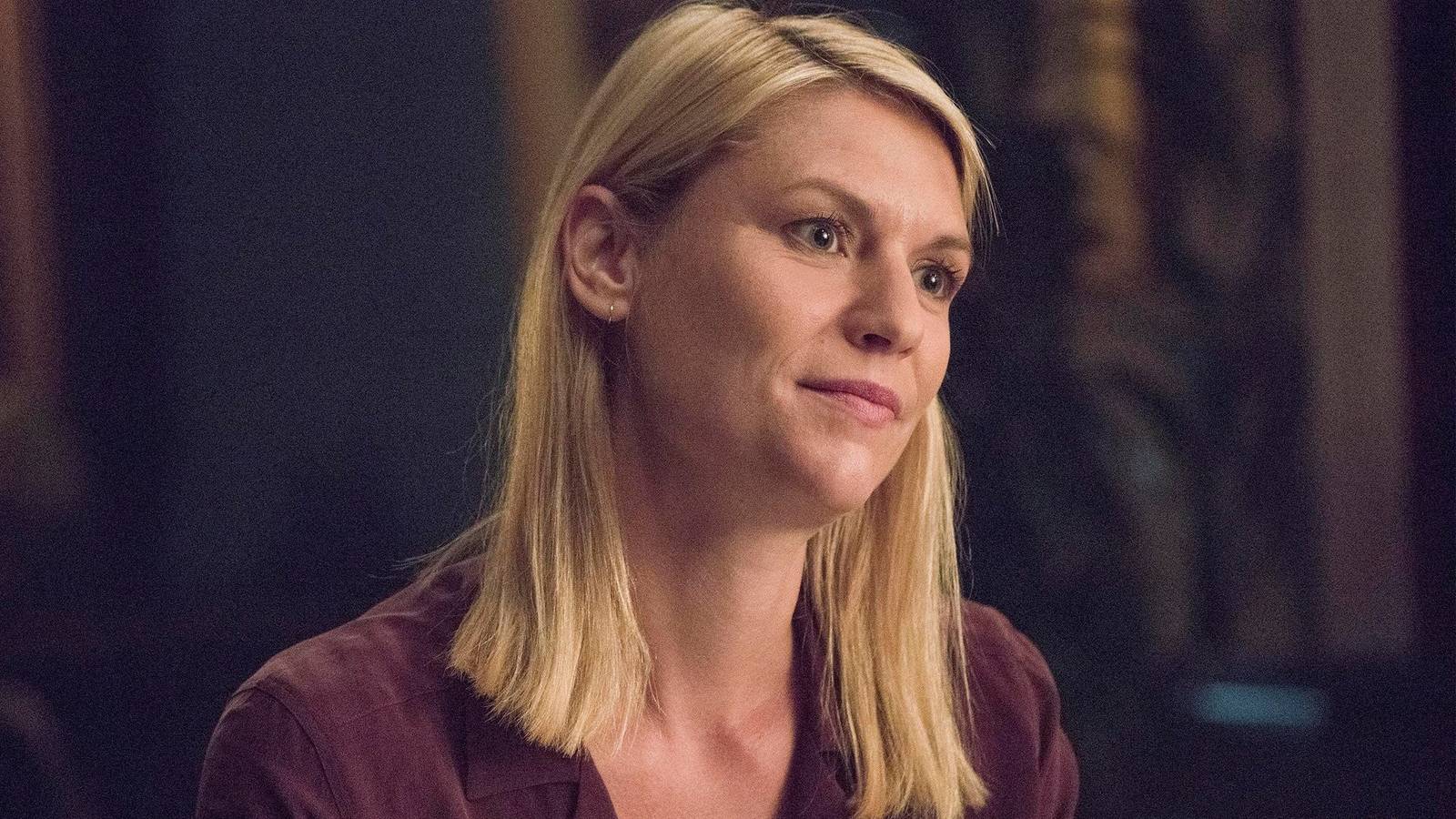
Published Sep 16, 2026, 10:30 AM EDT Mustafa Gatollari has been an internet culture and entertainment writer since 2015, but got his start reporting in local print in Bergen County, NJ at 18 years old. His work has appeared on the Daily Dot, Distractify, Motor1, BroBible, The Independent, The Mary Sue, Subplot, The Big Lead and his personal blog, Ultra News. Mustafa's passion for film and TV dates back to his first visit to the movies at 5 years old, when his mother took him to watch 'The Addams Family.' Mustafa's also been in front of and behind the camera. He co-created and successfully distributed 'Haunted Discoveries' alongside Brandon Alvis, whom he initially met on A&E's 'Ghost Hunters' where the two were selected as lead investigators for the reboot of the popular unscripted series. He and Brandon are currently releasing a slate of new documentaries, beginning with 'Ghosts of the Gold Rush,' which combines decades of their film production and paranormal experience to convey an oft-overlooked period in America's history. And the hauntings purportedly connected to this time that have persisted nearly two centuries later. You can email him at mustafa.gatollari@gmail.com or find him online on X or Instagram. Homeland is an extremely taut political thriller with a horrifying premise: what if an enemy flipped an American hero? The series does an incredible job showing the extreme emotional duress Nicholas Brody (Damian Lewis) endures. Surprisingly, it still manages to thrill audiences long after Brody's character arc, once its key source of dramatic tension, reaches a heartbreaking climax. At the show's core, which it queues up skillfully from the get-go, is a struggle about identity. From Brody's conflicts about serving the country he was born in or the captors who brainwashed him to believe their ideologies, to Carrie Mathison's (Claire Danes) own belief in her competence as an agent despite her mental health issues. Homeland itself shifts its identity across multiple seasons, but this emotional baseline permeates every episode. It also permeates the spy genre at large: Tehran, The Bureau, Tom Clancy's Jack Ryan, Fauda, all share a bit of Homeland's DNA. While the show is a stellar watch from start to finish, some seasons hit its original premise better than others. Here are Homeland's eight seasons, ranked from worst to best. 8 Season 7 (2018) Image via MovieStillsDB This is easily the most divisive season of the series and one that strays furthest from Homeland's original premise. Carrie's own mental health crisis mirrors the fractured political system of the United States: the Deep State vs. Democracy. Viewers wondered where attempts to stop terrorist plots went, and why so much of the show was focused on Carrie's custody battle. At times, the show almost felt like propaganda with constant narrative pushes regarding Russian election interference. It also felt like a massive departure to equate purported domestic terrorism initiatives to the mass bloodshed and destruction caused by terrorist bombings. Featuring arcs that include online trolls and social media bot/keyboard warrior warfare feels extremely low stakes when compared to a US senator possibly orchestrating a mass killing of US civilians he was sworn to protect. 7 Season 6 (2017) The real-world news cycle's influence on the narratives in season 6 is easy for viewers to spot. References to fake news and a controversial Presidential shift echoed real life, which soured the narrative for some viewers. This season also shifts the show even further away from Middle East conflicts, focusing more on stateside tensions. A bitter pill longtime fans of the show had to swallow was seeing Peter Quinn (Rupert Friend) constantly battling the effects of his nerve gas poisoning. His ending was bittersweet, too. Watching him sacrifice himself to save the President-elect gave him a proper send-off, but it also left fans with yet another favorite character sent to the grave. Seeing Carrie's shift into representing Muslim Americans instead of thwarting terrorist attacks seemed like a complete subversion of the show's original premise. Homeland truly felt like an entirely different show at times during season 6. 6 Season 5 (2015) Image via MovieStillsDB Homeland's fifth season feels like it could almost exist in a vacuum. This doesn't mean that it's not excellent viewing. Carrie's work on thwarting a jihadist chemical attack in Berlin and catching wind of Russian involvement provides a thrilling assortment of twists and turns. The pacing is also excellent. There's just one issue — Brody's disappearance in this season feels much more palpable, even an entire season after his death at the end of season 3. Largely responsible for this sentiment is the shift towards fears of burgeoning terrorist activities in Europe. Previous seasons dealt mainly with Iran and the US. Once season 5 introduces these terror plots, the show's tonal shift becomes very apparent. That doesn't mean it's not great viewing, because it is. It's just the first season that establishes that Homeland has gone in a different direction. 5 Season 8 (2020) Image via MovieStillsDB Wrapping up a geopolitical thriller with a nice bow seems impossible, especially in a show like Homeland where peace is a luxury none of its main characters ever experience. Somehow, though, the series manages to do exactly that. What's more, Carrie's journey echoes Brody's own psychological torment after she is freed from Russian captivity. She's viewed with suspicion when she returns. Unlike Brody, however, the audience doesn't question where her loyalty lies by the end of the show. She shows her true character when she defects to Moscow but actually feeds intel back to the US. She sacrifices her career and standing in the US intelligence community for the greater good: providing crucial data to her homeland. Moreover, the show does so with a beautiful metaphor: the tell-all book Carrie publishes about why she betrayed America contains secret messages. It's a fantastic wrap-up in a series that, again, has everything to do with identity. Despite Carrie's mental health struggles, she never lost sight of who she was, even if there's only one or two people in the world who acknowledge where her heart actually lies. It's a masterclass in espionage storytelling. 4 Season 4 (2014) Image via MovieStillsDB Any question of whether Homeland could survive as a series after the face of it was killed off was almost instantly squashed from season 4's opening episode. Carrie, despite struggling with her pre-existing mental health conditions and grieving Brody's death, demonstrates her fortitude through a series of harsh quandaries thrown her way. Out of all the Brody-less seasons, season 4 is easily the best. Like season 2, it has no shortage of surprising character kill-offs, and when Saul's poisoned, the show's penchant for getting rid of key performers has viewers legitimately worried he won't make it. Its strongest suit, however, lies in institutional betrayal. It forces viewers to realize that treachery lies within separate organizations in nations that supposedly operate under a single flag. While Homeland isn't the first show to explore grey areas and complex morality, its fourth season is an excellent example. Carrie having to reconcile with a bungled airstrike that kills civilians and perform damage control for the greater good doesn't provide any easy answers. It furthers the show's theme of identity struggle by expanding it into separate conflicts, beyond its former lead character. 3 Season 3 (2013) Image via MovieStillsDB It's been debated whether Homeland season 3's pacing suffers once it focuses on the breakdown of Brody's at-home family dynamics. It's a big departure from the cloak-and-dagger, powder-keg storytelling throughout all of season 2. This critique isn't necessarily wrong — it can be jarring to watch this midway through the season when we previously watched Brody wrestle with whether the terrorist-brainwashing initiative he was subjected to would prevail. Still, labeling season 3 as a slow burn isn't entirely fair, either. Once viewers reach the season's acclaimed final three episodes, it becomes clear why the season emphasized the dissolution of Brody's familial relationships. He firmly decides who he is this season, and there's a poetry to his death. Fate didn't allow him to be a martyr for Abu Nazir. Instead, he became a martyr for the US, after assassinating an Iranian military leader and installing an American ally in his place. Brody ultimately suffers as a result in brutal fashion, and his death leaves viewers wondering just what direction the series will go in his absence. After all, his storyline was the main source of Homeland's dramatic conflict for three seasons. 2 Season 1 (2011) Image via Showtime While Rotten Tomatoes scores aren't everything, it's difficult to argue that season 1 doesn't deserve its 100% Tomatometer score. The first season's gut-wrenching, high-stakes premise is instantly arresting and sets up the narrative tension that becomes a hallmark for the rest of the series. Carrie and Brody's relationship dynamics are expertly teed up in this batch of episodes too, laying a foundational tone that carries through the rest of the series. Everything works towards a singular event that keeps viewers on the edge of their seats — Brody detonating a suicide vest at a political summit, even though it could be argued that this tension is instantly lifted once his mission fails. When the season first released, it was hard to imagine anything would top it. Subsequent viewings, however, place it just beneath season 2's pacing and upped ante, as we get to see Brody struggle with his identity. 1 Season 2 (2012) Image via MovieStillsDB Picture a suffocating, achingly slow closing web composed of razor-thin wires collapsing on the show's main characters. That's what it's like watching Homeland season 2 — you'll never get a chance to breathe. This season feels like a constant panic attack is right around the corner, mirroring Carrie's own breakdowns. Throughout each episode, you can almost hear Brody's chest pound as he is torn between serving America as a newly minted congressman and his allegiance to terrorist leader Abu Nazir. The show's identity conflict is front and center in Homeland season 2. The action is relentless, major character deaths rack up episode after episode, and its finale is explosive, both literally and narratively. Release Date 2011 - 2020-00-00 Network Showtime Showrunner Alex Gansa Cast Mandy Patinkin Saul Berenson Directors Lesli Linka Glatter, Michael Cuesta, Daniel Attias, Alex Graves, Keith Gordon, Clark Johnson, Seith Mann, Tucker Gates, Michael Offer, Guy Ferland, Michael Klick, Carl Franklin, Charlotte Sieling, Jeffrey Nachmanoff, Brad Turner, Daniel Minahan, David Nutter, David Semel, Jeffrey Reiner, Jeremy Podeswa, John Dahl, John David Coles, Lodge Kerrigan Writers Patrick Harbinson, Debora Cahn, Ron Nyswaner, Anya Leta
All 8 Seasons Of Homeland, Ranked
Full Article
Original Source
Read the full article at Screenrant →KhanList aggregates and links to publicly available news content. We do not host full articles from third-party sources. Always verify important information with original sources.