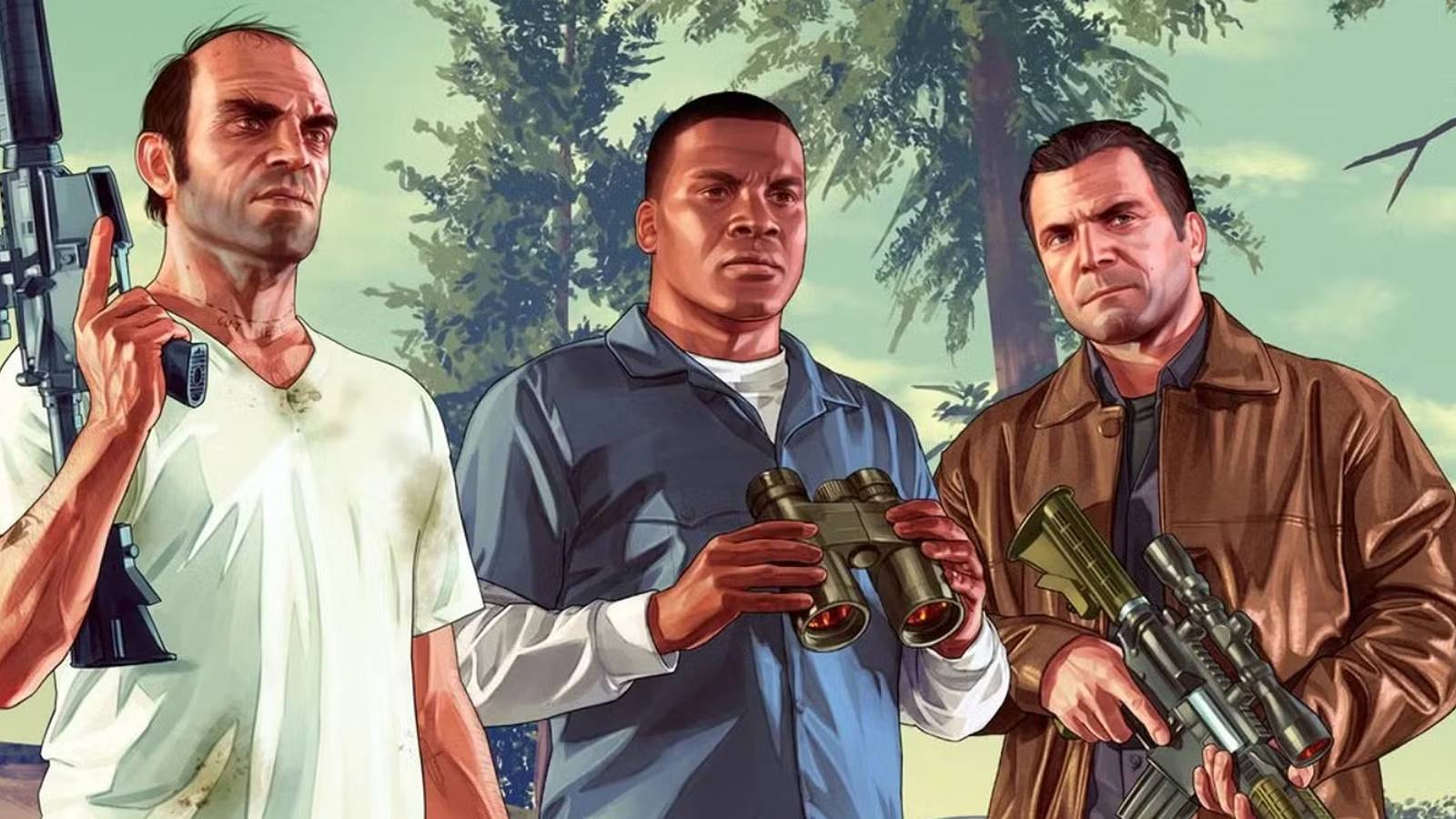
Every Mainline GTA Game, Ranked Image via Rockstar Games Published Jul 25, 2026, 3:36 PM EDT Sign in to your Collider account Today, Grand Theft Auto is undoubtedly the biggest game series out there. Most games come out and become irrelevant within a year or two. But each new GTA entry becomes a lasting part of gaming culture. Every generation of gamers has a GTA that defined their childhood or teenage years. For some, it was Vice City. For others, it was San Andreas. GTA V has now launched across three console generations and still ranks among the best-selling games year after year! Now, with GTA VI set to release on November 19, 2026, let's revisit and rank the mainline GTA games before we get a chance to experience Lucia and Jason's story. 7 ‘Grand Theft Auto’ (1997) Image via Rockstar Games The original Grand Theft Auto feels almost unrecognizable today. Instead of the now-famous third-person perspective, players looked down from above as they stole cars and completed jobs for crime syndicates. But the core GTA formula was already there. You could ignore missions entirely, steal almost any vehicle you saw, run over pedestrians, and try to outrun the cops. It also introduced one of the series' most beloved traditions: cheats. Players could enter codes like BSTARD to unlock every city with 99 lives and infinite ammo, or HANGTHEDJ for complete invincibility. The game was also immensely controversial at the time. Critics and politicians condemned it as a "murder simulator" because players took on the role of criminals and were rewarded for committing crimes. That controversy only fueled its popularity and helped put the series on the map. 6 ‘Grand Theft Auto II’ (1999) Image via Rockstar Games GTA II took everything that made the original so much fun and made it even better. It still used the top-down camera, but it added a cyberpunk, futuristic setting and one of the series' most interesting ideas: multiple criminal factions. Completing jobs for one gang made another gang hate you, and this forced players to actually think about who they wanted to work for instead of just grinding missions in a straight line. The world also felt much more alive. NPCs reacted better, missions became more varied, and police chases grew far more intense than anything in the first game. And, for the first and only time in the series, GTA II also included an eight-minute-long live-action intro cutscene, setting up the more cinematic direction the series would fully commit to later on. 5 ‘Grand Theft Auto III’ (2001) Image via Rockstar Games This was the game that took the open-world car-stealing chaos of the first two entries and moved everything into a fully realized 3D city, and it became the blueprint every future GTA game would be built on. There were in-car radio stations to flip through. There were mission cutscenes riffing on The Sopranos and Goodfellas. The game also introduced multiple explorable map islands, which unlocked progressively as players advanced through the story. There had been driving games before. There had been shooting games and open-world 3D games too. But combining all of that into one package was completely unheard of. And there was so much freedom! You could run someone over, wait for the ambulance to show up, spray it with an Uzi, and watch it crash and trigger a huge chain explosion. It was absolutely mind-blowing at the time. 4 ‘Grand Theft Auto: Vice City’ (2002) Image via Rockstar Games Vice City came out just one year after GTA III, but the improvements were massive, and it became the defining game of its generation. Tommy Vercetti was the series' first fully voiced protagonist, and the game fully embraced the colorful excess of the 80s. You could finally change clothes. Helicopters and motorcycles were added to the franchise, scattered across a neon-lit Miami map that felt worlds apart from the grim Liberty City before it. The Scarface-style missions were insanely fun. Nightclubs showed up in the series for the first time, and you could start purchasing businesses that generated passive income, which made you feel like you were actually building a criminal empire. Add in a phenomenal soundtrack and the best weapons the series had offered yet, from the katana to the flamethrower to the minigun and rocket launcher, and it's no surprise Vice City became the fastest-selling video game of 2002. 3 ‘Grand Theft Auto IV’ (2008) Image via Rockstar Games GTA IV told a much darker, more grounded story following immigrant Niko Bellic as he chased the American Dream through Liberty City. The game introduced a new physics engine that made everything feel more realistic. Cars felt heavier, shootouts became more tactical, and NPC reactions were years ahead of anything else on the market at the time. The story was Oscar-worthy and is still widely considered one of Rockstar's strongest. It introduced the in-game smartphone that would become an even bigger part of the sequel, and players could visit internet cafes to browse websites, read emails, and trigger hidden side missions. The game also broke multiple sales records, including fastest-selling video game and highest-grossing entertainment product within 24 hours of release. 2 ‘Grand Theft Auto: San Andreas’ (2004) Image via Rockstar Games As big as GTA V is, plenty of fans still hold San Andreas as Rockstar's single greatest achievement. Instead of one city, Rockstar built an entire state, featuring Los Santos, San Fierro, Las Venturas, deserts, forests, and mountains. And for the first time, interactive fully nude strip clubs! You could date girlfriends, spend money across dozens of new shops, and dive into a stack of minigames that no previous GTA game had come close to offering. San Andreas also added a full RPG progression system to the series for the first time. CJ could gain muscle at the gym, get overweight from eating too much fast food, improve his driving skills, boost his stamina, learn new fighting styles, and customize nearly every part of his appearance. Those progression systems have been sorely missed ever since, so much so that Rockstar may finally be bringing one of them back. It's heavily rumored that the gym system will finally be making a return in GTA VI. 1 ‘Grand Theft Auto V’ (2013) Image via Rockstar Games To no one's surprise, topping the list is GTA V. For the very first time, Rockstar introduced three playable protagonists, letting players instantly switch between Michael, Franklin, and what is arguably the greatest GTA character ever created, Trevor. And it delivered a Heat-style crime saga with the most cinematic missions the series had ever attempted. Los Santos became Rockstar's most detailed open world yet. You could hike mountains, go scuba diving, trade stocks, pull off elaborate heists, rob stores at gunpoint, play golf, do yoga, and mod every single part of your car. The driving felt the best it ever had, the graphics still hold up better than most modern AAA games over a decade later, and GTA Online kept the game relevant well beyond its expected shelf life. Games like Watch Dogs 2, Cyberpunk 2077, and Mafia have all come and gone since, but GTA V still remains the gold standard for an urban open world, and it's still the second best-selling video game of all time, trailing only Minecraft. Collider Exclusive · Oscar Best Picture Quiz Which Oscar Best PictureIs Your Perfect Movie? Parasite · Everything Everywhere · Oppenheimer · Birdman · No Country Five Oscar Best Picture winners. Five completely different visions of what cinema can be — and what it can do to you. One of them is the film that was made for the way your mind works. Ten questions will figure out which one. 🪜Parasite 🌀Everything Everywhere ☢️Oppenheimer 🐦Birdman 🪙No Country for Old Men FIND YOUR FILM → 01 What kind of film experience do you actually want? The best movies don't just entertain — they leave something behind. ASomething that pulls the rug out — that makes me think I'm watching one kind of film and then reveals I'm watching another entirely. BSomething overwhelming — funny, sad, absurd, and genuinely moving, all at once. CSomething grand and weighty — a film that makes me feel the full scale of what I'm watching. DSomething formally daring — a film that pushes what cinema can even do. ESomething lean and relentless — pure tension with no wasted frame. NEXT QUESTION → 02 Which idea grabs you most in a film? Great films are driven by a central obsession. What's yours? AClass, inequality, and what people are willing to do when desperation meets opportunity. BIdentity, family, and the chaos of trying to hold your life together when everything is falling apart. CGenius, moral responsibility, and the catastrophic weight of a decision you can never take back. DEgo, legacy, and the terror of becoming irrelevant while you're still alive to watch it happen. EEvil, chance, and whether moral order actually exists or if we just tell ourselves it does. NEXT QUESTION → 03 How do you like your story told? Form is content. The way a story is shaped changes what it means. AGenre-twisting — I want it to start in one lane and migrate into something completely different. BMaximalist and genre-blending — comedy, action, drama, sci-fi, all in one ride. CEpic and non-linear — cutting between timelines, building a mosaic of cause and consequence. DA single unbroken flow — I want to feel like I'm living it in real time, no cuts to safety. ESpare and precise — every scene doing exactly what it needs to do and nothing more. NEXT QUESTION → 04 What makes a truly great antagonist? The opposition defines the protagonist. What kind of opposition fascinates you? AA system — invisible, structural, and almost impossible to fight because it has no single face. BThe self — the ways we sabotage, abandon, and fail the people we love most. CHistory — the unstoppable momentum of events that no single person can stop or redirect. DThe industry — the machinery of culture that chews up talent and spits out irrelevance. EPure, implacable evil — a force so certain of itself it becomes almost philosophical. NEXT QUESTION → 05 What do you want from a film's ending? The final note is the one that lingers. What do you want it to sound like? AShock and inevitability — a conclusion that recontextualises everything that came before it. BEarned emotion — I want to cry, laugh, and feel genuinely hopeful, even if the world is a mess. CDevastation and grandeur — an ending that makes me sit in silence for a few minutes after. DAmbiguity — something that leaves enough open that I'm still thinking about it days later. EBleakness — an honest refusal to pretend the world is tidier than it actually is. NEXT QUESTION → 06 Which setting pulls you in most? Where a film takes place shapes everything — mood, stakes, what's even possible. AA gleaming modern city with a hidden underside — beauty masking rot, wealth masking desperation. BA collapsing suburban life that opens onto something infinite — the multiverse of a single ordinary person. CThe corridors of power and science at a world-historical turning point — where decisions echo for decades. DThe grimy, alive chaos of New York and Hollywood — fame as both destination and trap. EVast, indifferent landscape — desert and highway where violence arrives without warning or reason. NEXT QUESTION → 07 What cinematic craft impresses you most? Every great film has a signature — a technical or artistic element that makes it unmistakable. AProduction design and mise-en-scène — every frame composed to carry meaning beneath the surface. BEditing and tonal control — the ability to move between registers without losing the audience. CScore and sound design — music that becomes inseparable from the dread and awe of what you're watching. DCinematography as performance — the camera not recording events but participating in them. ESilence and restraint — what's left unsaid and unshown doing more work than any dialogue could. NEXT QUESTION → 08 What kind of main character do you root for? The protagonist is the lens. Who you choose to follow says something about you. ASomeone smart and resourceful who makes increasingly dangerous decisions under pressure. BSomeone overwhelmed and ordinary who turns out to be capable of something extraordinary. CA brilliant, tortured figure whose gifts and flaws are inseparable from each other. DA self-destructive artist whose ego is both their superpower and their undoing. EA quiet, principled person trying to make sense of a world that has stopped making sense. NEXT QUESTION → 09 How do you feel about a film that takes its time? Pace is a choice. Some films sprint; others let tension accumulate slowly, deliberately. AI love a slow build when I know the payoff is going to be seismic — patience for a devastating reveal. BGive me relentless momentum — I want to feel breathless and emotionally spent by the end. CEpic runtime doesn't scare me — if the material demands three hours, give me three hours. DI want it to feel propulsive even when nothing is technically happening — restless energy throughout. EDeliberate and unhurried — I want dread to accumulate in the spaces between the action. NEXT QUESTION → 10 What do you want to feel walking out of the cinema? The best films leave a mark. What kind of mark do you want? AUnsettled — like I've just seen something I can't fully explain but can't stop thinking about. BMoved and energised — like the film reminded me what actually matters and gave me something to hold onto. CHumbled — like I've been in the presence of something genuinely important and overwhelming. DExhilarated — like I've just seen cinema doing something it's never quite done before. EHaunted — like a cold, quiet dread that stays with me for days. REVEAL MY FILM → The Academy Has Decided Your Perfect Film Is…Your answers have pointed to one Oscar Best Picture winner above all others. This is the film that was made for the way your mind works. ParasiteYou are drawn to films that operate on multiple levels simultaneously — that begin in one genre and quietly, brilliantly migrate into another. Bong Joon-ho's Parasite is a film about class, desire, and the architecture of inequality that manages to be darkly funny, deeply suspenseful, and genuinely shocking across a single extraordinary running time. Your instinct is for cinema that hides its true intentions until the moment it's ready to reveal them. Parasite is exactly that — a film that rewards close attention and punishes assumptions, right up to its devastating final image. Everything Everywhere All at OnceYou want it all — and this film gives you all of it. The Daniels' Everything Everywhere All at Once is one of the most maximalist films ever made: action comedy, multiverse sci-fi, family drama, existential crisis, and a genuinely earned emotional core that sneaks up on you amid the chaos. You are someone who responds to ambition, who doesn't want cinema to choose between being entertaining and being meaningful. This film refuses that choice entirely. It is overwhelming by design, and its overwhelming nature is precisely the point — because the feeling of being crushed by infinite possibility is exactly what it's about. OppenheimerYou are drawn to cinema on a grand scale — films that understand history not as a backdrop but as a force, and that place their characters inside that force and watch what happens. Christopher Nolan's Oppenheimer is a film about the terrifying gap between what we can do and what we should do, told with the full weight of one of the most consequential moments in human history behind it. You want your films to feel important without feeling self-important — to earn their ambition through sheer craft and the gravity of their subject. Oppenheimer does exactly that. It is enormous, complicated, and refuses easy comfort. BirdmanYou are drawn to films that foreground their own construction — that make the how of the filmmaking part of the what it's about. Alejandro González Iñárritu's Birdman, shot to appear as a single continuous take, is cinema examining itself through the cracked mirror of a fading actor's ego. You respond to formal daring, to the feeling that a film is doing something that probably shouldn't be possible. Michael Keaton's performance and Emmanuel Lubezki's restless camera create something genuinely unlike anything else — a film that is simultaneously about creativity, relevance, self-destruction, and the impossibility of ever truly knowing if your work means anything at all. No Country for Old MenYou are drawn to cinema that trusts silence, that refuses to explain itself, and that treats dread as a form of meaning. The Coen Brothers' No Country for Old Men is a film about the arrival of a new kind of evil — implacable, arbitrary, and utterly indifferent to the moral frameworks we use to make sense of the world. It is one of the most formally controlled films ever made, and its controlled restraint is what makes it so terrifying. You want your films to haunt you, not comfort you. You are not interested in resolution if resolution would be dishonest. No Country for Old Men is honest in a way that most cinema never dares to be. ↻ RETAKE THE QUIZ
All 7 Mainline GTA Games, Ranked
Full Article
Original Source
Read the full article at Collider →KhanList aggregates and links to publicly available news content. We do not host full articles from third-party sources. Always verify important information with original sources.