
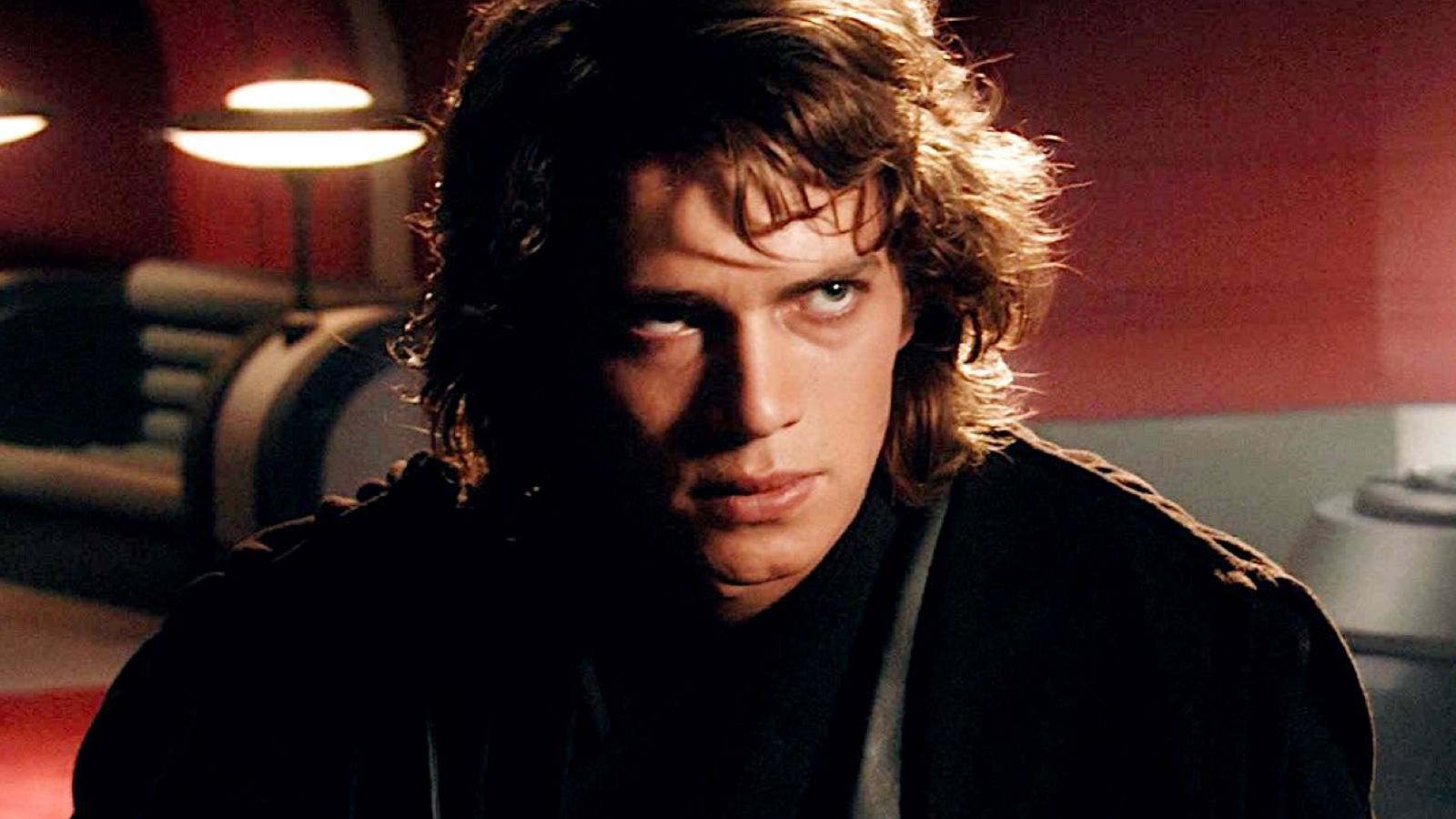
Every George Lucas Movie, Ranked Image via Lucasfilm Published Aug 23, 2026, 6:22 AM EDT Michael Block is a 14 time GLAM Award nominated writer, producer, and host of the podcast Block Talk. Throughout his time in the entertainment industry, he has worked on and off Broadway as a stage manager, written several produced plays, critiqued hundreds of theatrical performances, drag and cabaret shows, and has produced events randing from drag competitoons to variety concerts! On Block Talk, he interviews nightlife personalities, covers the wide world of entertainment through features, ranking episodes, and recaps ALL of Drag Race, as well as Dragula and Survivor. He has interviewed hundreds of RuGirls that span the globe at DragCon NYC, DragCon LA, and DragCon UK. In his free time, he makes one-of-a-kind jewelry and gift baskets with his mom. He is a proud member of the LGBTQ+ community. Sign in to your Collider account It might seem hard to imagine how one visionary could have influenced a major faction of the entertainment world, but that's exactly what George Lucas has done. The filmmaker has been responsible for some of the biggest pop culture phenomena of all time, from Star Wars to Indiana Jones. His impact continues beyond the screen, having founded Lucasfilm, LucasArts, Industrial Light & Magic, and THX, which all established a home for cinema technology to be created, evolved, and executed. As one of Hollywood's most significant figures, Lucas is easy to celebrate. What might surprise you is that, despite his prominence as a pop culture giant, there are only six feature directorial credits to his name! While his influence is indisputable, we are here to discuss those six films that represent a unique journey of his directorial style and themes. To rank the films, we will examine their impact at the time of release, cultural significance, and overall quality. Whether you agree or not, may the Force be with you! 6 'Star Wars: Episode II—Attack of the Clones' (2002) Image via Lucasfilm Sequels are hard, even in the Star Wars universe. Though Lucas didn't direct Star Wars: Episode V—The Empire Strikes Back, it remains one of the greatest sequels of all time. Unfortunately, that same magic was not replicated for the prequel trilogy. In the second narrative film in the Skywalker Saga, Senator Padmé's (Natalie Portman) survival from an assassination attempt puts Jedi Knight Obi-Wan Kenobi (Ewan McGregor) and his apprentice, Anakin Skywalker (Hayden Christensen), on a protection detail. As Obi-Wan investigates the bounty hunter behind the plot, he discovers a secret clone army coming to life, all while a romance blossoms between Anakin and Padmé while hiding out on Naboo. Star Wars: Episode II—Attack of the Clones serves as a crucial narrative bridge for Anakin's dark turn, but the overall film lacked the spark nearly every other Star Wars entry before and after contained. The reliance on digital green screens hurt the overall project. Then there's the lack of chemistry between Christensen and Portman; for a pair who would go on to influence the rest of theStar Wars story, their awkward connection was hard to watch, lacking the romantic warmth that would make you believe in their partnership. Further, the script is bogged down in heavy political maneuvering and clone investigation, so character arcs were pushed to the wayside. With Lucas going in solo, the lack of creative collaboration in the script hurt the film. Lucas prioritized pioneering digital cameras and heavy CGI worlds over tangibility, causing a disconnect for the audience. Even though Lucas is a brilliant creative force, Attack of the Clones was the low point of his career. 5 'Star Wars: Episode I—The Phantom Menace' (1999) Image via Lucasfilm Ltd There was an entire generation of Star Wars fans who dreamed of experiencing the beloved franchise for the first time in theaters. It seemed as if it would be just a dream, but then Lucas gave us the chance with the prequel trilogy. In Star Wars: Episode I—The Phantom Menace, Jedi Knights Qui-Gon Jinn (Liam Neeson) and Obi-Wan Kenobi attempt to protect Queen Padmé Amidala from a trade blockade. On their journey, they are forced down on the desert planet of Tatooine, where they discover a young boy named Anakin Skywalker (Jake Lloyd), who they detect is strong with the Force, and Qui-Gon believes is the "Chosen One." Meanwhile, a hidden Sith threat manipulates galactic politics as the heroes face off against a deadly warrior, Darth Maul (Ray Park). Jump-starting the Skywalker Saga narrative, The Phantom Menace hoped to replicate the magic of the original film 22 years later; unfortunately, it's remembered for all the wrong reasons. The mythology and lore are solid, and new characters are introduced, but the origins of key figures, including Obi-Wan, Yoda (Frank Oz), C-3PO (Anthony Daniels), R2-D2 (Kenny Baker), and Palpatine (Ian McDiarmid), tie the past to the present, cinematically speaking. But for every victory with new figures like Queen Amidala, Qui-Gon Jinn, and Mace Windu (Samuel L. Jackson), there's Jar Jar Binks (Ahmed Best). Though we have come around to the character retrospectively, at the time it was a major reason behind the film's negative reception, despite the explosive box office take. Because much of the focus was on the action and imagery, the acting came across as wooden and monotonous. With the bar astronomically high compared to the original film, The Phantom Menace didn't resonate in the same manner. Collider Exclusive · Star Wars Quiz Which Force UserAre You? Light Side · Dark Side · Or Somewhere Between The Force is not a binary. It is a spectrum — from the serene halls of the Jedi Temple to the shadowed corridors of Sith space. Ten questions will reveal where you truly fall. The Force has always known. Now you will too. 🔵Jedi Master 🟡Padawan 🔴Sith Lord ⚫Inquisitor ⚪Grey Jedi IGNITE YOUR SABER → 01 What is the Force to you? Your relationship with the Force defines everything else. AA living energy I must be worthy of — it is not mine to control. BSomething vast and mysterious I'm only beginning to understand. CNeither light nor dark — just a current I choose to ride. DPower. Pure and simple. The strong take it; the weak don't. NEXT QUESTION → 02 When you feel strong emotions — anger, grief, love — what do you do? The Jedi suppress. The Sith feed. Others choose differently. AAcknowledge them, then release them. Attachment leads to suffering. BFeel them fully, then decide what to do — they're not the enemy. CBury them. Emotion is a liability I can't afford to indulge. DUse them. Passion is the engine of the dark side for good reason. NEXT QUESTION → 03 The Jedi Council gives you an order you disagree with. You: How you handle authority reveals your alignment. AFollow it. The Council's wisdom surpasses my own perspective. BVoice my objection clearly, then defer to the decision. CComply outwardly while doing what I think is right. DIgnore it. The strong don't answer to committees. NEXT QUESTION → 04 You are offered forbidden knowledge that could give you enormous power. The cost is crossing a moral line. You: The dark side's pull is never more than a choice away. ARefuse without hesitation. There is no cost worth that price. BWeigh it carefully — sometimes darkness holds real answers. CFeel the pull but walk away — for now. DAccept it. Power justifies the method used to obtain it. NEXT QUESTION → 05 Your approach to training and learning is: A student's habits become a master's character. ADedicated but humble. There is always more to learn from my masters. BRigorous and patient. Mastery is earned through years of discipline. CEclectic — I draw from every tradition, not just one. DRelentless and brutal. Pain accelerates growth. Rest is weakness. NEXT QUESTION → 06 In a duel, your lightsaber fighting style reflects: Combat is the purest expression of a Force user's philosophy. ADefense and composure — I wait for my opponent to overcommit. BFast and instinctive — I trust the Force to guide my movements. CUnpredictable — I blend styles to keep enemies off-balance. DOverwhelming aggression — I end fights before they begin. NEXT QUESTION → 07 A defeated enemy lies at your feet, powerless. You: Mercy — or its absence — is the truest test of alignment. AStrike them down — compassion toward enemies is naïve and costly. BNeutralize them permanently. I can't afford loose ends. CSpare them if I can — but stay clear-eyed about the risks. DOffer them a chance to surrender. Every being deserves that. NEXT QUESTION → 08 The Jedi Code forbids attachment. Your honest view on love and bonds: The source of the greatest falls in the galaxy. AThe Code is right. Attachment clouds judgment and invites suffering. BLove is not a weakness — the Jedi Code got this one wrong. CI have no attachment — only loyalty to my master's mission. DI feel it deeply but struggle to reconcile it with my training. NEXT QUESTION → 09 Why do you use the Force at all? What's the point? Purpose is the difference between a knight and a weapon. ATo learn. I'm still figuring out what I'm capable of. BTo protect and serve. The Force is a responsibility, not a gift. CTo survive — and maybe carve out something worth having. DTo dominate. Strength demands to be expressed, not contained. NEXT QUESTION → 10 At the final moment — light side or dark side pulling at you — what wins? In the end, every Force user faces this moment. What does yours look like? AThe light. I choose peace, even when darkness would be easier. BNeither fully — I carve my own path through the middle. CWhoever I serve — my loyalty defines me more than my morality. DThe dark. Power is the only thing that's ever actually been real. REVEAL MY ALIGNMENT → Your Alignment Has Been Determined Your Place in the ForceThe scores below reveal how the Force sees you. Your highest number is your true alignment. Read on to understand what that means — and what it will cost you. 🔵 Jedi Master 🟡 Padawan 🔴 Sith Lord ⚫ Inquisitor ⚪ Grey Jedi Disciplined, compassionate, and deeply attuned to the living Force, you have walked the path long enough to understand its demands — and accept them. You lead not through authority alone, but through example. You have felt the pull of the dark side and chosen otherwise, every time. That is not certainty. That is courage. You are earnest, powerful, and brimming with potential — and you know it, which is both your greatest asset and your most dangerous flaw. You act before you think, trust your gut over your training, and sometimes confuse impatience for bravery. The Masters see something in you, though. The question isn't whether you have what it takes — it's whether you'll be patient enough to find out. You are not simply dangerous — you are certain, and that is worse. You have decided what the galaxy needs, and you have decided you are the one to deliver it. Your power is genuine and formidable, earned through sacrifice that would have broken lesser beings. But examine your victories carefully. Every Sith believed their cause was righteous. The dark side's cruelest trick is that it agrees with you. You were forged in fire and reshaped by those who found you at your lowest. You serve, because service gave you structure when you had none. Your allegiance is not to an ideology — it is to survival and to the master who gave you purpose. But there is something buried beneath the conditioning. The Jedi you hunt? You recognize them. Because you remember what it felt like before the choice was taken from you. You have looked at the Jedi Code and the Sith Code and found both of them incomplete. You walk the line not out of indecision but out of conviction — you genuinely believe both extremes miss something essential. The Jedi don't fully trust you. The Sith think you're wasting your potential. They're both partially right. But so are you. ↻ RETAKE THE QUIZ 4 'THX 1138' (1971) Image via Lucasfilm Lucas' directorial debut was THX 1138, co-written by Walter Murch. The sci-fi flick tells of a dystopian underground future where human emotions and sexual desires are outlawed. Living in a sterile, whitewashed underground city, citizens are controlled by android police and mandatory mind-numbing drugs. When THX 1138 (Robert Duvall) stops taking his medication, he falls in love with his roommate, LUH 3417 (Maggie McOmie), and attempts to escape the constant surveillance of the totalitarian society. A groundbreaking film that influenced films and narratives for decades to come, THX 1138 established Lucas' creative brain and prophetic ideas. In this haunting, avant-garde thriller, auditory and visual imagery become just as important as the storytelling, marrying themes from classic literature to feed a story about consumerism and automated police surveillance. Many of Lucas' subsequent films look and feel like massive blockbusters, mostly because they are. Here, Lucas uses his raw talent to craft a stark, dystopian world. Visually, the film's aesthetic is quite precise, with bright white set pieces, bald characters, and matching attire. What Lucas does smartly is use documentary-style framing to allow raw, unpolished imagery to emerge in real-world filming locations. 3 'Star Wars: Episode III—Revenge of the Sith' (2005) Image via Lucasfilm Third time's the charm! Star Wars: Episode III—Revenge of the Sith tells of the final days of the Clone Wars. As Anakin Skywalker has terrifying premonitions of his secret wife, Padmê Amidala's death in childbirth, he further falls toward the Dark Side through Palpatine's manipulation, now revealed as Darth Sidious. Consumed by fear and mistrust of the Jedi Council, Anakin pledges loyalty to the Sith, triggering an attack on the Jedi and wiping out nearly all of them. Through a final confrontation between mentor and Padawan, the prophecy is born as Anakin fully transforms into the future legend Darth Vader. Though the first two films have a lighter overall tone, the darker imagery is crucial to this last chapter. By ending on a low, unlike the third film in the original trilogy, Revenge of the Sith establishes itself as an integral entry in the Star Wars universe. Christensen finally finds his footing as Anakin unravels, while McDiarmid is at his finest in his chilling turn as Palpatine. The space battles are sublime, set to a sweeping musical backdrop by John Williams, who elevates the drama to great heights. The climactic lightsaber battle between Anakin and Obi-Wan may not be as iconic as that of Darth Vader (James Earl Jones) and Luke Skywalker (Mark Hamill) in The Empire Strikes Back, but it remains one of the most intense and emotional duels in film history. Lucas crafts a rich emotional story with grand visual storytelling, anchored by a tragic narrative that anchors the entire saga. A high-stakes, dark and emotional space opera, Revenge of the Sith ends on a high. 2 'American Graffiti' (1973) Image via Universal Pictures It may come as a shock, but one of the greatest Lucas films is the one in which he stepped outside the science-fiction realm. In 1973, his second feature was the coming-of-age film American Graffiti. Produced by Francis Ford Coppola and set in 1962 Modesto, California, it follows four high school graduates—Curt Henderson (Richard Dreyfuss), Steve Bolander (Ron Howard), John Milner (Paul Le Mat), and Terry "The Toad" Fields (Charles Martin Smith)— as they spend their final summer night cruising the streets and listening to rock on the radio, as they face major life choices about college and adulthood all before morning arrives. American Graffiti captures the end of American innocence right before the societal shift of the Vietnam War era through themes of future pressure and the fleeting nature of adolescence. By compressing the entire story into a single evening, the main quartet is forced to confront the harsh realities of responsibility, identity, and self-doubt. American Graffiti may not be epic in nature, but its snapshot storytelling delivers an equally high-stakes emotional tale. By giving young men the freedom to cruise, it gives them the chance to experience connection, community, and escape before dawn breaks. Lucas captures authentic teenage nostalgia through a remarkable soundtrack that becomes a part of the environment. They say write what you know; American Graffiti uses Lucas' experience to build the story, giving the film a raw and genuine essence. 1 'Star Wars: Episode IV—A New Hope' (1977) Image via Lucasfilm Cinema and pop culture forever changed in 1977, and all it took was a single film: Star Wars. Known now as Star Wars: Episode IV—A New Hope, the first film in the Skywalker Saga is an epic space opera that follows young Luke Skywalker, who gets caught up in a galactic civil war as he buys two droids carrying secret plans to the tyrannical Empire's planet-destroying space station known as the Death Star. Luke teams up with Jedi Master Obi-Wan Kenobi (Alec Guinness), smuggler Han Solo (Harrison Ford), and a Wookie named Chewbacca (Peter Mayhew) to rescue rebel Princess Leia (Carrie Fisher) and destroy the Death Star. A masterclass in epic sci-fi world-building and extraordinary action-adventure, Star Wars marries a brilliant hero's journey with groundbreaking special effects that changed modern cinema. Before it established a juggernaut franchise, Star Wars was standalone cinema at its finest. Lucas drops you directly into an extraordinary world, right in the middle of the action. Rather than exposition to bog down the pacing, Lucas installed a narrative scroll that helped set the tone. Science fiction can be confusing with its terminology and lore, but Lucas made it accessible, boasting a lived-in universe with iconic characters that would go on to influence cinema forever. Darth Vader is the best sci-fi villain ever created, and the Jedi are among cinema's finest heroes. Williams' score featured one of the most recognizable musical themes ever written, further contributing to the praise. Cast Mark Hamill, Harrison Ford, Carrie Fisher, Peter Cushing, Alec Guinness, James Earl Jones, Anthony Daniels, Kenny Baker, Peter Mayhew, David Prowse, Phil Brown, Shelagh Fraser, Jack Purvis, Alex McCrindle, Eddie Byrne, Drewe Henley, Denis Lawson, Garrick Hagon, Jack Klaff, William Hootkins, Angus MacInnes, Jeremy Sinden, Graham Ashley, Don Henderson, Richard LeParmentier Runtime 121 minutes Director George Lucas Writers George Lucas
All 6 George Lucas Movies, Ranked
Full Article
Original Source
Read the full article at Collider →KhanList aggregates and links to publicly available news content. We do not host full articles from third-party sources. Always verify important information with original sources.