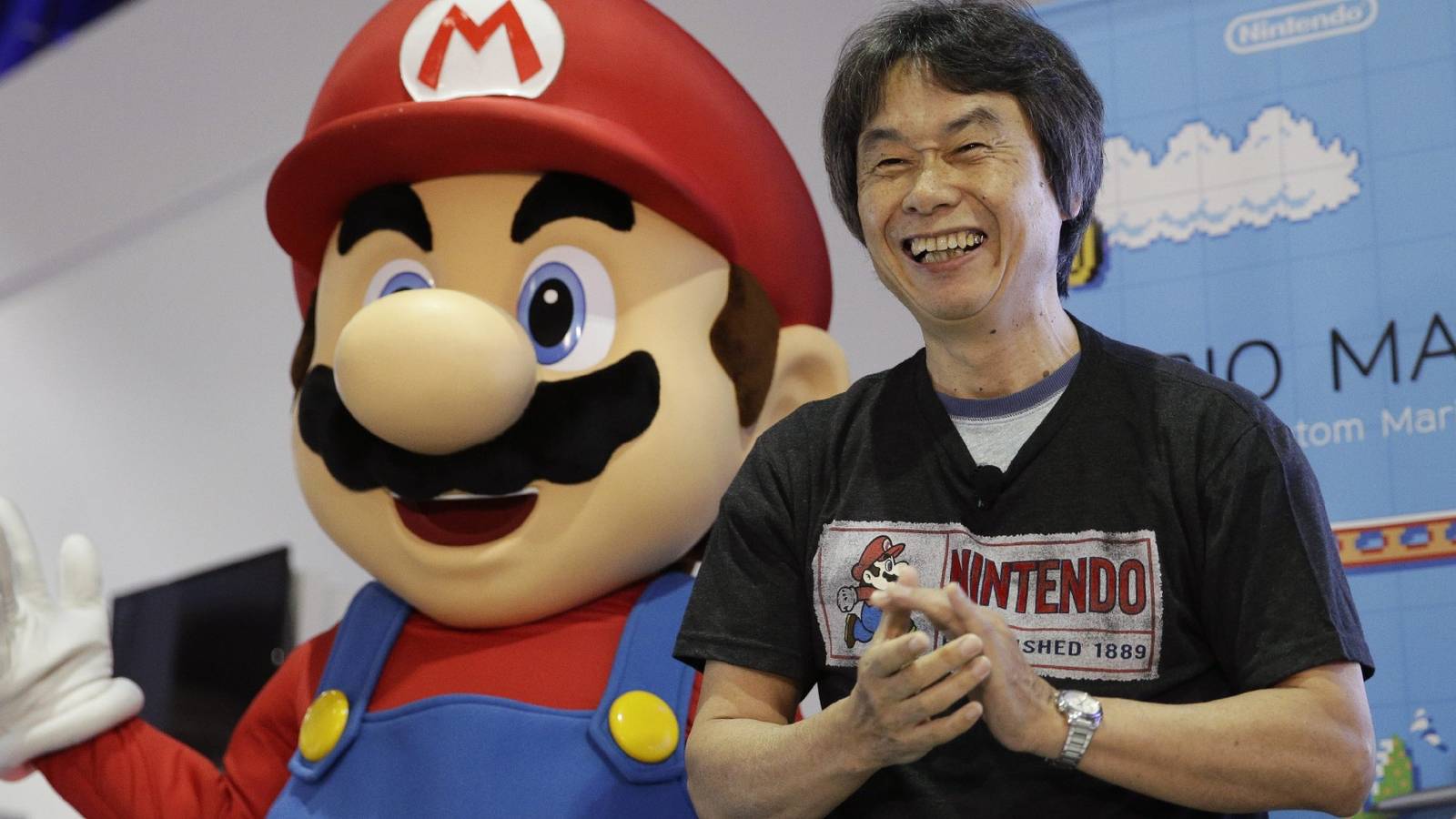
Published Jul 26, 2026, 3:30 PM EDT Yuliya Geikhman has been writing professionally for over 17 years. She started out in the MMO scene with Pando Media Booster and now dives into everything gaming at Screen Rant. She's a lifelong gamer, a relentless industry sleuth, and a passionate follower of everything happening in the games industry. Legendary Nintendo director and designer Shigeru Miyamoto is a beloved and well-known name in the video game industry. The video game legend created some of Nintendo's biggest hits, including The Legend of Zelda, Pikmon, Donkey Kong, and Super Mario Bros. Even someone who's never played a video game in their life recognizes the iconic moustachioed face of the world's most famous Italian plumber. Miyamoto has had a hand in many video games over the years, and still maintains the position of Executive Fellow and Representative Director at Nintendo. Despite being the designer, concept artist, and producer for many titles over the years, Miyamoto as only ever actually directed 18 games. Discover these games below, ranked by their importance to the industry and fun level. Super Mario All-Stars (1993) This game doesn't quite count as a Miyamoto-directed title, as it's a compilation of four of his other games. Miyamoto did direct the four games remade for the SNES collection: Super Mario Bros., Super Mario Bros.: The Lost Levels, Super Mario Bros. 2, and Super Mario Bros. 3. However, Miyamoto is technically listed as Producer for the game, with Takashi Tezuka taking the helm as Director. We're honestly just including it for the sake of being thorough. Moving on! Super Mario Run (2016) Super Mario Run is the last game that has Shigeru Miyamoto listed as the lead Director. Miyamoto was joined by other Super Mario dev veterans, including long-time collaborator Takashi Tezuka. Unfortunately, the project was a side-scrolling, auto-running mobile game. Though it got decent reviews and many millions of downloads, it never reached the same level of success as native Nintendo projects. Devil World (1984) Devil World for the NES was Shigeru Miyamoto's first console game. This game came at a crossroads in Miyamoto's career: It was after he had already created several iconic arcade games, but before he became a household name in gaming households. Devil World is a Pac-Man-like maze game about a couple of dragon creatures who rebel against "The Devil." It received good reviews on releases, but was seen as potentially blasphemous for Western audiences. The game has heavy religious themes—the dragon has to collect Bibles and Crosses to seal away the Devil—so it wasn't released in the US until 2023. Wild Gunman (1984) This gun-slinging light-gun game had players in a Wild West setting, and required precision and timing. It's remembered today through the Final Smash of the Duck Hunt duo in Super Smash Bros. Ultimate. Wild Gunman is another game that was ported to NES with Miyamoto's oversight but not designed by him. The original title was a 1974 arcade game created by Gunpei Yokoi, and Wild Gunman ported it to home consoles. Donkey Kong 3 (1983) The third installment in the franchise returned Donkey Kong to the role of the villain. This time, though, he's being pursued by an exterminator named Stanley instead of the now-iconic Mario. Stanley shoots bug spray at Kong and the bugs in each level, trying to force a perpetually-descending Kong to the top of the screen. The game was never as popular, and it just wasn't as fun as the first two. Popeye (1982) One of the least-known of Miyamoto's games is the 1982 Popeye. Based on the E. C. Segar comic strip, the arcade title was exclusive to UK and Ireland, and was a launch title for the Famicom in 1983. It later came to the Atari and other consoles but never quite took off the way Miyamoto's other games have. Surprisingly, Donkey Kong was originally supposed to be a Popeye game. The Popeye title that did end up making it to arcades was a platformer similar to DK but without the iconic jumping. Hogan's Alley (1984) Hogan's Alley might not be as well remembered today as Duck Hunt, but the two were released together. Both used light gun technology and were huge hits for the NES, but Duck Hunt's charm gave it more longevity. The shooting game was based on a real-world US shooting range by the same name. It tasked players with shooting cardboard cutouts of gangsters while avoiding shooting civilians. It was a solid shooter for the time, but pretty generic even at the time of its release. Donkey Kong Jr. (1982) The sequel to Donkey Kong reversed the roles of the first title. In Donkey Kong Jr., it seems that Mario (aka Jumpman) has managed to capture Donkey Kong. The arcade game follows Kong's son, Donkey Kong Jr., climbing up vines to rescue his imprisoned father. Though it was never quite as popular or legendary as the original game, Donkey Kong Jr. was every bit as fun and challenging as its predecessor. Kung-Fu Master (1984) Known as Spartan X in Japan, Kung-Fu Master is a rare video game that was directed but not designed by Shigeru Miyamoto. The original game was designed by Takashi Nishiyama for arcades, and was a beat-'em-up loosely based on Jackie Chan's Martial Arts movie, Wheels on Meals. Miyamoto directed the NES port of the title, and has credited his work on it as inspiring the Super Mario games. The game was a commercial success and jump-sparked the Beat 'em Up genre. Super Mario Bros.: The Lost Levels (1986) Super Mario Bros.: The Lost Levels is the second Super Mario game. It was released in Japan as Super Mario Bros. 2, but it's not the same as Super Mario Bros. 2, which Miyamoto did not direct. Confused? Don't worry about the details—all you need to know is that The Lost Levels was created by Shigeru Miyamoto and Takashi Tezuka for fans who had mastered the first game. Naturally, these were considered "too difficult" for a Western audience and didn't make its way to NA until 1993, as part of the Super Mario All-Stars compilation. The game's difficulty made it extremely popular with challenge-seekers, but alienated more casual players. When it finally made its way to the US, it influenced what would later become the hyper-difficult Kaizo movement in gaming.
All 18 Nintendo Games Directed By Shigeru Miyamoto, Ranked
Full Article
Original Source
Read the full article at Screenrant →KhanList aggregates and links to publicly available news content. We do not host full articles from third-party sources. Always verify important information with original sources.