
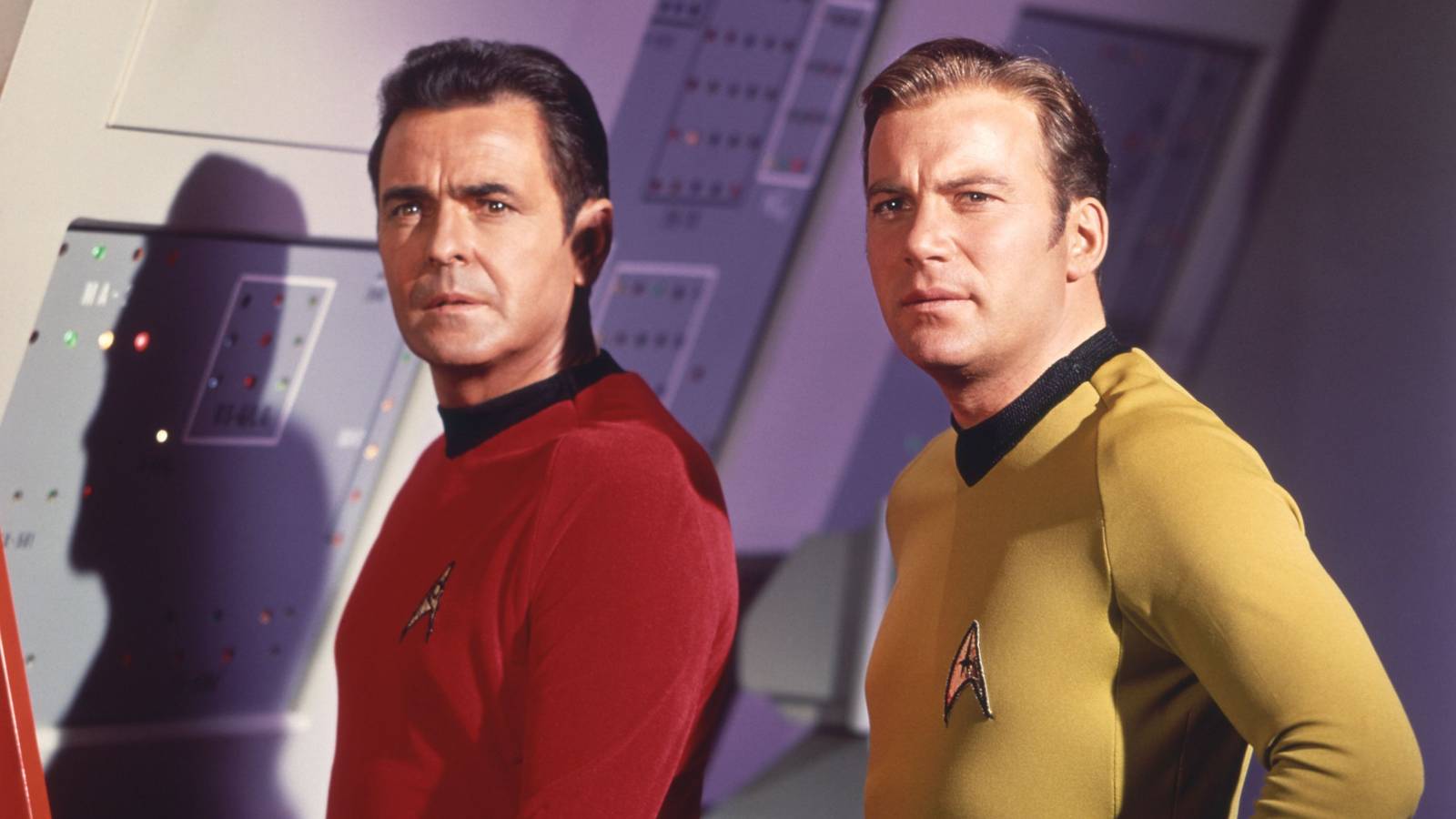
Published Sep 5, 2026, 1:53 PM EDT Senior Music Editor at Screen Rant, Sarah's love of sound and story drive the beat. A globetrotting brand whisperer and award-winning journalist, she’s built cross-cultural narratives around the world—but music has always been her true north. She launched DJ Mag North America, successfully introducing the iconic UK brand to the U.S. market. Previously, she carved a space for EDM inside the pages of VIBE, blending electronic and hip-hop culture long before it was trendy. Few science-fiction franchises have had a big-screen history as long or as unpredictable as Star Trek. Since Star Trek: The Motion Picture brought the crew of the USS Enterprise to theaters in 1979, the franchise has moved through several distinct generations while repeatedly reinventing what a Star Trek movie can be. The original cast delivered six films, followed by four featuring the crew of Star Trek: The Next Generation. J.J. Abrams then launched the alternate Kelvin timeline with an entirely new cast in 2009, eventually producing a trilogy of its own. Most recently, Star Trek: Section 31 became the franchise's first streaming movie, bringing Michelle Yeoh's Philippa Georgiou back from Star Trek: Discovery. Not every experiment has worked. Some movies struggled to translate Star Trek's cerebral appeal into blockbuster entertainment, while others found exactly the right balance between character, spectacle, and the ideas that have kept the franchise alive for 60 years. With 14 feature-length movies now carrying the Star Trek name, there is plenty to argue about. From the weakest voyage to the movie that set the standard for everything that followed, here is every Star Trek movie ranked from worst to best. 14 Star Trek: Section 31 (2025) Michelle Yeoh returning as Emperor Philippa Georgiou should have been enough to make Star Trek: Section 31 an exciting expansion of the franchise. Instead, the streaming movie was met with overwhelmingly negative reviews and often feels strangely disconnected from the qualities that make Star Trek distinctive in the first place. Yeoh remains an enormously compelling presence, and the movie occasionally finds some fun in Georgiou's morally questionable approach to protecting the Federation. Yet its black-ops adventure lacks the character depth of Discovery and never develops a convincing identity of its own. For a movie built around one of modern Star Trek's most intriguing characters, Section 31 feels like a major missed opportunity. 13 Star Trek V: The Final Frontier (1989) Everett William Shatner stepped behind the camera for The Final Frontier, an ambitious movie that sends Kirk and the Enterprise crew in pursuit of a mysterious planet supposedly inhabited by God. The instigator is Sybok, Spock's estranged half-brother, whose ability to manipulate emotional pain gives the story an unusually personal premise. Uneven effects and an increasingly bizarre final act make The Final Frontier the weakest outing for the original Enterprise crew... There are worthwhile moments, particularly when Kirk refuses Sybok's offer to erase his deepest trauma. Unfortunately, the larger story never comes together. Uneven effects and an increasingly bizarre final act make The Final Frontier the weakest outing for the original Enterprise crew, despite some genuinely strong character work between Kirk, Spock, and McCoy. 12 Star Trek: Nemesis (2002) The final movie starring the complete Next Generation crew should have provided an emotional sendoff worthy of characters whom audiences had followed for more than a decade. Instead, Nemesis delivered a grim action movie that never fully understands what made this version of Star Trek special. Tom Hardy gives an intense early performance as Shinzon, a clone of Jean-Luc Picard who becomes the new leader of the Romulan Empire. His connection to Picard creates intriguing possibilities, but the movie favors explosions over exploring them. Data's sacrifice gives Nemesis genuine emotional weight, although the moment cannot rescue a disappointing farewell for one of Star Trek's greatest crews. 11 Star Trek: Insurrection (1998) Everett Star Trek: Insurrection has often been criticized for feeling more like an extended episode of The Next Generation than a major theatrical event. That criticism is understandable, but it also overlooks some of the things the movie does well. Picard discovers that Starfleet officials are participating in the forced relocation of the peaceful Ba'ku so the Federation can exploit the rejuvenating properties of their planet. The resulting conflict places Picard in exactly the sort of moral dilemma that defined The Next Generation. The stakes feel relatively modest compared with the franchise's best movies, but Insurrection at least remains recognizably committed to Star Trek's ideals. 10 Star Trek Generations (1994) Bringing William Shatner's James T. Kirk and Patrick Stewart's Jean-Luc Picard together was always going to carry enormous expectations. Star Trek Generations succeeds in delivering that historic meeting, although getting the two legendary captains into the same story requires some convoluted maneuvering involving the mysterious Nexus. The movie works better as a changing-of-the-guard event than as a standalone adventure. The destruction of the Enterprise-D remains spectacular, while Malcolm McDowell makes a memorable villain as Tolian Soran. Kirk's eventual fate is more divisive, and Shatner has even admitted that he wishes he could redo Kirk's final words. Still, seeing Kirk and Picard finally stand side by side earns Generations an important place in franchise history. 9 Star Trek: The Motion Picture (1979) Following the enormous success of Star Wars, Paramount finally brought Star Trek to theaters with a movie noticeably more interested in the cerebral science fiction of 2001: A Space Odyssey than fast-moving space battles. Its famously deliberate pacing can make The Motion Picture a difficult watch, especially compared with the films that followed. Yet director Robert Wise gives the Enterprise a remarkable sense of scale, while the mystery surrounding V'Ger creates one of Star Trek's most unusual movie antagonists. It is flawed and undeniably slow, but its ambition has aged remarkably well. 8 Star Trek Into Darkness (2013) J.J. Abrams' second Star Trek movie is enormously entertaining when viewed purely as a blockbuster. Chris Pine and Zachary Quinto have settled comfortably into Kirk and Spock, the action is relentless, and Benedict Cumberbatch brings considerable menace to the mysterious John Harrison. The cast nearly pulls it off, but the movie ultimately demonstrates why referencing a classic is much easier than matching one. The problem arrives when Harrison is revealed as Khan. From that point forward, Into Darkness begins leaning far too heavily on The Wrath of Khan, recreating major ideas and even reversing one of its most famous moments. The cast nearly pulls it off, but the movie ultimately demonstrates why referencing a classic is much easier than matching one. 7 Star Trek III: The Search For Spock (1984) Following The Wrath of Khan was an almost impossible assignment, especially after Spock's devastating death. Leonard Nimoy nevertheless made an impressive directorial debut with The Search for Spock, turning the consequences of the previous movie into another deeply personal adventure. Kirk risks his career and steals the Enterprise after learning there may be a way to restore Spock. The cost is enormous: Kirk loses his son David and ultimately destroys the Enterprise itself. The Search for Spock lacks the precision of the movie before it, but its willingness to let Kirk sacrifice nearly everything for his friend gives the story tremendous emotional power. 6 Star Trek Beyond (2016) The Kelvin-timeline movies finally felt completely comfortable in their own skin with Star Trek Beyond. Rather than relying heavily on earlier movies for its identity, director Justin Lin sends the Enterprise crew into a largely self-contained adventure after their ship is destroyed by the mysterious Krall. There is even a strong argument that Beyond is the best of the J.J. Abrams-era Star Trek movies. The movie also understands that the greatest strength of this cast is the chemistry between its characters. Separating the crew creates unlikely pairings, particularly Spock and McCoy, while Sofia Boutella's Jaylah becomes one of the trilogy's best additions. Released during the franchise's 50th anniversary, Beyond captures the optimism and camaraderie of classic Star Trek without simply copying it. 5 Star Trek VI: The Undiscovered Country (1991) Custom image by Mark Donaldson The original cast received the farewell it deserved with The Undiscovered Country. With the Klingon Empire facing an unprecedented crisis, Kirk is forced to participate in peace negotiations with an enemy he has spent most of his life distrusting. Nicholas Meyer, who also directed The Wrath of Khan, uses the end of the Cold War as inspiration for a story about political change and the difficulty of abandoning old prejudices. A conspiracy plot keeps the movie moving, but the real drama comes from watching Kirk realize the future cannot look like the past. It remains one of Star Trek's smartest movies.
All 14 Star Trek Movies, Ranked Worst To Best
Full Article
Original Source
Read the full article at Screenrant →KhanList aggregates and links to publicly available news content. We do not host full articles from third-party sources. Always verify important information with original sources.