
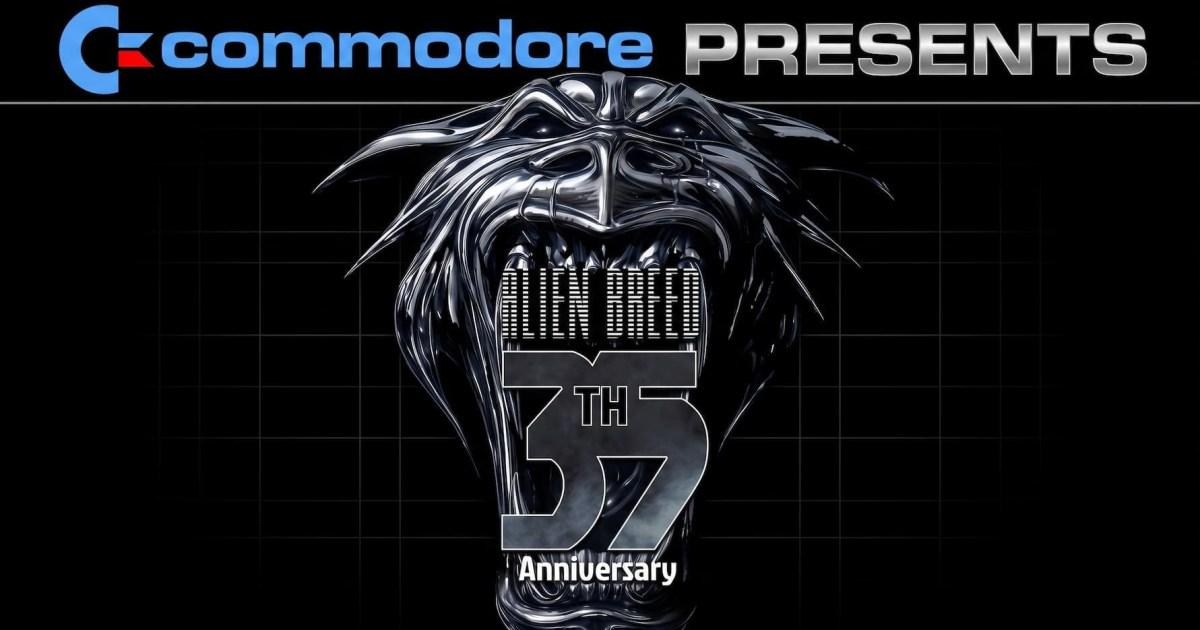
Commodore is back and they’re bringing friends (Commodore) GameCentral speaks to the newly revived Commodore about their plans for remembering the good old days of the C64 and Amiga and for becoming a publisher of brand new games. The Commodore Amiga renaissance has been a long time coming but suddenly the 80s home computer doesn’t seem quite as obscure as it used to be. If you were a gamer in the UK and Europe between the 80s and early 90s, then you very likely didn’t own a console, but instead either an Amiga 500 or its rival the Atari ST. You may well also have grown up with the ZX Spectrum or Commodore 64, at a time when almost nobody used PCs to play games. Although the Commodore 64 was relatively popular in North America (Japan had its own home computer preferences, with the MSX being a favourite) as a follow-up to the 64, the Amiga was much less so. But while Nintendo and Sega dominated in America and Japan it wasn’t until the PlayStation era that the worldwide market become more homogenised and home computers that weren’t PCs or Macs stopped becoming commonplace. Because formats like the Amiga weren’t generally popular outside of Europe not only have they been forgotten but so too have the hundreds of exclusive games that were made for them, often by European developers – most of which are now long gone. That makes nostalgia a very difficult business for older UK gamers but, as we say, things are getting better. In recent months there’s been a number of, seemingly unconnected, Amiga announcements, ranging from a belated version of The Settlers 2 to a remake of Defender Of The Crown and a remaster (that the original creator has already disowned) of James Pond. The most significant development, though, has been the return of Commodore themselves, or at least a new company that has been able to fight through the maze of rights issues to gain control of almost everything that the original Commodore once owned. They’ve already dabbled with some neat looking flip phones, but while they didn’t specifically have anything to do with games their new project does: Alien Breed 35th Anniversary Collection. Expert, exclusive gaming analysis Sign up to the GameCentral newsletter for a unique take on the week in gaming, alongside the latest reviews and more. Delivered to your inbox every Saturday morning. Commodore generally didn’t act as a publisher back in the day, but they are publishing Alien Breed and, as you’ll discover in our interview with chief strategy officer Jim Squires, they seem to have designs on publishing both new and vintage games in the future. Their plans remain opaque for the moment but it’s easy to see why they picked on Alien Breed as their first move, since it was made by Team17 – one of the few companies from that time still around today. They’ve only licensed the rights though and it’s actually Antstream that have handled the recreation of all six Alien Breed games, including the two 3D shooter entries. The games look like they did back in the day but, as Antstream senior director of business development Stewart Stanbury and studio head/development director Mike Rouse explained, they’ve updated the game to include twin stick controls, which works far, far better than the original control scheme (Amiga controllers were generally all digital joysticks with just one button). There’s also online multiplayer, which obviously the original never had. Importantly, the collection features artwork and video interviews with the creators, as well as lots of other curios, such as images of boxes and manuals and a number of prototype versions and plans for games that were never made. In other words, exactly the sort of museum content that we always complain is missing from other retro collections. It’s a great collection and hopefully a blueprint for more to come. And while those future plans remain uncertain, we’re very encouraged by a lot of what Commodore said during the interview below. Formats: PlayStation 5, Xbox Series X/S, Nintendo Switch, and PCPrice: £17.99Publisher: Commodore/AntstreamDeveloper: AnststreamRelease Date: 24th September 2026 (Switch TBA)Age Rating: 7 Alien Breed looked great but didn’t control well originally (Commodore) GC: It’s great to speak to you all and it’s great to see Commodore back. Obviously we’ll talk about Alien Breed specifically, but I’m also very interested in what Commodore is doing generally and where you’re going with all this. JS: So, I very much feel the same as you, that I’m delighted that Commodore is dipping its toe back into publishing, and I’m glad I get to help spearhead that a bit from our side. So, we came back last year. I’m sure you probably know a bit about the return. But the very short version is in July of 2025, so a little over a year ago, we acquired all of the 47 remaining original trademarks. We brought back tons of the original people on the hardware team at Commodore. It was a big passion project to get this back off the ground and really make the Commodore brand mean something again, like it used to back in the day. So, the first thing we put out is the Commodore 64 Ultimate, which if you haven’t heard, it’s an FPGA [field-programmable gate array, a type of integrated circuit – GC] recreation of the original. So, not one of these pre-loaded, nostalgia driven things that you hook up to your TV. It’s a full, proper Commodore 64 that even supports all the old peripherals, all the old discs. Whatever you want to put into it, it’s going to work. It’s magic. It’s great. So, we came at game preservation initially from a hardware place, right? Because that’s the one area that we felt was really, really missing in games preservation. There is tremendously good work being done out there by a number of companies. I think, despite them being owned by Atari, who may have been a competitor back in the day, I think we can all point to Digital Eclipse as the high watermark. They do some incredible work and I’m one of their biggest fans. GC: They’re very good. JS: But we were kind of like, ‘Who’s the Digital Eclipse of hardware right now, right?’ We’re seeing a lot of re-releases, but it’s never usually a 1:1 thing with hardware, whereas we’ve really tried to recreate that full experience. Which has been great. And knock on wood, we may have some more things in the pipeline that keep on that spirit as well, which would be very nice to see. But game preservation does need two temples. There’s the hardware and the software. But we thought, man, if we could do it this well for hardware, what would it look like if we stepped in and tried our hand at software? And so, we’re good friends with the Antstream folks, Mike and Stewart, in particular, have been phenomenal. There’s a reason it’s the three of us on this call. [laughs] They really, really know what they’re doing when it comes to bringing classic games back and making them play the way you remember them being and not necessarily the way they were. That’s a very slim difference but, you know, there were limitations back in the day, that we are now able to overcome. I think the biggest thing about this collection is that finally Alien Breed is a twin stick shooter. Before, you were stuck with the one stick and so you’re shooting in the way you’re walking and that is just not as good. So it feels better now, which is great. But they have built what I would consider a museum quality showpiece. For us, we know the game publishing industry is very, very hard right now. It’s the hardest it’s ever been. It just keeps getting harder. Thankfully it is not our core business. So we are able to look at it from a true preservationist standpoint. It’s about what is it that we care about, that we want to make sure is still playable and can continue into future generations. And of course, like every publisher, we hope to turn a profit, but whether we do or not, it’s kind of the secondary point to what we’re doing. We really just want to make sure that that high quality content is being preserved as faithfully as possible. And with Alien Breed, it was a great opportunity that came up, because unlike a lot of titles out there that we could look at preserving, these… with the exception of some mobile, actually I think like BlackBerry releases back in 2012 and maybe smartphone in 2013… [laughs] The original six Alien Breed games have never come back out. There have been remakes but not just the cleaned up, ‘This is the original, here you go.’ So I think we’ve done a phenomenal job to bring these back for the first time ever. The number of comments I’ve read on Steam reviews… I don’t know if I’ve even said this to you guys yet, Mike and Stewart, you’ve probably seen the same… My favourite takeaway is people saying, ‘I was never able to get Alien Breed 3D to run on my AmIga. I can’t believe I finally get to play this!’ So it’s been a lot of fun to see that sort of a thing. The 3D games are blatant clones of Doom (Commodore) GC: I’ll be honest, I never really liked Alien Breed much, back in the day. It may be the game most compromised by the Amiga’s limited controls. The graphics were good, but the controls were just horrible and, like you say, it now plays like how it should have rather than how it did. There wasn’t time to review the collection before now, so maybe I missed something, but there doesn’t seem to be any option for the old controls? MR: No, you can switch. GC: Oh, you can? MR: Yeah. So, essentially what we do is we manage the new control scheme on the thumbsticks and then when you switch to a D-pad and the face buttons, you’ve got the old scheme. So rather than building in a system where you have to switch between the two… GC: It’s just which ones you press? MR: Yes! You move you move your thumbs outwards to the outer set of controls and you’ve got the old control scheme, so to D-pad and face buttons, and then you move it inwards to the sticks for the new control scheme, which is move on one stick, shoot on the other stick. GC: OK, great. What I really liked about the collection is, and you’ll see me complain about the lack of this in collections from other companies, but I really appreciate all the museum content: the interviews, the prototype games, etc. The stuff that gives context to what the series is. How much of a priority was that for you, from the start? MR: As a dev team, we sat down and one of the exercises we ran through is to talk about what our favourite game is and what we would love to see if our favourite game was released again. And we just came up with a huge list of things, as fans of the game, you want to see. You want to see all the concept images, you want to hear from the developers, you want to know all the little secrets that went into it. Everything is fascinating and exciting and the value add there is not just for you as an original fan but anyone getting hold of it for the first time. There’s now the history of this product that you can learn about. You can see the challenges, as some of the items we put up there are instruction manuals and the boxes, and in the text we describe what they are. And then we also describe that collectors put more value on collecting these physically if all these pieces are together and when I look at someone like my son, he doesn’t get that at all. He’s like, ‘What, you pay more money for a physical thing if it has all the pieces together?’ I say, ‘Yeah and look, here’s all the different pieces you get with it’, and so, when we look at preserving these old games… one, it’s culturally vital that we do it. It’s one of the few mediums – one of the only mediums – where we do a terrible job. Music is very accessible, books, poetry, films… do fantastic jobs of getting hold of the original content and then learning about it. We even teach it at school. But games we don’t and so we have to make a choice as an industry on how we preserve very culturally important pieces. So, you know, Alien Breed is not going to be to everyone’s taste, but it was influenced by film and media and song of the time, to create an interactive experience that hadn’t existed before. And that’s really important for us as a community of gamers and for us as a wider culture. And so for us, yes, all these concepts we could get, the music, cancelled versions of the game are really important, because they tell a full story. GC: That’s nice, that’s a great speech! But was Alien Breed inspired by a particular movie, I never realised? [Alien Breed copies the film Aliens to a hilariously obvious degree – GC] MR: [laughs] Uh, I mean… possibly, yeah. Maybe Mary Poppins. GC: But I agree entirely with what you just said and it’s interesting to me because while the arcade scene was very important in the UK at the time, Nintendo and Sega were not. Not before the Mega Drive at least. So we weren’t playing Mario and Zelda, we were playing, generally speaking, UK-made C64 and Amiga games, but while one can be nostalgic for those games none of them were better than the best stuff coming out of Japan. Which must create problems for you, especially in terms of attracting a new audience. Especially when most people in the US have probably never heard of these games. SS: I might be able to add something there. And I speak from the Gamescom experience that we had on the Commodore stand, which huge thank you to Jim for helping make that happen. JS: It was amazing. SS: But what we saw when people came up and were playing it… you know, dads or mums with their kids who may have played the game back in the day, and there’s some great photos of a dad pointing at the screen, with the kid sitting next to him. And I’d love to say it was a cliché moment, and it only happened once, but it didn’t. It happened a number of times where you had these generations sitting looking at a game. And what we’re trying to do, and the vibe that we had… Mike was talking earlier about how important it was during the creative process to make the game feel like it did, but not necessarily play exactly like it did. We wanted that modern aspect from it, so that when a parent and their child sit down in front of the screen they have that nostalgic kick. They can share a moment that they have with their child, that that child can then pick up and innately know what the controls are ‘cos they’re used to twin sticks already and an older generation, a more nostalgic generation, can pick it up and play it as well, because we all tend to play games now way longer than we used to. So we saw this moment happen over and over again. And that was so important and it was a validation for the design ethos to go in and add this as a concept. And, sadly, so many of those little nuances of what the team created will be missed. They will be seen by a handful of people. We still want people to have a great time. The little nuances that make those moments happen are by design and they’re there to enable these moments to happen in an organic and comfortable and approachable way for both a younger and an older audience. So that was super important towards the design and that’s what brings people on a nostalgic journey. It’s not a full remake. It’s not a full remaster of everything, but what it is, is the right bits done because, to the point that you made, the North American audience is very difficult for a game that doesn’t have a culture there. So, what this does is kind of creates a benchmark. It says, right, this is what you can do. We think a lot of people are going to be playing Alien Breed for a long time. People will pick this game up in six months or a year or further down the line, and it won’t have changed. That sense of nostalgia, that sense of the gameplay, is not going to disappear because it’s not a modern, total remaster, etc. where people chew through it in a couple of weeks or months and then disappear out. This is the equivalent of the world book collection or the Encyclopaedia Britannica, as it were. When it’s needed, it’ll be there and it’ll be there for whatever generation happens to pick it up and it’s still going to be approachable and playable and that was a huge part of the of the ethos that we were in on and that also then reflects what Commodore are doing as a business as well, with brand and everything else. All the Alien Breed games are included in the collection (Commodore) JS: The question of something that is so UK-ccentric, or European-centric, because of the different audiences and dynamics back in the day. To a certain extent, I would almost call that a feature and not a bug. On the one hand, we have a built-in audience in the UK ready to go. As you can probably tell from my accent, I did not grow up in the UK. [Jim is Canadian – GC] So in North America, in the 80s, the reality is we grew up with consoles, where you guys grew up on computers. That was very much the gaming divider. There’s just no way around that. We had computers at home, but we all kind of went from our 64s… like, a lot of us weren’t even really aware of the Amiga. We went from the 64 to, as we all remember, the now defunct term IBM compatible PC. GC: That was always my understanding, that the 64 was moderately successful but the Amiga was not. JS: Yeah. I mean the 64 was everywhere when I was growing up. I can certainly tell you that much. And America, I think, was always, technically speaking, Commodore’s number one market back in the day. But again, we’re talking, you know, 300 million people versus, I apologise I don’t know the current or the then population of Britain but by comparison I’m in Canada and we’re 30 million. So when you have that big a market size you’re going to have it as your number one market, even if you’re not the number one seller in that market. But yeah, every kid on my block had a Commodore 64 and most people I talked to… if you didn’t own one, you knew someone who did. The Amiga, not the same experience by any stretch. My computer after the 64 was a Tandy 1000. So, there you go. We went in a very different direction. But, I would say that for a lot of us over here, and you guys may end up in a similar experience if there were games that did not come to the UK. You’ll often have heard about a game and never had the chance to play it. So Alien Breed, for me, is a great example. I was aware of the franchise and the impact it had on British audiences and the impact it had on so many people on the Commodore team, but being in North America and not having grown up with an Amiga I did not play it until the collection. And then I went back and played the originals just to make sure it lined up nicely and I saw the difference and it was great. It’s been fun to do research into this, but there are a lot of folks out there, like me, who get excited by the opportunity to play something they never had the chance to before. Right? You’ve heard about it and now it’s available and easy to digest. Listen, is it connected to a certain movie? I don’t know. But what I will say is there’s this beautiful period from the late 80s to early 90s where everybody was like, ‘How do we do our own that?” The other one, other than Alien Breed, that I keep going back to, is the Genestealers from Warhammer, right? But it’s great, it inspired so many cool things that came out of it. And so even fans of a certain film franchise, who may have heard about this as a then knock-off but now, you know, loving piece of nostalgia might want to dive into it. So yeah, we love that it’s a chance to introduce it to new audiences, not to just sell it to folks who loved it back in the day. The collection has lots of developer interviews (Commodore) GC: I can see now why you started with Alien Breed, because there is such a clear disconnect between what it could’ve been and what it was, and it’s all down to just the controls. I don’t expect you to announce anything now but is this going to be a template for future games? Have you got a short list of other games you want to make collections for? JS: So, I will say that we’re not announcing anything yet, just to get that out of the way. But short answer, yes. We would love to do more. I mean, I’ll even go a little a bit higher level than these collections. We would like to be doing more publishing. But we’re not rushing into it, because we’re not doing this from a revenue point of view. It’s about trying to preserve the right things. GC: That is music to my ears. JS: If the opportunity presents itself, to present the right things. It could be new games, that were like, ‘This fits our ethos. This might be tied to existing whatever.’ To be honest with you, I am really just spitballing a little bit, in the same way I do behind the scenes. We do not have anything queued up for game two yet because we want to learn from this one first. I think that’s the most important thing we can do, where we went right, where we went wrong, and what we can do for the next project, to do it correctly. And, yeah, we have so many things going on at Commodore that there’s never a need to rush into anything new right now, because you can only spin so many plates. Having said that, yeah, there are a number of older series that we would love to get involved into bringing back. And I’ll be frank with you, one of the things that breaks my heart is that some of the best games being made today… I’m going to throw out a term for you that never sticks, David. I keep trying to make it a thing. It’s like I’m trying to make fetch happen. But nouveau retro. You know, these games that look and feel like old school games but aren’t. Like Mina The Hollower, which I know Mike is tired of hearing me talk about. GC: Oh, it’s very good. JS: You know, these sort of games that really fit that mould. Some of the best of these are being made on the 64 right now by current developers and they’re not typically being ported out. And if they are, they’re being ported out to things like the NES. Nobody is taking these games and presenting them in a way that everybody can easily access them. And in in my perfect world, I would love to help some of these developers reach audiences on Steam, on PlayStation, on Nintendo, things like that, because these games are just fabulous. Now, that’s not us announcing plans to do anything. That is just genuinely what my heart would love to be doing, because there it’s just great content, right? Great content deserves a great a great audience and we’d like to help them find it. GC: If I can be a grammar Nazi for a moment, retro means something that isn’t actually old but looks it. JS: That’s a really good catch. GC: So you’re actually using the term correctly, unlike most others. JS: [laughs] Every time someone says retro computing, I’m kind of like ‘vintage computing’. GC: Yes, that’s exactly it. Vintage is an actual old Commodore 64 from the 80s, a retro one is the new replicas you’re making now. But I wonder, since there aren’t that many series with quite as many sequels as Alien Breed… would you consider making collections that spotlighted particular developers? I won’t name them but I’m sure we all know the obvious ones. JS: No, no. I know exactly what you’re thinking. Yeah. Absolutely we would. GC: I would love to see those people interviewed for posterity. Because there are some of those games that are so British and I can also think of developers that were so French, and they did most of their work on the C64 and Amiga. SS: I think, David, something that was a consideration when we were looking at titles and we’re fortunate enough at Antstream to have relationships with a lot of vintage game studios and IP. And a big part of that kind of focus and decision on which project we were going to pick up first did come down to one where we see an opportunity and we see a game that we can apply this retro theming to in the right way, so that it modernises gameplay without really irritating the original player-base or confusing a new player-base. So, Alien Breed worked particularly well for that. And it also covered both the top-down and 3D… sort of the origins of the 3D gameplay, which is so important that there were two mixes in there, which you don’t often get in a franchise. If you’ve got an RTS or a strategy game or a first person shooter, it’s seldom you get a franchise that’s got both of them. And if you look at all the additional content in the game, Team17 had some crazy ideas of what they wanted to do with the Alien Breed brand, from pinball machines to World Of Warcraft style games. I mean, they really were… it was a very different time when it came out. But I think a big part of it was about finding the right opportunity and us talking with different publishers, but then also finding groups of developers who, and I mean it’s quite sad, but are still around. Hopefully Commodore will make a new Amiga as well (Commodore) GC: Well, that’s what I was going to say. I’ve met a lot of these people and they’re always stuck working at mobile developers or whatever, and it’s such a waste of talent. SS: We had such a great moment with… Mike reached out and spoke to a lot of the original developers, with the support of Team17, who were genuinely fantastic at helping us network with the original team. And we went out and Mike had a list of questions that we had deliberated over, ‘How do we ask these guys? Are they going to remember?’ And, again, you’ll see from the developer interviews, and we’ve got some snippets from it, the stuff we got back. We were like, ‘This is why we do this.’ They are just… they’re funny, there’s a sparkle in the eyes for some of these guys when they told their stories. GC: They’re always so proud of what they did, and rightly so. SS: Absolutely. GC: For an admittedly small period of time they were hugely influential to the youth of the UK and beyond. But now they’re just being forgotten, unless something is done like a collection like this. MR: Yeah. We as an industry sometimes forget that we stand on the shoulders of giants. And you know, these people, like you said, they paved the way for the industry, and they inspired the generation of developers that are creating some of the greatest games around now. So again, it is vitally important that these games are not just brought back to be enjoyed by modern audiences, and for those that have a nostalgia for it, but, like I said, culturally it’s very important. GC: It would be fascinating to see something based around Lemmings and DMA Design. How many people even realise that GTA is Scottish? Because there’s nothing in those games to indicate that. MR: I know. GC: How many people know that before GTA, the biggest game from the same developers was a puzzle game about green-haired lemmings. JS: That is my favourite, like weirdest line. Few people ever get two hits but to go from Lemmings to GTA is the most bizarre right turn. GC: Lemmings was really big at the time, too. It was the first game I remember my mum liking. JS: Yeah. GC: But it’s like tears in the rain, it’s all being lost. When my generation goes, who will remember these games and people? Well, hopefully plenty of people through projects like yours. SS: I think, David, these things are not going to be lost like tears in the rain, because folks like ourselves and others are out there trying to make sure of that. So, I think it’s okay. We’re going to make it work out nicely, you know. GC: Good. We’ll end on that. Excellent. Thank you all for your time. Video games used to come in things called boxes (Commodore) Email gamecentral@metro.co.uk, leave a comment below, follow us on Twitter. To submit Inbox letters and Reader’s Features more easily, without the need to send an email, just use our Submit Stuff page here. For more stories like this, check our Gaming page. Arrow MORE: Uncharted 5 from Naughty Dog is real according to multiple sources Arrow MORE: Resident Evil 5 and 6 remakes will happen hints Capcom but not anytime soon Arrow MORE: Toem 2 review – the healing power of photography GameCentral Sign up for exclusive analysis, latest releases, and bonus community content.
Alien Breed 35th Anniversary and the return of Commodore interview
Full Article
Original Source
Read the full article at Metro →KhanList aggregates and links to publicly available news content. We do not host full articles from third-party sources. Always verify important information with original sources.