
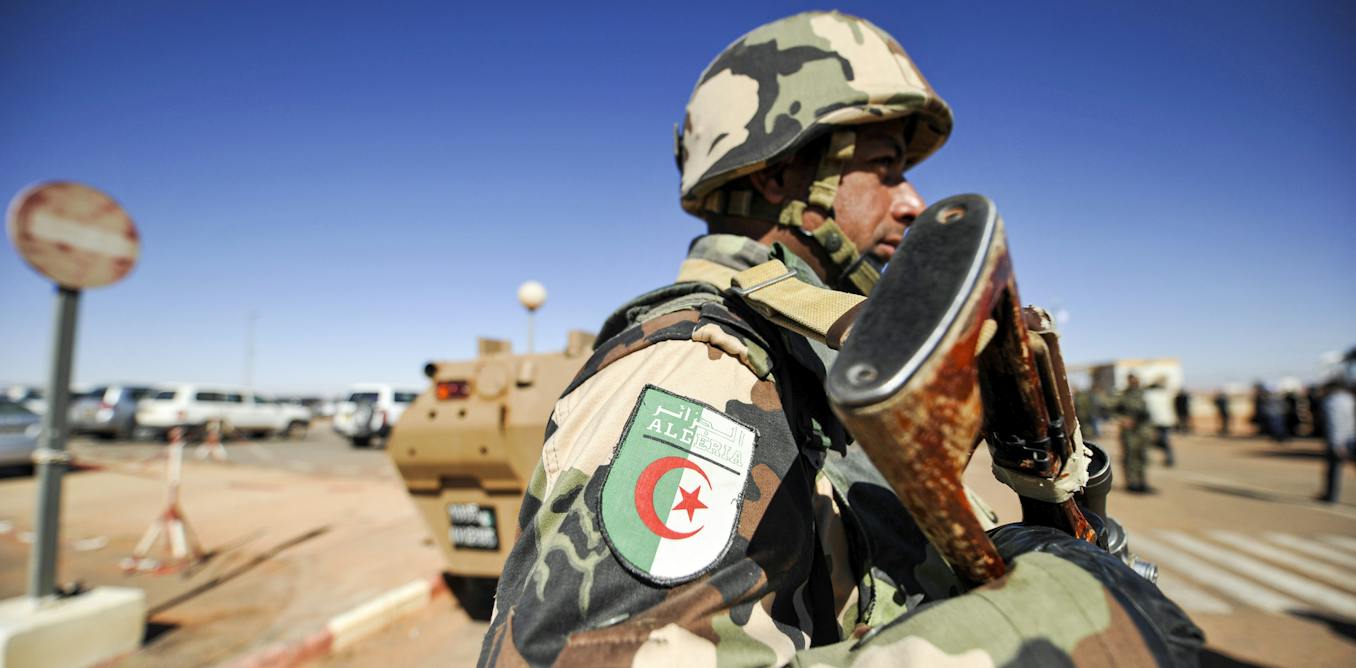
Algeria recently announced it would deploy its army into neighbouring Niger. This marks a departure from its long-standing reluctance to deploy its military outside its borders. It last sent forces to support Egypt during the 1973 Arab-Israeli war. On 25 October 2026, both chambers of Algeria’s parliament approved the deployment of army units to Niger. The following day, President Abdelmadjid Tebboune authorised the mission, saying it would protect the two countries’ shared energy and economic interests. Days earlier, the two nations – which share a 951km border – had signed a military cooperation protocol. I have studied Algeria’s diplomacy, bilateral relations and position within regional and international power dynamics. In my view, this latest decision signals a shift in Algeria’s approach to the Sahel. By combining military cooperation with the protection of its economic interests, Algeria is seeking to exert greater influence over regional security without becoming directly involved in the region’s many conflicts. But can an operation be limited to protecting economic interests when securing infrastructure also requires securing the surrounding areas? The real test will be whether Algiers can turn its intervention into a tool for stabilisation. This will require a military presence with a clearly defined mandate and cooperation with other countries in the region. Without these safeguards, Algeria’s intervention risks becoming yet another episode in the militarisation of the Sahel. Why the mission matters Securing energy interests provides an immediate justification for military intervention, but it does not fully explain the strategic stakes. Sonatrach, Algeria’s national oil and gas company, is exploring the Kafra oil block in the Agadez region of Niger. The region is near the Algerian border. Niger is also a key link in the planned trans-Saharan gas pipeline project. It’s intended to transport natural gas from Nigeria, through Niger, to Algeria, where it would connect to existing pipelines supplying European markets. Read more: Niger is a key player in the Sahel region - 4 security implications of the coup The Niger section of the project would be in the north, a region affected by armed groups and illicit trafficking. This poses an operational challenge: protecting an oil or gas facility does not necessarily secure the roads leading to it. It doesn’t ensure the safety of nearby populations or address threats in surrounding areas. Yet, the broader the area requiring protection, the greater the risk that the military mission will extend beyond its original scope. This is a familiar pattern in foreign interventions. It has been seen in the volatile eastern region of the Democratic Republic of Congo, for instance. Protecting an investment can lead to a long-term military presence, which requires additional resources and creates new obligations. Algeria must therefore distinguish between three objectives: protecting energy facilities ensuring that its economic activities in Niger can continue without disruption from insecurity shaping the regional security environment in the Sahel. The first requires a clearly defined mandate. The second calls for broader logistical and political coordination. The third carries significantly higher costs and risks. A former Algerian diplomat raised the possibility of deploying forces to Madama, in northern Niger. The region’s proximity to Libya could facilitate surveillance of the wider Sahara-Sahel region. However, this remains a possibility rather than a confirmed deployment location or an indication of a broader military mandate. Pedestrians near the border crossing on the Niger-Algeria border. Markus Matzel/ullstein bild via Getty Images A fragmented regional order The coups in Mali, Burkina Faso and Niger have profoundly reshaped the Sahel’s security arrangements. France’s withdrawal of troops in 2022 and the end of the UN mission in Mali in 2023, as well as the creation of the Alliance of Sahel States that same year, have weakened existing security frameworks without eliminating the threats. The Sahel Map showing the Sahel region and Algeria’s position. Wikimedia Commons The military authorities in these countries continue to face armed groups, governance challenges and rivalries between states. Niger occupies a pivotal position between north Africa, Libya and the wider Sahel. Its instability affects cross-border movement and economic interests. This also threatens Algeria’s security along its southern border. For Algiers, supporting Niger’s military capabilities is therefore as much about preventing insecurity from spreading as it is about strengthening bilateral relations. But closer ties between Algeria and Niger do not, in themselves, amount to a regional security strategy. Bilateral cooperation can strengthen military capabilities, but it can also deepen divisions if countries pursue their own security arrangements without coordinating responses to shared threats. External engagement The role of external powers adds another layer of complexity. Russia has strengthened its security presence in the Sahel. Other actors such as China and the US are expanding their influence in the broader region. Algeria will have to avoid being drawn into competing camps. It will need to preserve its independence in regional security decisions. A military presence can enhance diplomatic clout, but it can also expose the country to partner expectations, local opposition and possible retaliation from armed groups. Read more: Niger has cut military ties with the US: why this is bad for the Sahel’s security An intervention carried out at the host country’s request may have a legal and political basis, but this does not remove the risks. The risks The October 2026 decision to deploy Algerian army units to Niger is a political milestone. However, it remains unclear how many troops would be deployed and how long the mission would last. The military mandate, deployment location and rules of engagement haven’t been made public. The mission’s outcomes will need to be assessed against the evolving security threats, the safety of local populations and the state of regional cooperation. This highlights Algeria’s paradox. To prevent instability in the Sahel from spreading towards its borders, it may have to intervene beyond them. But doing so risks drawing the country into crises that no external military force can resolve alone.
Algeria is sending troops to Niger for the first time in decades – what’s at stake
Full Article
Original Source
Read the full article at Theconversation →KhanList aggregates and links to publicly available news content. We do not host full articles from third-party sources. Always verify important information with original sources.