
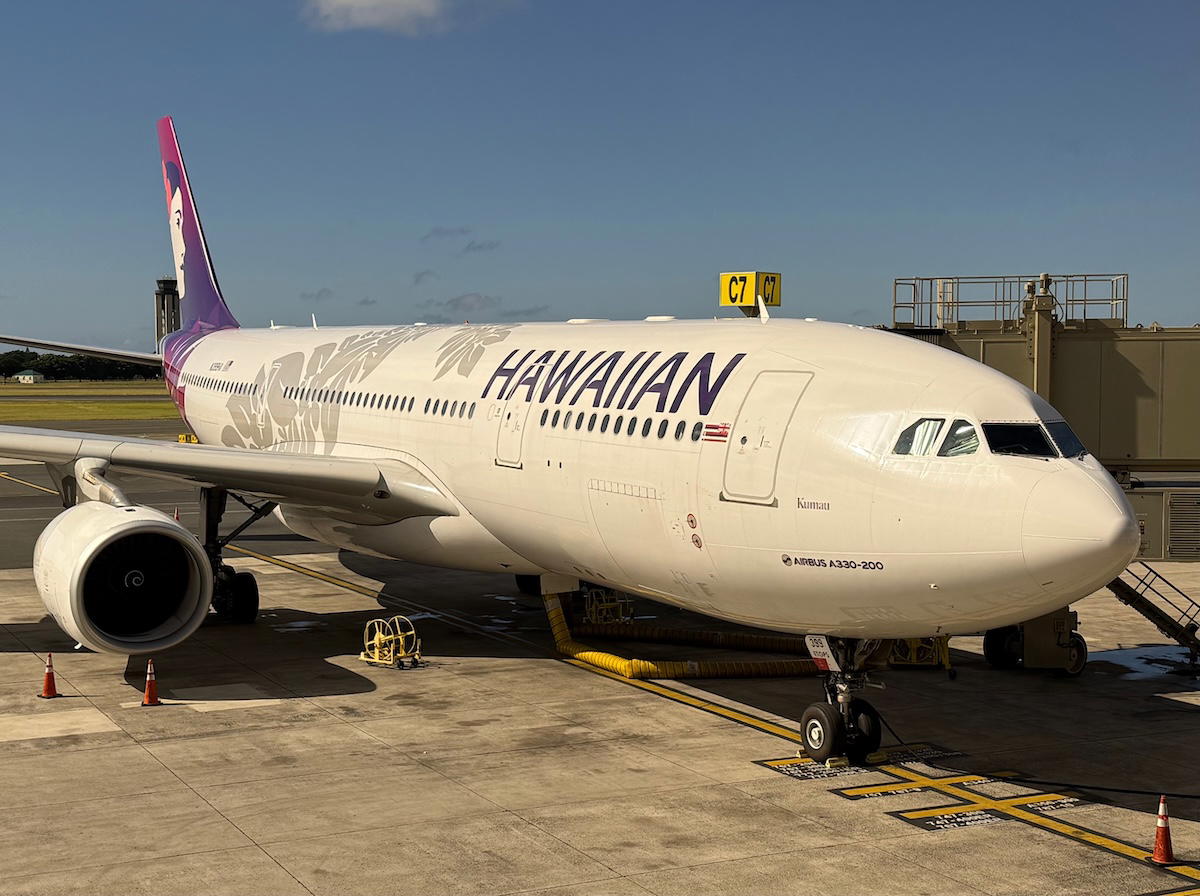
Alaska Air Group has just formally revealed that it plans for Alaska and Hawaiian to join the oneworld transatlantic and transpacific joint ventures. This has major implications for competitive dynamics. We’ve had reason to believe that this was in the works, but these plans are now official. Whether or not this arrangement receives regulatory approval remains to be seen. Alaska & Hawaiian plan to join long haul joint venturesThe partnership dynamics at play here are interestingBottom line Alaska & Hawaiian plan to join long haul joint ventures Alaska Air Group has announced that it intends to join Atlantic and Pacific joint ventures in order to strengthen its international guest proposition: Alaska plans to join the oneworld transatlantic joint venture, which otherwise includes American, British Airways, Iberia, Finnair, and Aer Lingus (Aer Lingus isn’t part of oneworld, but is still part of the joint venture, given that it’s owned by IAG) Alaska plans to join the oneworld transpacific joint venture, which otherwise includes American and Japan Airlines Alaska plans to join long haul joint ventures In a presentation for investors, the company points out how over 85% of US carrier global long haul capacity operates within immunized joint businesses. The airline suggests that key advantages include a more useful network, greater commercial relevance, and broader demand access. For those not familiar with joint ventures, these allow airlines to coordinate fares and schedules, to create as comprehensive of a network as possible. The downside is that these joint ventures are the equivalent of eliminating a competitor, since multiple airlines are essentially merging parts of their business, and acting as one. The thing to be aware of is that joining a joint venture requires regulatory approval, and that can at times be tough to secure, or at a minimum, require some concessions. After all, it’s the equivalent of eliminating a competitor. Personally, I can’t imagine that approval here will be all that hard: Across the Atlantic, Alaska really isn’t adding that much capacity, in a way that would meaningfully shift competitive dynamics Across the Pacific, American is incredibly weak, so if anything, this would just strengthen the overall competitiveness of the joint venture arrangement Alaska & Hawaiian want to join long haul joint ventures The partnership dynamics at play here are interesting There’s nothing preventing airlines from the same region from belonging to the same joint venture. However, in the United States, we’ve generally seen only one “local” carrier be part of every joint venture. That’s mostly a function of there being three airline alliances and (historically) three global US carriers. The evolving partnership between Alaska and American has been interesting to watch. Keep in mind that going back several years, the plan was for American to launch long haul flights out of Seattle, and for Alaska to provide the regional feed for those flights, as part of a win-win arrangement. However, that strategy collapsed for a variety of reasons — that includes failures on American’s part, plus Alaska’s decision to acquire Hawaiian, and launch its own long haul flights. Now we’re seeing Alaska launch long haul flights out of Seattle, without any specific support from American. It makes sense for American & Alaska to partner more closely On the surface, some might be surprised that American is okay with Alaska joining its joint ventures. However, I think that overlooks the overall competitive dynamics: American just isn’t really trying to compete across the Pacific, so competitively, it seems beneficial for American’s partners to at least have more service Realistically, it’s in American’s best interest for Alaska to put up a good fight against Delta in Seattle, in terms of weakening Delta’s long haul presence, and challenging its growing West Coast hub American is significantly weaker than United across the Pacific, and Delta’s joint venture with Korean Air is strong Earlier this spring, we learned how Alaska and American planned to strengthen their partnership and introduce more revenue sharing arrangements, so clearly Alaska joining American’s joint ventures is a core part of that. I continue to think that an eventual merger wouldn’t be illogical, but that’s neither here nor there. Competitively, this development makes sense Bottom line We’ve known for some time that discussions were taking place for Alaska to join the long haul oneworld joint ventures. While it remains to be seen with what timeline this happens, Alaska Air Group has for the first time publicly stated these plans. The airline group hopes to join both Atlantic and Pacific joint ventures. Regulatory approval is needed for this, so we’ll see if the deals get approval. This would be the first time in recent memory that we’ve seen two US airlines be part of the same long haul joint venture. While you’d logically think American might be opposed to Alaska joining this arrangement, it’s actually pretty logical when you consider the competitive dynamics. American just can’t compete on long haul flying, so having another airline to partner with to take on Delta and United is also in American’s best interest. What do you make of the prospect of Alaska joining the oneworld transatlantic and transpacific joint ventures?
Alaska & Hawaiian To Join Oneworld’s Atlantic & Pacific Joint Ventures
Full Article
Original Source
Read the full article at Onemileatatime →KhanList aggregates and links to publicly available news content. We do not host full articles from third-party sources. Always verify important information with original sources.