
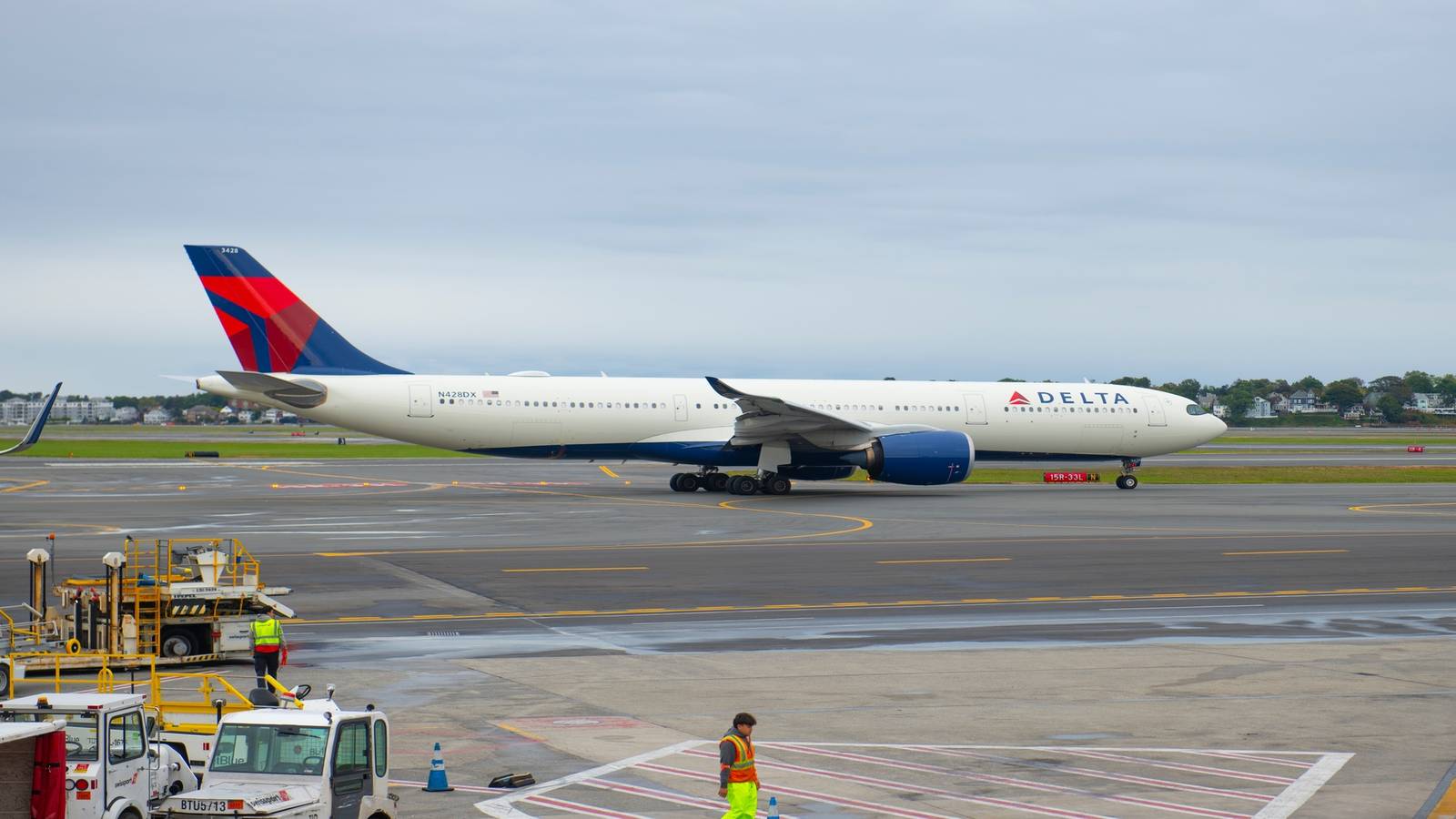
Published Aug 7, 2026, 4:00 PM EDT Prachi is a London-based journalist with extensive experience in the aviation industry. She has worked for several leading industry publications, covering a broad range of topics. Her expertise lies in aircraft maintenance, emerging technologies, and advanced air mobility. She is currently pursuing a PhD in Journalism, focusing on data journalism and its potential to transform conventional aviation reporting. The battle for Seattle-Tacoma International Airport between Delta Air Lines and Alaska Airlines has been one of the most closely watched airline rivalries in the US, and it is becoming very interesting. The Atlanta-based carrier recently announced that it will reinstate flights between Seattle and Tokyo Narita next year, ending a seven-year break and putting it back into direct competition with Alaska Airlines on the route. The two carriers have been competing for market share in Seattle since Delta stepped up its presence in the city and designated it a hub in 2014. Both airlines have built strong domestic networks from Seattle, but in recent years they have expanded their focus beyond the US market, adding long-haul services and strengthening the Emerald City’s links to destinations around the world. This year, both carriers have continued that expansion. Delta’s Return To Tokyo Adds More Competition To Seattle’s Asia Market Credit: GCMapper From March 7, Delta Air Lines will resume flights between Seattle and Tokyo Narita, operating the route with its Airbus A330-900 aircraft. The airline inherited the route following its merger with Northwest Airlines and operated nonstop services between the two cities until 2020. During the COVID-19 pandemic, as part of a wider Asia-Pacific network restructuring, Delta moved its remaining Seattle-Tokyo services to Tokyo Haneda Airport. However, competition in Seattle’s international market has increased as Alaska Airlines continues to develop the city as a long-haul hub following its acquisition of Hawaiian Airlines. With Delta’s return to the route, the Seattle-Tokyo market will see additional capacity, increasing the number of daily departures between the two cities to five. Three flights will operate to Narita and two to Haneda, assuming current schedules remain unchanged. During the winter 2026/27 season, Alaska Airlines and Japan Airlines are scheduled to operate daily flights between Seattle and Narita, while Delta and All Nippon Airways will each operate daily services to Haneda. Beyond Japan, Delta has also continued expanding its international network from Seattle. The airline recently launched new seasonal nonstop services to Rome and Barcelona. Delta Air Lines Long-Haul Routes From Seattle (2026/27) Destination Frequency Amsterdam Year-round; twice daily (one daily during northern winter season) Barcelona Summer seasonal; three weekly (Tue, Thur, Sat) – Launched in 2026 London Heathrow Year-round; one daily Paris Year-round; one daily (four weekly during northern winter season – Mon, Wed, Fri, Sun) Rome New summer seasonal; four weekly (Mon, Wed, Fri, Sun) – Launched in 2026 Seoul Incheon Year-round; one daily Shanghai Pudong Year-round; one daily Taipei Year-round; one daily Tokyo Haneda Year-round; one daily Tokyo Narita One daily – Returning in March 2027 Alaska Is Challenging Delta With A Growing International Network Credit: Shutterstock Regarding Alaska Airlines, since the merger with Hawaiian Airlines, the carrier has been gradually expanding its international network from Seattle. It wasted little time after the acquisition and launched its first long-haul international service from Seattle to Tokyo Narita in May 2025. It then launched its second and longest route to Seoul Incheon. This year, the airline has also expanded into Europe. In April, it commenced its first-ever route to the continent with a seasonal summer service to Rome. Since then, it has added a year-round service to London Heathrow and a seasonal service to Reykjavík. Looking ahead, Alaska aims to turn Seattle into the West Coast’s “new premier global gateway” and plans to operate at least 12 international destinations with long-haul aircraft from the city by 2030. Destination Frequency Aircraft Tokyo Narita One daily (Year-round) Airbus A330-200 until Oct. 2 (278 seats); Boeing 787-9 Dreamliner from Oct. 3 (300 seats) Seoul Incheon Up to six weekly (one daily from May 2027) Boeing 787-9 Dreamliner (300 seats) Rome One daily (Summer seasonal) Boeing 787-9 Dreamliner (300 seats) London Heathrow One daily (Year-round) Boeing 787-9 Dreamliner (300 seats) Reykjavík One daily (Summer seasonal) Boeing 737 MAX 8 (161 seats) That would mean adding roughly one to two long-haul routes a year through 2030, although the actual pace is likely to vary. Given its plans, it would not be surprising to see Alaska add more European destinations in the coming years, potentially including major markets such as Paris, putting it into further competition with Delta. At present, the two airlines compete directly on four of Alaska’s long-haul routes from Seattle: Tokyo Narita, London, Seoul and Rome. Alaska Dominates Seattle Overall, But Delta Leads Long-Haul Flying Indeed, the competition between Delta and Alaska in Seattle has become one of the most interesting airline battles in the US. However, the two carriers were once codeshare partners rather than rivals. The partnership was mutually beneficial. Delta, which had a smaller presence on the West Coast at the time, gained access to Alaska’s strong network, while Alaska customers benefited from easier connections to Delta’s global network. But following its merger with Northwest Airlines in 2008, the Atlanta-based carrier began looking to establish a stronger West Coast presence and compete with United Airlines in San Francisco and American Airlines in Los Angeles. Seattle quickly became the focus of its expansion plans. In 2014, Delta announced plans to build a hub at the airport and increased its operations significantly in the following years. As a result, its partnership with Alaska came to an end in 2016, and the two carriers have since competed for a larger share of the Seattle market. Today, Alaska remains the largest airline at the airport, holding around 50.7% of the overall market share compared with Delta’s 24.1%, according to Port of Seattle data. However, Alaska’s lead is largely driven by its domestic network. In the international market, Delta currently holds the largest share with 24.8%, ahead of Alaska’s 14.7%. This year, Delta is scheduled to offer around 1.63 million seats on long-haul nonstop routes from Seattle, compared with around 541,000 seats from Alaska.
Alaska Airlines Vs. Delta: Who's Winning The Seattle Long-Haul Battle Right Now?
Full Article
Original Source
Read the full article at Simpleflying →KhanList aggregates and links to publicly available news content. We do not host full articles from third-party sources. Always verify important information with original sources.