
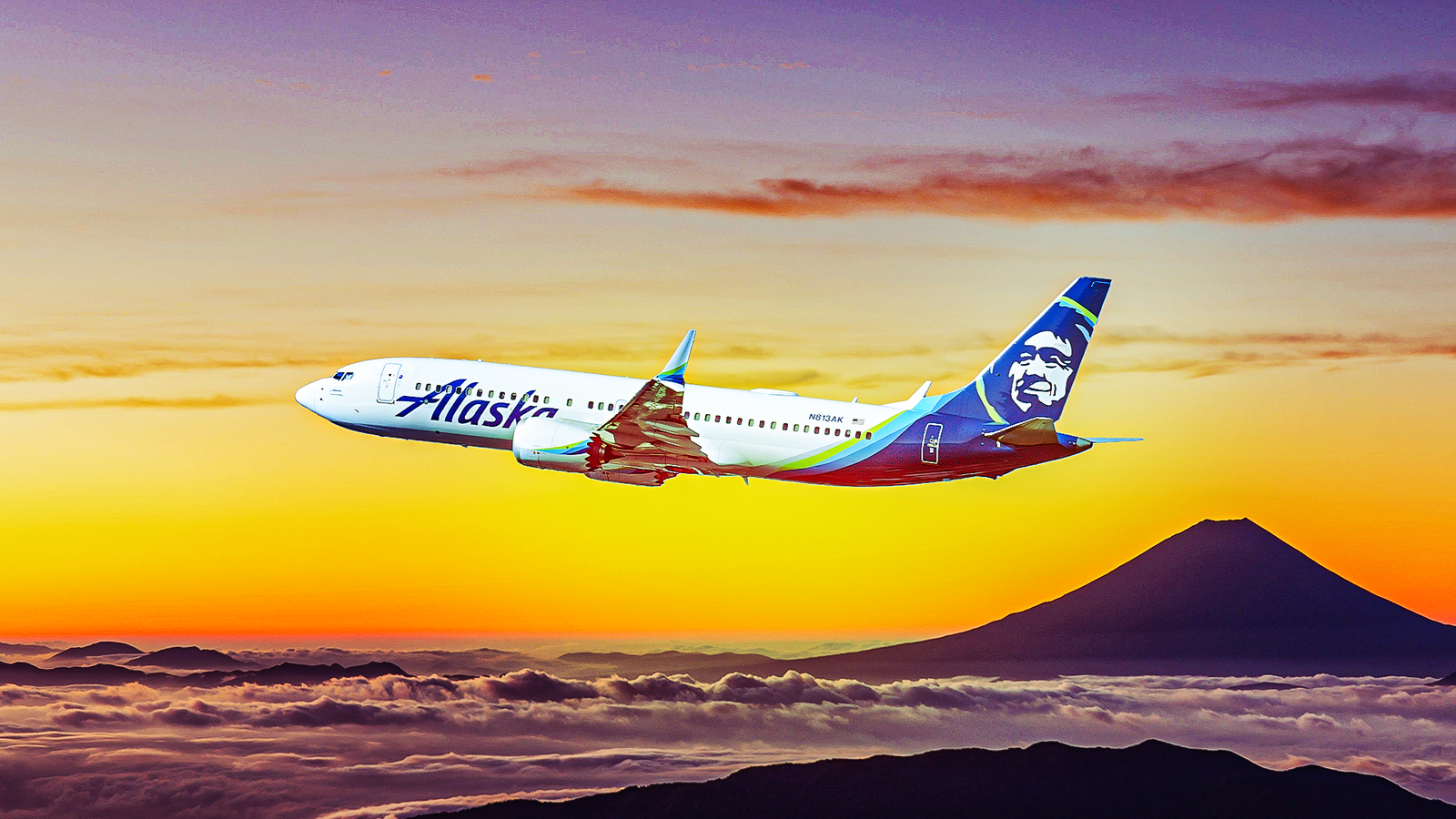
Published Nov 13, 2026, 7:00 PM EST Jack comes to Simple Flying with a lifelong interest in all things aviation. He holds a degree in Aerospace Engineering from Georgia Tech, and is a certified private and remote pilot. Beyond these experiences, Jack previously worked for a corporate flight department where he gained first-hand experience in the world of business aviation. Currently, Jack works in the professional services industry and continues to build his flight hours outside of work. Alaska Airlines will launch its first nonstop service between Ted Stevens Anchorage International Airport (ANC) and Tokyo Narita Airport (NRT) in 2027, opening a direct link between the largest city in Alaska and one of Asia’s most important aviation gateways. The route will be unusual not only because the cities have never had scheduled nonstop service on Alaska, but because the airline plans to operate it with a single-aisle aircraft. A Boeing 737 MAX 8 will cover the transpacific journey, which is scheduled to take as long as eight hours and 15 minutes westbound. The headline’s reference to one Boeing 737 is about aircraft capability, not a plan to dedicate only one physical airframe to the route. Alaska’s MAX 8 is the only 737 variant in its fleet with sufficient range for the mission. The larger MAX 10, which the Federal Aviation Administration (FAA) certified in October 2026 and which Alaska expects to begin receiving in the second quarter of 2027, cannot operate the route with the same capability. Anchorage & Tokyo Are Closer Than They Appear Credit: SNEHIT PHOTO | Shutterstock Alaska announced it will begin the route on May 13, 2027, with daily flights through September 7. The airline plans to resume service in January 2028 at three flights per week, extending the link beyond the initial summer season. AeroRoutes reports that flight AS21 is scheduled to depart Anchorage at 2:10 PM and arrive at Tokyo Narita at 3:25 PM the following day. The return, AS22, leaves Narita at 9:45 PM and reaches Anchorage at noon on the same calendar day. All times are local, and the date change reflects the route’s crossing of the International Date Line. The seasonal pattern also leaves a gap between the end of the summer schedule in September and the planned winter restart in January. The flight’s duration may appear surprising for a 737, but Anchorage and Tokyo are geographically closer than their positions on a conventional map suggest. The airports are separated by approximately 2,980 nautical miles (5,519 km). Both cities sit at relatively high latitudes, shortening the trans-Pacific distance compared with routes linking Tokyo to major US cities farther south. The westbound schedule of up to eight hours and 15 minutes is only marginally longer than Alaska’s Anchorage–New York-JFK route, despite crossing the North Pacific. The new service is not the longest route Alaska has flown with the MAX 8 by distance; its seasonal Seattle–Reykjavík service covers a greater distance. The MAX 8 Is The Only 737 In Alaska’s Fleet With The Required Range Credit: Markus Mainka | Shutterstock Alaska has explicitly identified the 737 MAX 8 as the only aircraft in its 737 fleet capable of operating Anchorage–Tokyo. The airline says the MAX 8 has greater range than the MAX 10, even though the latter is the larger member of the family. A longer fuselage and higher passenger capacity can increase weight, while fuel capacity, aerodynamic performance, and maximum takeoff weight influence how far an aircraft can fly. Alaska lists the MAX 8 with a range of approximately 3,500 nautical miles (6,482 km). The route’s published distance sits relatively close to that headline figure, which helps explain why the MAX 8 is selected rather than a higher-capacity aircraft. Airlines calculate actual dispatch capability using expected winds, temperature, required reserves, alternate-airport requirements, and the payload being carried. That level of nuance and margin is also likely why Alaska chose not to use the MAX 9, even though its maximum range technically covers the ANC-NRT route distance. Comparison of Alaska 737 MAX Fleet Category 737 MAX 8 737 MAX 9 737 MAX 10 Length 129 feet, 6 inches (39.47 meters) 138 feet, 4 inches (42.16 meters) 143 feet, 8 inches (43.79 meters) Maximum takeoff weight 182,200 lb (82,600 kg) 194,700 lb (88,300 kg) 197,900 lb (89,800 kg) Range 3,500 nautical miles (6,500 km) 3,300 nautical miles (6,100 km) 3,100 nautical miles (5,700 km) The MAX 10’s arrival will therefore not make the MAX 8 redundant on Alaska’s longest narrowbody missions. The FAA issued the MAX 10’s amended type certificate on October 20, 2026, clearing the aircraft for delivery after a prolonged certification process. Alaska expects its first examples from the second quarter of 2027, but their role will be shaped by different network requirements. An Eight-Hour Flight With A Domestic-Style Cabin Credit: Alaska Airlines The aircraft assigned to the route is configured with 161 seats, including 16 in First Class and 145 across the rest of the cabin. This is Alaska’s standard domestic-style MAX 8 layout, not a dedicated international configuration. First Class passengers will receive recliner seats, not lie-flat beds, and the aircraft does not offer individual seatback entertainment screens. Alaska is adding service elements intended to make the journey more comfortable. Its route announcement describes multi-course dining in First Class, complimentary meals in Main Cabin and Premium Class, and Filson-branded bedding and amenity kits for First Class passengers. The airline is also expanding connectivity across its MAX 8 fleet through Starlink installations, although its announcement says free Wi-Fi is available on select flights as the rollout continues. An eight-hour flight places more emphasis on personal space, sleep, and entertainment than a typical domestic sector. Travelers choosing First Class will have a larger recliner and upgraded service, but not a lie-flat product. The introductory round-trip fare was announced from $999 for travel between May 13 and June 7, 2027, subject to availability and the original booking deadline. ETOPS & North Pacific Weather Will Shape Operations Credit: LemonFer | Shutterstock Aircraft range alone does not determine whether a nonstop flight can operate safely. Because the 737 MAX 8 has two engines, Anchorage–Tokyo must comply with extended-range twin-engine operational requirements, commonly known as ETOPS. These rules require airlines to plan routes so that an aircraft remains within its approved diversion time of suitable alternate airports. Dispatchers must identify alternates and confirm that weather forecasts and runway conditions meet the applicable operating standards for the period in which the aircraft might need to land. The North Pacific presents particular planning challenges. There are fewer major airports than on many transatlantic corridors, and weather at remote airfields can change quickly. Alaska and the Aleutian Islands provide potential diversion options along parts of the route, while airports in Japan offer alternatives closer to the destination. However, an airport is not automatically usable simply because it appears geographically convenient. Its runway, rescue and firefighting services, operating hours, facilities, and forecast conditions must satisfy the airline’s requirements. These constraints can affect how much payload the aircraft carries. Fuel reserves and the ability to reach an alternate must be protected, while stronger-than-expected headwinds can increase fuel burn and reduce the weight available for passengers, baggage, and cargo. Under 14 CFR 121.624, an operator must list enough ETOPS alternate airports within the approved diversion time and ensure they meet weather and field-condition requirements. Tokyo Adds A New Dimension To Anchorage’s Network The Tokyo route is part of a broader expansion at Anchorage. Alaska has also announced seasonal nonstop flights to Austin, Dallas-Fort Worth, and Nashville, creating four new routes from the city in 2027. Those domestic services will operate weekly on Saturdays during the summer, while Tokyo will have a much more substantial schedule. The route also extends Alaska’s international ambitions beyond Seattle. The airline has added London, Rome, and Reykjavík from its Pacific Northwest hub with the Boeing 787, alongside existing services to Asia. Its Seattle expansion, outlined in an airline announcement, relies on a combination of widebody aircraft, narrowbody MAX 8 services, and partnerships that provide onward connections. Anchorage–Tokyo applies the narrowbody model differently: rather than linking Seattle to a European destination, it uses Alaska’s northern location to establish a direct trans-Pacific connection. The airline will need to build demand on both sides of the route. Japanese visitors can use Anchorage as a gateway to Alaska’s national parks, wildlife, and cruise ports, while travelers from Alaska gain direct access to Tokyo and connections beyond Narita. Narita offers connections across Japan and to other Asian destinations, although the usefulness of those connections will depend on partner schedules and minimum connection times. The winter reduction to three weekly flights suggests Alaska expects demand to vary by season. A Test Case For Alaska’s Wider Pacific Ambitions Credit: MasoodUK | Shutterstock Anchorage–Tokyo is a carefully targeted use of the 737 MAX 8 rather than evidence that every narrowbody can serve long-haul markets without compromise. The aircraft’s range makes the route possible, but payload limits, ETOPS planning, and the passenger experience will determine whether the schedule is sustainable. It is the only 737 in Alaska’s fleet that can perform the mission with the proper safety margins. If the route attracts enough year-round demand, Anchorage could become more than a seasonal spoke in Alaska’s (and Seattle's) network. It may provide a platform for additional trans-Pacific flying, particularly to destinations that cannot yet support widebody frequencies. Future aircraft deliveries and changes in the airline’s fleet could broaden those options, but the immediate test is whether a 161-seat aircraft can reliably connect Alaska and Japan across changing seasonal conditions. The route’s success will depend less on the headline flight time than on consistent performance, useful onward connections, and passenger demand in both directions. A strong first season could also give Alaska evidence for testing other long-range narrowbody markets from Anchorage, while weak winter bookings would reinforce the value of keeping such routes seasonal rather than forcing year-round capacity.
Alaska Airlines Plans To Connect Tokyo From Anchorage, But Can Only Do It With 1 Boeing 737
Full Article
Original Source
Read the full article at Simpleflying →KhanList aggregates and links to publicly available news content. We do not host full articles from third-party sources. Always verify important information with original sources.