
“The championship? You take it any way it comes,” said Alan Jones, with typical unsentimental pithiness, after winning a tense Canadian Grand Prix in Montreal in 1980 that made him that year’s Formula One world champion. This came during his third season with the Williams Grand Prix team, after making a promising showing the year before with four race victories.Jones, who has died aged 80 of cancer, had taken full advantage of the aerodynamic excellence of the new Williams FW07 car, featuring revolutionary “ground effect” technology, which was introduced in the latter part of the 1979 season.In 1980, in the improved FW07B, he won five races, as well as finishing in the top three in five others. This made him the first Williams driver to become world champion, and also gave the team the first of their nine constructors’ championships, which they won again in 1981, Jones’s final season with them. The only other Australian to win the drivers’ championship is Jack Brabham, who won three times between 1959 and 1966.This was the one world championship triumph for Jones, but many knowledgeable observers and fellow drivers insist that at the start of the 1980s the pugnacious Australian was the finest driver on the track, despite the presence of such gifted competitors as Nelson Piquet, Carlos Reutemann and the newcomer Alain Prost.The expert F1 commentator Mark Hughes described him as being: “Strong like an ox, psychologically more airtight than anyone who’s ever climbed into a race car, and the most aggressive wheel-to-wheel racer who scared the living daylights out of his rivals.”Alan Jones driving a Williams-Ford car in the British Grand Prix at Brands Hatch, 1978. Photograph: Colorsport/ShutterstockHe was good enough to be summoned to Ferrari’s headquarters in Maranello and offered a drive for 1978 by the enigmatic Enzo Ferrari, known as Il Commendatore. Jones recalled to MotorSport magazine’s Simon Taylor how “they ushered me into the presence of this white-faced figure with dark glasses, and my first thought was, ‘He’s dead. They’ve propped him up and they’ve got a recording of his voice coming from behind a curtain.’”But Enzo was in fact fully conscious, and signed a contract with Jones on the premise that he had got the job unless Ferrari signed Mario Andretti instead, since a north American driver would boost sales of Ferrari’s road cars. In the event they signed the Canadian driver Gilles Villeneuve, prompting Jones to call Frank Williams, who had expressed interest in him, and the rest would become history.“By signing Villeneuve, Ferrari had done me the biggest favour of my life,” Jones estimated. As for Frank Williams, “Frank is the best bloke I ever drove for, because he was such a great motivator. He could make you walk over glass.”The combination of the no-nonsense Jones and the ruggedly hard-headed duo of Williams and his designer, Patrick Head, might have been created in motor racing heaven.Alan Jones celebrating after his first F1 victory, and the only one he had for the Shadow team, in the Austrian Grand Prix, 1977. Photograph: Sutton Motorsports/ZUMA Press Wire/ShutterstockBorn in Melbourne, Alan had racing in his blood, since his father, Stan Jones, was an Australian motor racing hero in the 1950s, and won the New Zealand Grand Prix, the Australian Drivers’ Championship and the Australian Grand Prix. He also ran a chain of successful car dealerships. Stan and Alan Jones are one of three father-son pairs who won the Australian Grand Prix, the others being Keke and Nico Rosberg, and Graham and Damon Hill.Stan separated from his wife Alma (nee O’Brien) when Alan was 12, with Stan taking custody of their son. Alan attended the Roman Catholic Xavier college, and recalled how he got a start in racing at the age of 16 by doing hill-climb events in a Mini. He worked for his father for a time, but Stan’s businesses went bust and Alan decided he had to travel to Europe if he was going to build himself a racing career.He turned up in London and found accommodation in Earl’s Court, a home from home for visiting Australians. He scratched a living via a string of odd jobs, and with a friend, Brian McGuire, began dabbling in low-level motor racing, but managed to break a leg in a testing accident at the Brands Hatch circuit. He had married his first wife, Beverley, and they ran a boarding house in Ealing, cramming in visitors four to a room.By 1971 Alan was competing in Formula 3, had trials with the March team, and came second in the 1973 Formula 3 championship, driving for GRD. In 1974 he began competing in Formula Atlantic. Then, after driving for ex-racing driver Harry Stiller’s F5000 team, he was signed up to drive the Hesketh Formula One car that Stiller had bought.Alan Jones overtaking Nelson Piquet in the Argentina Grand Prix, 1980He made his F1 debut at the 1975 Spanish Grand Prix at the Monjuïc circuit in Barcelona, an ill-fated event in which four people died when Rolf Stommelen’s car crashed into a spectator area.This worked in Jones’s favour, when he was hired to replace the injured Stommelen on Graham Hill’s team. He managed to score a fifth place at the German GP at the Nürburgring, but did not enjoy being an employee of the esteemed two-times British world champion. “He was stubborn and inflexible,” he reported. “A great ambassador for motor racing, but a wretched man to work for.”Jones was then signed up to drive with John Surtees’ team, but again did not find the surroundings congenial. For 1977 he made another move, this time joining the Shadow F1 team to replace Tom Pryce, who had been killed in a grotesque accident at the South African Grand Prix at Kyalami. His prospects now began to look a lot brighter, as he won the Austrian Grand Prix and finished the season in seventh place, having scored 22 points.However, his Austrian victory was tempered by more bad news when McGuire was killed shortly afterwards in an accident at Brands Hatch. On the upside, it was after the end of this season that he was contacted by both Williams and Ferrari.His 1981 swansong with Williams brought Jones third place in the drivers’ championship, with wins at Long Beach and Las Vegas (the latter being his 12th F1 victory) as well as four podium finishes. His announcement of his retirement after Las Vegas, aged 34, thus seemed at the very least premature.He may have agreed, since he was back in 1983 for one race with Arrows, then signed up with the newly formed Beatrice-Haas team for 1985-86. But the car was not powerful enough to be seriously competitive, and Jones could not get along with team manager Teddy Mayer. “There’s ways to get the best out of drivers,” he mused, “and he found out how not to get the best out of me.”This marked the end of his F1 racing career. He had competed in the 24 Hours of Le Mans sports car race in 1984, and he would participate in various competitions over the next few years, including winning a round of the All Japan Touring Car Championship in 1987, coming third in the Bathurst 1000 in New South Wales in 1988 and putting in stints with teams run by Tony Longhurst and Glenn Seton.From 1987 to 2002 he was part of the Formula 1 commentary team on Channel Nine TV, where he formed a wildly popular double act with the retired British motorcycle champion Barry Sheene. In 2013 he became an F1 commentator on Network Ten.His first marriage ended in divorce, and in 2002 he married Amanda Butler-Davis. She survives him, along with six children.
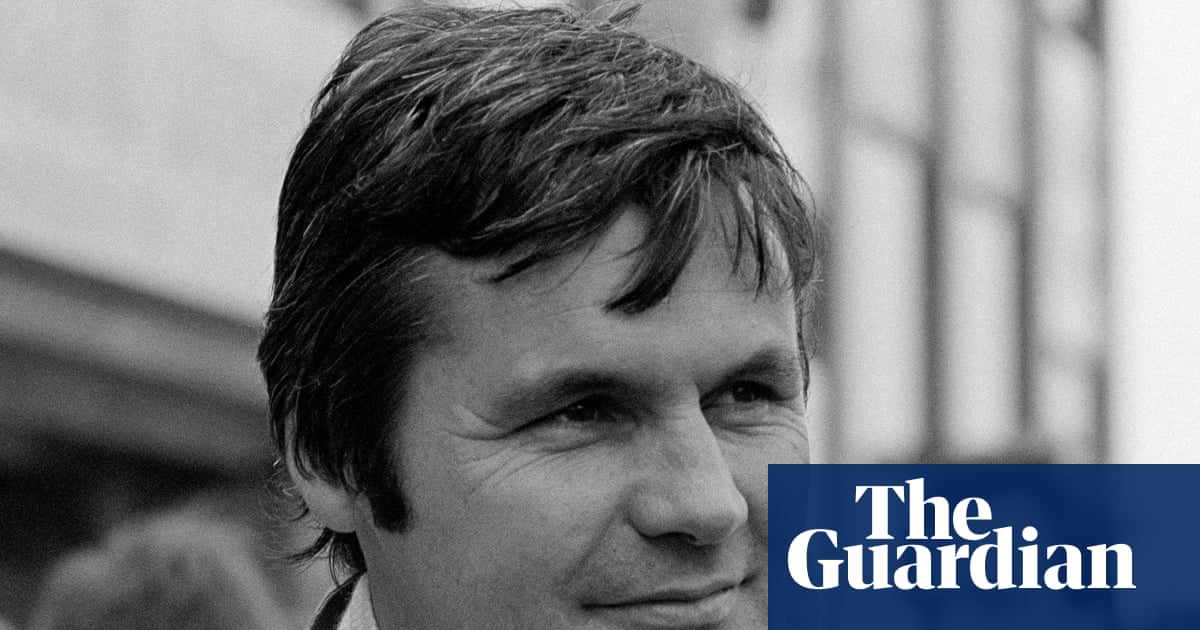
Alan Jones obituary
Full Article
Original Source
Read the full article at Theguardian →KhanList aggregates and links to publicly available news content. We do not host full articles from third-party sources. Always verify important information with original sources.