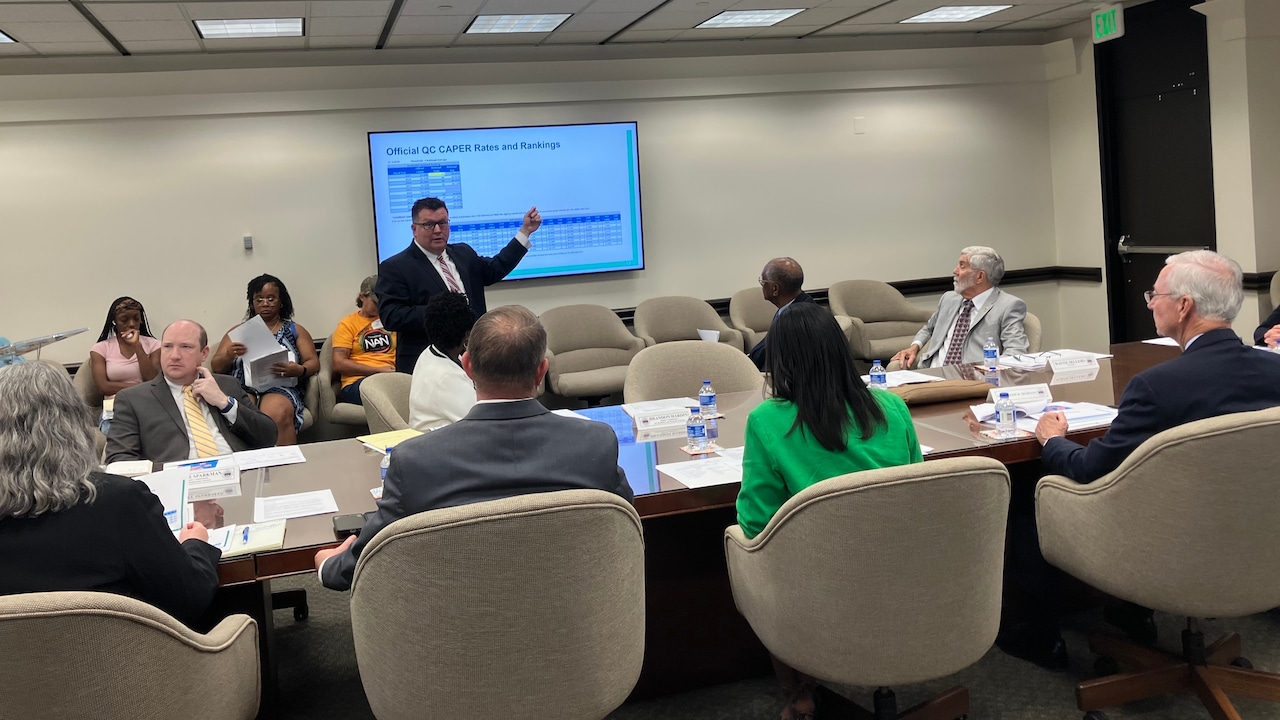
Alabama is working to reduce the payment error rate in the food stamp program in order to avoid a potential new cost of more than $100 million under President Trump’s “One Big Beautiful Bill.”Officials at the Alabama Department of Human Resources, while trying to adjust to the sweeping, one-year-old law, pushed back some on the reasoning for the changes, and said the payment error rate is not an indicator of fraud in the food stamp program, which was renamed the Supplemental Nutrition Assistance Program (SNAP) in 2008.They also noted that states with the worst error rates will be exempt from the new costs for two years and called for equal treatment.Changes to SNAP are important in Alabama, where 648,952 individuals in 321,268 households received benefits as of June.The average monthly benefit per household was $392.The number of Alabamians receiving SNAP benefits has dropped about 10% since October, partly because of other provisions in the “Big Beautiful Bill,” including an expansion of work requirements.Brandon Hardin, a deputy commissioner at DHR, gave the DHR State Board an overview of the changes on Thursday.Hardin’s presentation focused, in part, on efforts to reduce the payment error rate to avoid costs shifted from the federal government to states under the “Big Beautiful Bill.” Federal dollars have traditionally covered the full cost of SNAP benefits. Starting in fiscal year 2028, states will bear a portion of those costs unless their payment error rates are below 6%.Alabama’s error rate rose to 9.52% in the 2025 fiscal year, a level that would require the state to pay 10% of SNAP benefits, or $174 million based on the amount issued in 2025.That would be a major new burden on the state General Fund.Alabama could reduce or eliminate that new cost if it reduced the error rate. States with error rates below 6% will not have to pay a portion of benefits - the federal government will continue to fully pay them.Hardin said payment errors mainly happen when there are changes in homes that receive SNAP, such as a change in income or the number of people living in the home, and those changes are not reported on a timely basis. That causes overpayments or underpayments, which count as errors whether they are the fault of the client or the agency. DHR Commissioner Nancy Buckner said an example is when a child moves in with a grandparent who receives SNAP benefits. “It’s not even close to a measure of fraud,” Hardin told the board. “It’s when a household circumstance changes and they do not report that it ends up becoming potential error in that case.”Alabama asked the federal government for a waiver that would exclude errors made by clients from counting toward the state’s error rate. The waiver was denied.Alabama’s error rate ranked 29th lowest among states last fiscal year. The state has fared better in previous years - ranking 16th lowest in 2023 and 2024 - and sixth lowest in 2022, when the rate was 4.68%, low enough to avoid the new costs under the new rules.Hardin told the board about DHR’s strategies to reduce the error rate, including extra case reviews in the largest counties, more in-person training for staff members, and others.The “Big Beautiful Bill” delays new cost requirements for states with the highest error rates. Based on 2025 data, those states would be Alaska, Delaware, Georgia, Illinois, New Mexico, and Oregon, as well as the District of Columbia.“Alabama needs to be treated just like those other states that are getting a two-year pass,” Commissioner Buckner told the board.“Every state in this country should be treated the same.”The DHR Board approved a resolution proposed by Board Member Joe Morton to ask Alabama’s U.S. senators and congressional delegation to seek a two-year delay in new costs for Alabama based on the error rate.“We’re headed in the right direction in Alabama but we just need time,” Morton said.The “Big Beautiful Bill” requires states to pay more of the administrative costs of SNAP, increasing the state share from 50% to 75%.The Legislature provided $35 million to DHR to accommodate that increased state cost in the next fiscal year, which starts Oct. 1.Hardin presented a chart showing that Alabama’s administrative costs were lower than most other states as of fiscal year 2023 - $29.57 per case per month, as compared to the national average of $41.62.“We’re getting a really good bang for our buck,” Hardin said.
Alabama pushes back on expensive new SNAP rules: ‘Not even close to a measure of fraud’
Full Article
Original Source
Read the full article at Al →KhanList aggregates and links to publicly available news content. We do not host full articles from third-party sources. Always verify important information with original sources.