
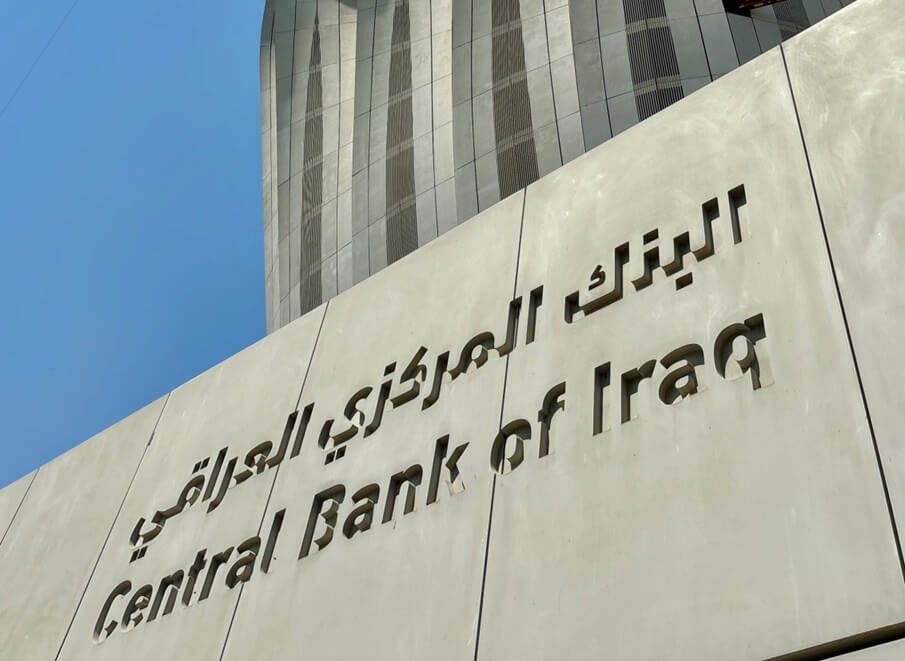
The new headquarters of the Central bank of Iraq (CBI). Photo: Zaha Hadid Architects Baghdad (IraqiNews.com) — Iraq’s commercial banking landscape is not facing an existential collapse, but is undergoing a rigorous process of “sorting, restructuring, and market realignment” that is essential to pave the way for long-term expansion, prominent economic analyst Manar Al-Obaidi stated on Monday, September 7, 2026. Public apprehension over financial stability heightened after the Central Bank of Iraq (CBI) placed Al-Taif Islamic Bank under an 18-month regulatory conservatorship due to severe compliance breaches affecting its financial position. The intervention sparked protests by depositors outside bank branches in Baghdad and Basra demanding access to their funds, testing domestic confidence in private banking institutions. Drawing on a five-year analysis of balance sheets, regulatory performance indicators, and liquidity metrics, Al-Obaidi outlined that Iraq’s banking sector naturally divides into three distinct tiers: Tier 1: Leading Institutions (~5 Banks): A select core of roughly five lenders that successfully upgraded administrative frameworks, integrated advanced core-banking technologies, aligned with international compliance and AML standards, and cultivated tangible depositor trust. Tier 2: Mid-Tier Banks: Institutions with viable growth potential that can transition into tier-one status provided they rapidly scale paid-up capital, strengthen corporate governance, and overhaul internal risk-management systems; otherwise, they risk operational marginalization. Tier 3: Small and Vulnerable Lenders: The weakest segment of the financial sector, facing limited strategic alternatives that include mandatory mergers, comprehensive balance sheet restructuring, or voluntary market exit. Structural Categorization of Iraq’s Commercial Banks CategoryTypical Roster / ProfileOperational Strengths & ChallengesStrategic HorizonTier 1: Market Leaders~5 Commercial & Islamic BanksHigh international compliance, robust liquidity, modern digital servicesAnchor trade finance and institutional capital flowsTier 2: Mid-Tier LendersRegional & Growth-Oriented BanksModerate capital base; requires tech and risk governance upgradesConsolidation or promotion to top-tier statusTier 3: Small EntitiesCapital-constrained boutique banksVulnerable to compliance audits, low retail deposit penetrationMergers, acquisitions, or license revocation Al-Obaidi emphasized that the operational definition of banking has fundamentally evolved beyond merely securing an operating license, establishing brick-and-mortar branches, and collecting retail deposits: Prerequisites for Modern Survival: Sustainable operations now require substantial equity capital, automated risk-screening engines, rigorous regulatory compliance, and direct clearing links to international correspondent networks. Short-Term Friction vs. Long-Term Growth: While regulatory crackdowns and individual bank conservatorships trigger short-term public anxiety, they serve as a cleansing mechanism that separates viable financial intermediaries from shell institutions. Expanding Economic Demand: As Iraq modernizes foreign trade execution, customs clearing, electronic payments, and corporate liquidity management, transaction flows will shift toward automated, compliant, and well-capitalized institutions.
Al Obaidi: Iraq banking sector in reform phase, not collapsing
Full Article
Original Source
Read the full article at Iraqinews →KhanList aggregates and links to publicly available news content. We do not host full articles from third-party sources. Always verify important information with original sources.