
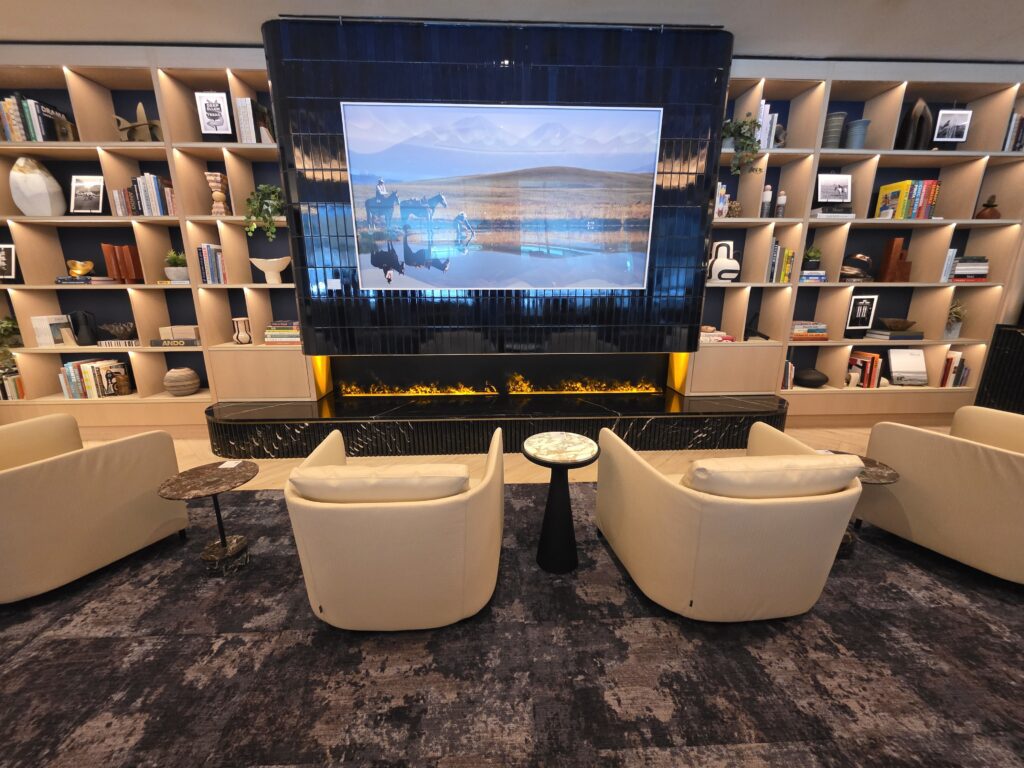
Airport lounges are so crowded that travelers are demanding $200 admission prices and $5,000 annual credit card fees to keep the “untouchables” out, arguing that the “true lounge caste” has been driven into the concourse while everyone else crowds around the buffet. There are also lounges where the line outside and the crowd inside make the benefit nearly worthless. Paying for somewhere comfortable to sit, and then being unable to find a seat, has become a really legitimate complaint – even if it’s mixed with real snobbery because it’s the ‘other’ people who shouldn’t be in there. “Premium” travel experience before 10am on a Sunday https://t.co/13PniAuksG — David Slotnick (@David_Slotnick) November 8, 2026 Status anxiety places airline lounges belong alongside BMWs, remote work, and ski trips as things that have lost their cachet as access spread. They’re still aspirational to the people getting in, while the people already inside are unhappy that increased access has lowered their relative status. View wyatt.today’s post on Twitter The original poster’s follow-up invokes the tens of thousands of his employer’s dollars he spends on flights, then uses a racial slur for other guests. It’s no longer about finding empty space inside. But most people just want a chance to use the benefit they’re paying for and maybe a snack without standing in line in the terminal like a schmuck to get an $895 ‘free’ drink. Wanting Quiet Space Isn’t Elitist One reply argues that a lounge defeats its purpose when it gets too crowded. It may still have food, a shower, or an airline agent to help when your flight gets delayed or cancels. But the core value proposition is escape from the terminal. I often just want a place to open my laptop without balancing it on my knees. And then having frictionless access to a snack, and the ability to run into the washroom without bringing all my stuff with me, are cherries on top. Nobel laureate James Buchanan’s theory of clubs explains this well. Sharing a facility spreads its costs across more people. Eventually, adding people creates enough congestion to make the experience worse. The membership and the size of the facility have to be considered together. There need to be access limits to preserve the value proposition of the facility. But since most people don’t use the space most of the time, it’s perceived option value that they’re purchasing and it continues to drive premium credit card acquisition and adoption. Lounges Got Better, And People Started Using Them Differently I’ve written about the claim that airport lounge culture represents American decline. The nostaglic view is just wrong. I remember ginger ale and Goldfish crackers, a photocopier in the Admirals Club, and packaged Tillamook cheese in United’s Red Carpet Clubs. Today’s better lounges offer actual meals and craft cocktails. When I visited Chase’s new Dallas–Fort Worth lounge, I found the best food inside a bank lounge that isn’t a Capital One Landing. Plus they have whiskey tastings, and facial treatments. The space is 18,000 square feet. These spaces are no longer just a room with seating, snacks and a fax machine. The same improvements help explain why lounges fill up. People go for the food People who might have stopped in to check e-mail now plan to eat a meal. They come more often and stay longer. A better lounge becomes a destination in its own right. The travel mix has changed. Traditional managed business travel is a smaller part of the story. Premium leisure travelers, families, and people combining work with a trip use the same spaces. A Monday – Thursday consultant arriving just before boarding and a family building in a generous airport buffer spend very different amounts of time. Credit cards have expanded access. That brings in more people, including travelers who wouldn’t buy a separate airline club membership. Uncertain security waits get people to the airport earlier. If security might take ten minutes or an hour, you allow for the hour. When it takes ten minutes, you’ve suddenly got time to spend. Even without an increase in the average security wait, greater uncertainty can mean more time in the airport. I laid out these problems for Delta years ago. Their more substantial food draws people in and keeps them there. And Delta doesn’t just admit customers with its own premium card – American Express Platinum cardmembers flying Delta can enter, too. Platinum’s standard allotment is now 10 visits and Delta Reserve’s is 15, with a spending route to unlimited access. Delta also limits entry before an originating flight to three hours prior to scheduled departure, with an exception for connections. A three-hour entry window still leaves plenty of time for a long visit. And if everyone arrives before the same bank of departures, an empty room earlier in the day doesn’t help. The number of people holding an eligible card isn’t the only number that matters. Double the average length of a visit, with the same flow of arrivals, and you double the average number of people occupying the lounge. I recently catalogued 70 new and expanded lounge projects. More space helps, but a new lounge also attracts people who previously skipped the experience. I’d underscore that which lounges we’re talking about matters a great deal. Spending $895 for a Platinum Card doesn’t on its own signal discernment, although I their Salt Lake lounge is quite nice. Capital One’s Landings at Washington National and LaGuardia offer genuinely good food and reservations. You enter and are shown to a table. That’s a totally different experience. You Could Buy Your Way Into Lounges In The 1960s, Too One commenter remembers the 1990s as a time when people earned their way in by flying. But American Airlines started selling lounge memberships in 1967, at $25 a year or $250 for life. Before that, their sales department handed out memberships. Paid lounge access was a function of the civil rights era – a nondiscriminatory way to determine who could enter. The claim that credit card lounges are bad while airline lounges are good doesn’t make sense. I’d happily choose a good Chase or Capital One lounge over plenty of airline clubs. And finding quiet lounges overseas doesn’t mean most overseas lounges are quiet. Have you ever tried to enter a Priority Pass lounge at Heathrow? Comfort Can Spread Even When Status Can’t The discussion of aspiration is revealing. Some people feel that accessibility is the inverse of aspiration – that’s true if what you’re aspiring to is being above other people. But you can also just aspire to a more comfortable trip, get it, and be pleased that other people can get it too. A product can also become less distinctive to its old customers while becoming an attainable aspiration for new ones. The people entering and the people complaining aren’t necessarily the same people. That’s why the comparison to remote work is revealing – someone getting to work from home doesn’t take away the time you save on your commute working from home. Treating it as a status symbol entails a tradeoff (‘when everyone has status, nobody does’). I’m glad more people can have a better trip. I also want the benefit I’ve paid for to be usable. I don’t usually bother with Centurion lounges, they aren’t as nice as Capital One and Chase lounges in many airports and there are too many people waiting to get in. When there’s a choice, I’ll pick elsewhere. But some of those Chase (Las Vegas! Phoenix!) and Capital One lounges (Denver!) can make the wait not worth the squeeze, too. Banks are selling more access than they can deliver. Sometimes I’ll just take the restaurant in the terminal. Of course most banks stopped paying for Priority Passs swipes at restaurants – which would be fair enough if they could accommodate travelers in their own lounges. Topics on this page
Airport Lounges Are Packed—Travelers Demand $5,000 Annual Credit Card Fees To Keep The Masses Out
Full Article
Original Source
Read the full article at Viewfromthewing →KhanList aggregates and links to publicly available news content. We do not host full articles from third-party sources. Always verify important information with original sources.