
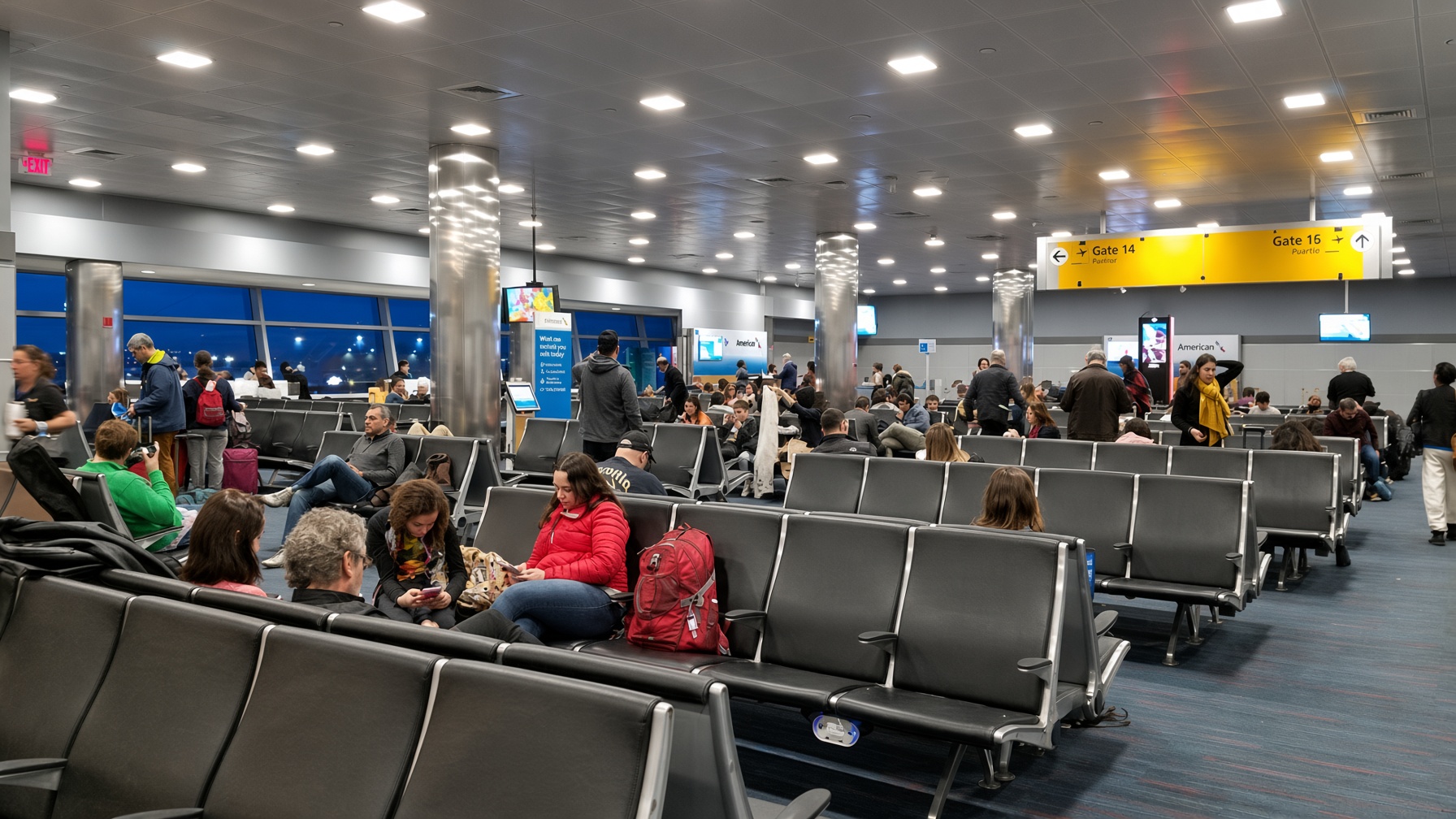
A Frontier passenger complained that there was “Nowhere to sit at the gate but glad your bag has a seat.” Passengers take up the available seats at gates with their luggage, and there’s never enough for everyone to sit down. That’s by design and it isn’t enough to ask someone to move their stuff. Airport planners start with assumptions that leave a significant number of passengers without seats even before anyone spreads out. But maybe bags deserve the seats more than you do anyway – at least if you’re flying Frontier? Well it’s frontier and bags usually cost more to fly than human. I’d argue that only bags should get seats in this case. Nowhere to sit at the gate but glad your bag has a seat. by u/CutOpenSternum in frontierairlines Not Enough Seats, And They’re Used Inefficiently There aren’t as many seats as passengers to begin with, and people spread out across multiple seats with their belongings. And it’s awkward to sit down in close quarters between two strangers anyway. You can ask someone to move their bag or sit at the next gate. Here though the person posting their frustration wasn’t in the mood to confront anyone, “I buried my brother yesterday and I had enough energy left to get home or go to jail in Dallas, not both.” Plus their family was with them – so each person grabbing one stray seat between other passengers isn’t helpful (that’s especially true with young kids). I’ve written about the same problem at an American Airlines gate. In a Delta discussion about bags occupying gate seats, one commenter offered a New York approach: As a New Yorker I have no qualms about asking if your bag bought a ticket. No? Then make room Airports Purposely Don’t Give Everyone A Seat The FAA’s terminal planning guidance says gate waiting areas are typically sized for the largest aircraft that can use the gate and considers what share of passengers will actually be there at one time. Some will turn up at the last moment to the airport, while others will be somewhere else in the terminal eating or shopping. Springfield, Missouri’s terminal facility requirements uses an 80% aircraft load factor, then assumes 70% of those passengers are seated and 30% standing. For a 172-seat Boeing 737 that would mean just 96 seats. The plan then allows a 10% area reduction for paired gates that can share waiting space, even though departures at two gates can happen at the same time. So a gate next door can provide overflow, but only sometimes. Seats compete with shops and restaurants for space. Airports collect concession revenue but not incremental payments from passengers sitting in a chair. Fewer chairs encourage people back into the shops and bars. An Empty Chair Doesn’t Always Feel Available Passengers commonly leave a seat between themselves and a stranger when there’s room. Then the gate area fills and everyone keeps behaving as though that buffer still belongs to them. A bag on the chair is a way to lay claim to the space and prevent someone else from taking it. And an empty seat between two people creates nearly the issue. Are the passengers traveling together that you’d be sitting between, or is someone coming back? Will squeezing in make the next half hour awkward? A study at Taipei’s Songshan Airport found that passengers favored front rows and aisle positions with room for luggage. They wanted privacy, sightlines to flight information, and space to eat and drink. Bags obstructing circulation made the seating harder to use. I’ve made a related point about Delta Sky Clubs with empty chairs and lines outside. Two people taking a table for six don’t necessarily leave four places that strangers will comfortably use. Capital One’s provision for bags underneath furniture, and simple jacket hooks, addresses behavior that otherwise consumes seats. (They also reserve larger tables for larger parties, and seat guests at busy times, to match party sizes to available space.) Those Black Chairs Are Designed To Torture You The connected seats with metal frames and armrests we see at almost every airport come from a long tradition of airport furniture. Charles and Ray Eames’ Tandem Sling Seating dates to 1962. Herman Miller traces its origins to Eero Saarinen’s request for durable, comfortable furniture for Dulles. The manufacturer emphasizes replaceable pads, easy cleaning and integrated power. Standardized parts make repairs easier. Connected rows are predictable to arrange and maintain. Fixed armrests prevent you from lying across several seats. That’s useful when a crowded gate needs every chair, and intentionally miserable for long-delayed passengers who want to sleep. One passenger observes, Well those chairs don’t look any more comfortable than the floor anyway. Different Behaviors Apply At Different Airports And Gates Different airports are trying to set different expectations. London Heathrow purposely tries to keep you away from the gate as long as possible so you’ll shop, with gate information not appearing until around 45 minutes before departure. Then you rush to your gate where your flight is about to board. Singapore Changi offers free snooze lounges around the clock in the transit areas, regardless of airline or ticket class. At a gate where announcements are local, moving down the concourse can mean missing information. Passengers waiting on assistance, a standby seat or a gate agent decision have good reasons to stay close. An almost empty waiting area and a packed departure gate shouldn’t have the same norms around how you space out. Some things to consider: Move your bags before someone asks. An empty terminal gate area is fine but once people are looking for chairs, keep your belongings with you without occupying another seat or blocking the aisle. Take an available seat, including the one between strangers. “Is anyone sitting here?” is enough when you’re unsure. You don’t need permission to use an unoccupied public chair. Briefly saving a traveling companion’s seat is reasonable. Someone using the restroom hasn’t abandoned their place. Saving seats for imaginary friends isn’t ok. Offer your seat when someone needs it more. Your mother taught you this. Ask politely don’t start a fight. “Would you move your bag so I can sit?” Don’t handle somebody else’s belongings. Use a nearby quiet gate. Keep track of your flight with the airline’s app or the airport’s depature screens and return in time. Airports try to keep spaces limited because they’re expensive (driving up airline costs) and because encouraging people to sit keeps them from shopping. Passengers aren’t the airport’s customers, they’re the marks. But a good airport provides sufficient seating (with power outlets), mixes individual chairs, family seating and work spaces, and keeps boarding lanes away from seating areas. And they make flight information visible from overflow seating areas. Topics on this page
Airport Gates Run Out Of Seats Before Boarding—And Passengers Make It Worse By Giving Bags A Chair
Full Article
Original Source
Read the full article at Viewfromthewing →KhanList aggregates and links to publicly available news content. We do not host full articles from third-party sources. Always verify important information with original sources.