
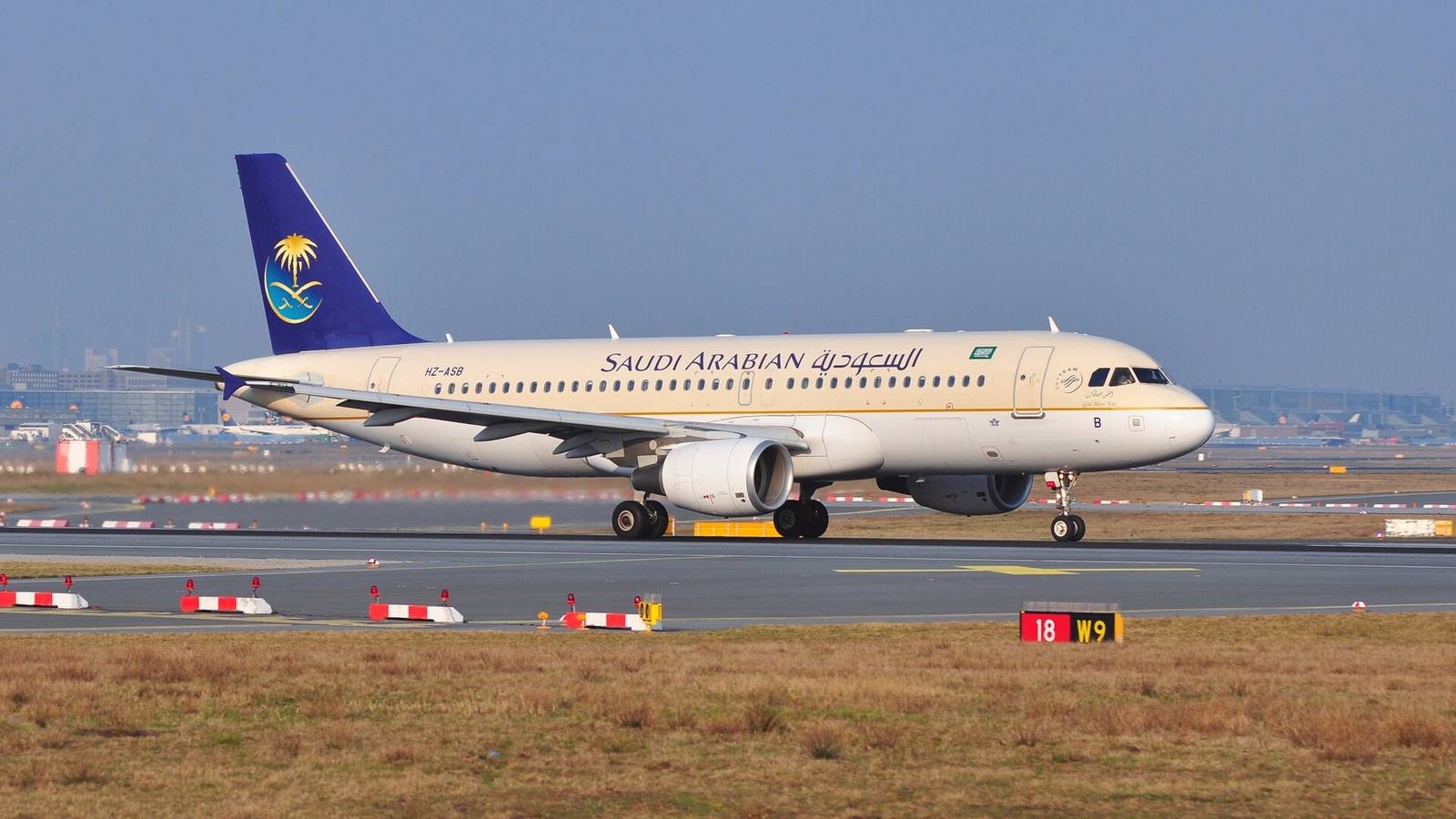
Published Oct 8, 2026, 4:54 PM EDT Paul has had a career of 25+ years focused on the international technology sector, which has taken him to over 100 countries. Along the way, he developed a deep love for aviation, with a travel bucket list measured by aircraft types flown rather than destinations reached. Now he brings that avgeek passion, along with the journalism experience he accumulated early in his career, to write insightful pieces for Simple Flying. Airlines are suspending flights to Saudi Arabia's capital after a fresh Houthi missile attack on Riyadh's King Khalid International Airport (RUH) on Thursday, October 8, left a Saudia aircraft badly damaged by fire. The Iran-backed group claimed responsibility for targeting the airport with a ballistic missile, although Saudi authorities have not confirmed that its projectile directly struck the aircraft. Several international airlines have halted operations amid mounting security concerns. The disruption has been substantial. Aviation analytics firm Cirium recorded 293 canceled or nonoperating flights at Riyadh on Thursday, representing approximately 39% of scheduled arrivals and departures. The escalating violence also raises questions about Delta Air Lines' planned October 23 launch of nonstop flights from Hartsfield-Jackson Atlanta International Airport (ATL), while Riyadh Air faces particular challenges to its rapidly expanding network. Houthi Attack Leaves Saudia Aircraft Badly Damaged Credit: Mikus Meli | Shutterstock Reuters reports that a commercial aircraft belonging to Saudia caught fire while parked at a terminal at Riyadh's King Khalid International Airport on Thursday. Three people briefed on the incident told Reuters that the aircraft suffered extensive damage, possibly from falling missile interception debris or a direct projectile strike. The aircraft was reportedly an Airbus A320, although its registration has not been independently verified, but early video (see below) appears to confirm this. Saudia operates a total of 37 Airbus A320-200s with an average age of 10.2 years. Reuters established that the aircraft was believed to be empty of passengers, but could not rule out injuries associated with the explosion or subsequent fire. The latest incident follows deadly attacks on Riyadh and Abha airports earlier this week. Saudi Arabia's General Authority of Civil Aviation (GACA) reported that three foreign nationals were killed, and 36 people injured in the attacks. The Houthis have threatened further strikes on Saudi aviation infrastructure, warning international airlines against using much of the kingdom's airspace. The renewed fighting follows the collapse of a fragile truce in Yemen, and an escalation of Saudi-backed military operations against Houthi forces. The attack is particularly concerning because it follows a separate September 19 missile incident near Riyadh airport, when fuel storage facilities were hit and a large fire developed. The recurrence of attacks against infrastructure associated with a major international airport creates a safety challenge extending beyond the immediate disruption. The central concern now is no longer whether Riyadh airport can reopen after an attack, but whether commercial airlines can continue to operate reliably while missiles threaten civilian aviation infrastructure and aircraft. Over 450 Riyadh Flights Disrupted As Airlines Suspend Services Credit: Robert Buchel | Shutterstock Flight disruption at Riyadh's King Khalid International Airport intensified following Thursday's missile attack, with FlightAware reporting over 450 canceled or delayed flights. At the time of writing, the airport had already accumulated 116 canceled departures and 164 canceled arrivals, representing more than a third of all flights being canceled. RUH Measure (October 8, 4:00 PM ET) Departures Arrivals Total Canceled flights 116 164 280 Delayed flights 94 92 186 Total disrupted flights 210 256 466 Saudi carriers bore the brunt of much of the disruption. National carrier Saudia had 162 of its scheduled flights canceled and a further 108 delayed, representing more than three quarters of its operations. Low-cost airline flyadeal recorded 39 cancellations and 53 delays, while flynas had 37 cancellations and 86 delays. Riyadh Air, by virtue of its smaller flight count, experienced the least disruption, with 11 cancellations and six delays. International carriers also moved to suspend flights. Lufthansa Group halted all Riyadh services through October 16, while Air India and Akasa Air canceled flights through October 10, and IndiGo suspended operations through October 9. An Air India service was forced to return to Delhi, while other operators experienced individual cancellations. Responses have varied considerably, however, with the Gulf airlines continuing their schedules at the time of writing, despite the escalating security situation. Airline Confirmed Response Air India Suspended Riyadh flights through October 10; Delhi–Riyadh flight returned to Delhi Air India Express Suspended Riyadh flights through October 10 Akasa Air Canceled Riyadh flights through October 10 Cathay Pacific Existing Riyadh suspension extended through January 31, 2027 IndiGo Canceled Riyadh services through October 9 Lufthansa Group Suspended Riyadh flights through October 16 Philippine Airlines Canceled Riyadh services through at least October 10 Singapore Airlines Previously postponed Riyadh launch to March 28, 2027 Longer-term disruption had already complicated the market: Cathay Pacific extended its Riyadh suspension into 2027, and Singapore Airlines postponed its planned return until March 28. These decisions demonstrate how prolonged instability could affect international connectivity well beyond the immediate aftermath of an attack. Delta And Riyadh Air Face Expansion Uncertainty Credit: Karolis Kavolelis | Shutterstock The timing is particularly problematic for Delta Air Lines, which plans to inaugurate nonstop Atlanta–Riyadh flights in just over two weeks on October 23. The service will use an Airbus A350-900, operating daily through October 30, before reducing to three weekly flights. It represents Delta's first scheduled service to Saudi Arabia, and the first nonstop connection between the United States and Riyadh operated by an American airline. The route is also strategically linked to Delta's partnership with Riyadh Air, which is intended to develop connectivity between North America and Saudi Arabia. However, there were already signs that Delta's ambitious new route could face commercial challenges. In July, Delta President Peter Carter acknowledged that advance bookings were "softer than anticipated," while independent examinations of airline seat maps suggested extremely limited early reservations on some departures. Such figures are not definitive booking totals, but they underline the difficulties of establishing a new long-haul route during regional instability. Delta has not announced a postponement following Thursday's attack, although the latest developments will inevitably complicate its assessment of operational safety and commercial demand. Meanwhile, Riyadh Air is also experiencing its first major operational challenge as it rapidly builds out its network. The carrier now has 15 routes for sale, following the first launch of scheduled Boeing 787-9 operations in June. But every one of its flights touches Riyadh, and continued attacks on its home airport will severely undermine its reliability and credibility. While the airline has deep pockets and the ability to ride out instability longer than most, the larger concern will be the ongoing damage to Riyadh's reputation as an emerging connecting hub, as well as Saudi Arabia's broader ambitions with its Vision 2030 program.
Airlines Suspend Flights To Riyadh After Terrorist Attack Destroys Saudia Airbus A320
Full Article
Original Source
Read the full article at Simpleflying →KhanList aggregates and links to publicly available news content. We do not host full articles from third-party sources. Always verify important information with original sources.