
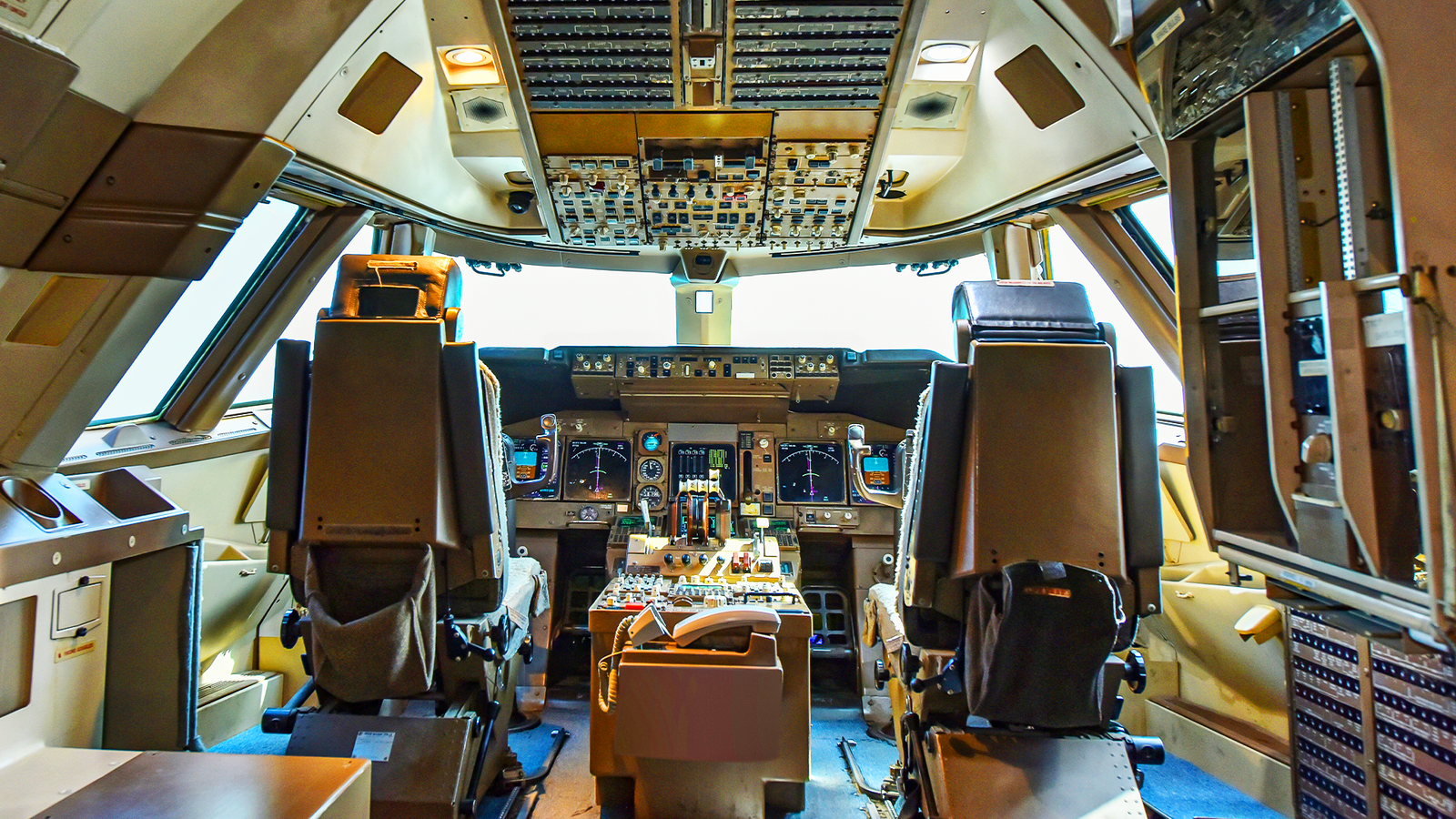
Published Nov 16, 2026, 9:00 PM EST Louis is a military historian and the staff writer for History of War magazine, a leading military history monthly. He also has an interest in private and commercial aviation. Modern aircraft cockpits have two layers of protection. The first is a reinforced door. This was introduced following the September 11 attacks in 2001. They are designed to withstand forced-entry attempts and small-arms fire, and are installed on every passenger and large cargo aircraft that flies in the US. The most recent aircraft also have a secondary barrier, usually a lockable gate. The protection was introduced to ensure there is always at least one barrier to the cockpit, such as when a pilot opens the reinforced door to use the toilet. The Barrier Introduced After 9/11 During the 9/11 attacks, the terrorists had relatively light barriers preventing them from getting into the cockpit. To avoid a repeat of the attacks, the Federal Aviation Administration (FAA) mandated reinforced cockpit doors. These doors were built so they could not be forced open manually. They can also withstand small arms fire. Previously, the doors were flimsy, often built from thin aluminum. Now they have reinforced frames, steel plates, and Kevlar composites. Further protection has come from adjusting in-flight procedures. Routine and casual visits to the cockpit by crewmembers were common in pre-9/11 aviation. These social calls have now been totally eliminated. Pilots also now lock the door from the inside during flights. This is made possible through internal specialized keypads, delayed-release toggles, and pilot override switches. The FAA has strict rules that new reinforced door designs have to follow to be certified under FAA Advisory Circular 25.795-1. For example, these doors must survive impact tests from a 100 lb (45 kg) pendulum, delivering a force greater than that of someone trying to break them down. The doors also need to have decompression blow-out panels. The technology is vital because the reinforced doors are virtually airtight, which would create a dangerous pressure difference between the cabin and cockpit in the event of rapid decompression. Unintended Vulnerabilities Of The Reinforced Doors Introducing the reinforced doors also brought some unintended safety dilemmas to American commercial aviation. The doors make it much harder for intruders to get into the cockpit. Yet, if they are able to do so, the reinforced door becomes a stout protection for the intruder from passengers or crewmembers fighting back. The isolation of the internally locking reinforced door can also be a problem if the pilots become incapacitated. Some airlines use procedures like the two-person cockpit rule, which requires a crewmember to enter the cockpit when one pilot leaves, ensuring there is never a solo pilot. A single barrier also creates a troubling moment of vulnerability. Particularly in long-haul aviation, the pilots move around, leaving the cockpit to use the bathroom or for crew changes. To do so, they have to open the cockpit door. This creates a window of opportunity for an intruder to break in. The Campaign For A Secondary Barrier Two years ago, President Joe Biden's administration introduced the FAA Reauthorization Act of 2024. This law requires all commercial aircraft to have a secondary barrier, eliminating the vulnerabilities created by the single reinforced door that is locked from the inside. This requirement is expected to take five to six years to fully implement, meaning many aircraft will keep flying in the US with a single reinforced door for years to come. “Every day, pilots and flight crews transport millions of Americans safely - and today we are taking another important step to make sure they have the physical protections they deserve,” former US Transportation Secretary Pete Buttigieg explained. This law came about after more than two decades of campaigning by Ellen Saracini. Her husband was United Airlines Captain Victor Saracini, who died when United Flight 175 was hijacked and flown into the World Trade Center. "It's insulting to the pilots and crews that died September 11. I can't look another victim's family in the eyes and say to them, 'I knew there was an issue and I sat back and did nothing,'" she told NBC Chicago. When the law went through the federal legislature, it was known as the Saracini Aviation Safety Act. Before the law, airlines were allowed to install the secondary barrier, but most opted not to. Saracini was particularly disappointed that United did not take a lead on the issue given its history of hijackings. "Security measures have evolved in the years since the barriers were ordered and many more layers of security now exist," a United Airlines spokesperson said in a statement, explaining why it would not proactively install such barriers before the law came into effect. The airline denied that cost was the deciding factor. How The Secondary Barrier Keeps Passengers & Crew Safe The secondary barrier is a retractable gate or mesh barrier that is installed in the forward galley area. It sits between the cockpit door and the passenger cabin. Whenever a pilot has to leave the cockpit for any reason, the barrier is deployed, ensuring that the aisle is blocked before the reinforced door opens. The barrier then retracts when the pilot returns to the cockpit. The process is somewhat similar to double-barrier systems used by zoos and similar sites, ensuring that there is always at least one barrier in place. Some airlines had such technology in place before the law was enacted. Examples include JetBlue Airways and Delta Air Lines. They used lightweight wire-mesh gates. Crew members installed the devices manually to allow the pilot to leave the cockpit. The new rule makes the barriers mandatory. It also ensures that standardized barriers are built into new aircraft, rather than airlines having to improvise aftermarket solutions. The FAA will be able to formalize standards that all airlines must follow, as has been the case with the main reinforced door that all US jets now have. Southwest Airlines Was The First Carrier To Use The Barrier You'll now see the secondary barrier fairly frequently when you fly in the US or on a US airline. It follows the first passenger service flown under the FAA secondary barrier mandate: a Southwest Airlines flight from Phoenix Sky Harbor International Airport (PHX) to Denver International Airport (DEN) on August 29, 2025. The flight was operated by a Boeing 737 MAX 8 that had just been delivered to the airline. Southwest's full fleet, according to Planespotters.net, consists exclusively of 737 aircraft, which helps illustrate how the new 737 MAX 8 fits into it. The carrier also has an order for MAX 7 aircraft. Aircraft type Total Average age (years) Boeing 737-700 262 20.3 Boeing 737-800 188 11.1 Boeing 737 MAX 8 352 3.7 Total 802 10.9 Southwest is expected to receive 25 new 737s by the end of 2025, all of which will have the FAA-mandated doors installed. However, the airline was already moving to install the doors before the law took effect, as it wanted to be proactive about safety, Airline Geeks reported. Some Airlines Asked For A Delay To The Secondary Barrier Mandate The FAA's initial plan was for all airlines under its jurisdiction to install the barriers by August 2025. However, the trade group Airlines for America objected. It said certification holdups and the need to train crewmembers on using the barriers would make it impossible to meet the deadline. The airlines asked for a two-year delay, and the FAA agreed to a single-year delay. The secondary barrier mandate has not been universally popular among airlines. The Air Line Pilots Association (ALPA), a union that represents around 80,000 pilots in the US and Canada, has heavily criticized Airlines for America for requesting the delay and the FAA for agreeing to it. " While we acknowledge this ruling falls short of the unacceptable [two-year] delay requested by Airlines for America, this extension still compromises the safety and security of our skies," said ALPA's President Jason Ambrosi. The new rule will bring about vital standardization. Runway Girl Network reports that some airline crews had been improvising barriers with whatever was on hand when pilots had to leave the cockpit. A common example was crews using the catering trolley to make it harder for would-be intruders to reach the cockpit, giving them just enough time to close the cockpit door.
Airline Cockpit Doors: How Reinforced Flight Decks Keep Intruders Out
Full Article
Original Source
Read the full article at Simpleflying →KhanList aggregates and links to publicly available news content. We do not host full articles from third-party sources. Always verify important information with original sources.