
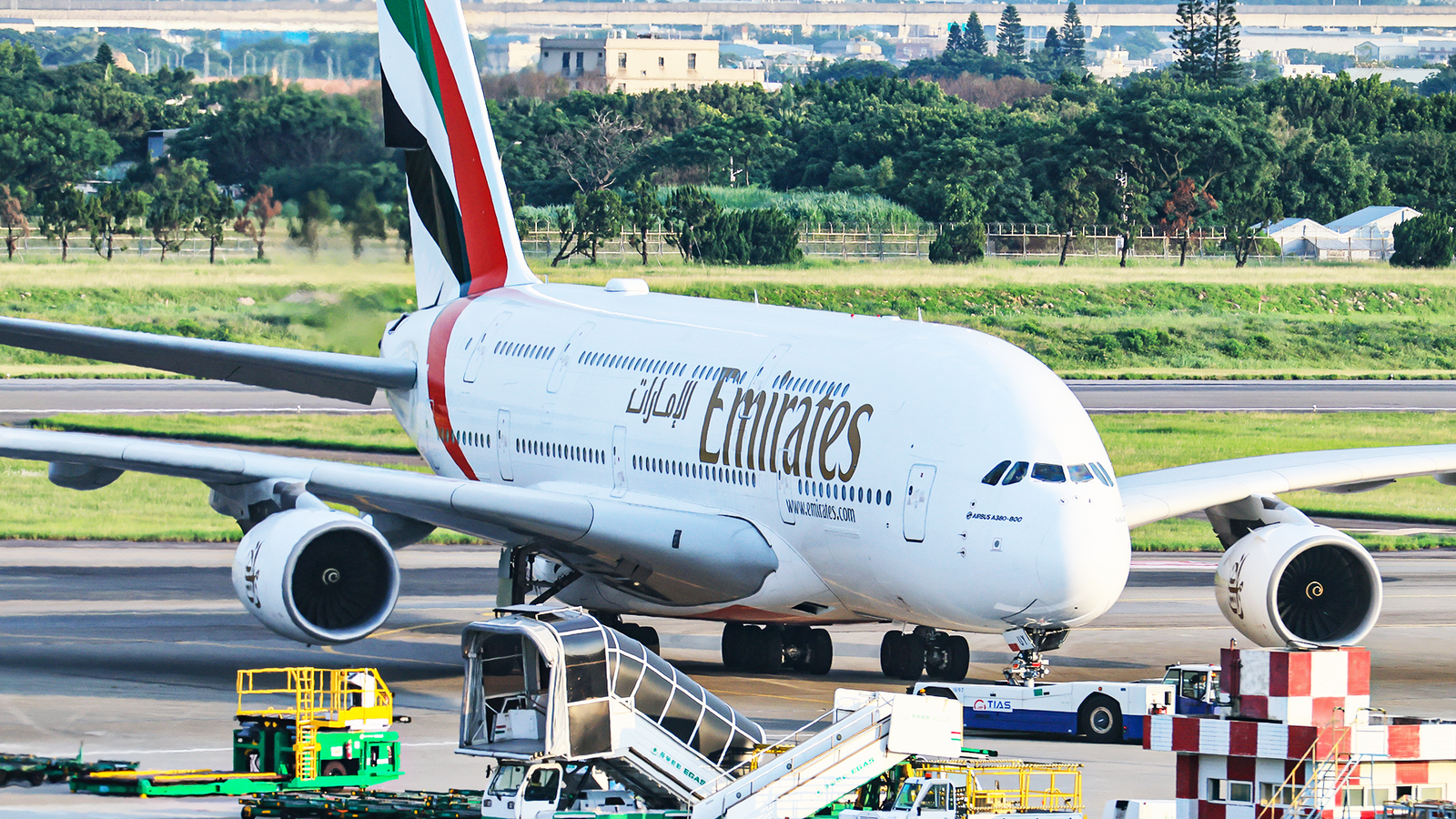
Published Nov 25, 2026, 2:00 PM EST Luke Diaz is a freelance military writer with experience with active duty experience in the US Navy as well as defense and industrial engineering. He is a former Naval Flight Officer who performed tactical air control on the carrier-based E-2 Hawkeye. This October, the Federal Aviation Administration sent a harsh reminder to Airbus A380-800 operators about the cost of four-engine complexity. After an uncontained high-pressure turbine seal failure caused an engine shutdown and an aborted takeoff, the FAA directed the Engine Alliance GP7200 turbofans, which power many of the superjumbos, to be recalled from service for overhaul. Replacing each sub-assembly costs up to $528,150 per engine, demonstrating how four large powerplants compound mechanical difficulties and high hourly fuel costs. Emirates refuses to treat the double-decker as an operational liability. During its financial year ended in March, the Dubai carrier posted a record $6.2 billion pretax profit and bought out 29 leased A380-800s outright to keep them flying into the 2040s. The airline's leadership openly acknowledged that the superjumbo was the most profitable asset in its whole fleet, wagering billions on multi-class cabin repairs while almost all other international operators scrapped the type. " Because four-engine aircraft consume almost twice as much fuel per hour as a contemporary twinjet and require twice as many shop visits when external maintenance facilities stop, most airline planners steer clear of these aircraft. Emirates packs high-paying fliers into slot-choked international airports where additional daily flights are not feasible, turning an out-of-production giant into its top earner nonetheless. Why A Superjumbo Quadjet Breaks Most Airlines But Pays Off In Dubai Credit: Karl Weller | Shutterstock An Airbus A350-1000 consumes 1,823 gallons (6,900 liters) of jet fuel per hour, whereas four Rolls-Royce Trent 900 or GP7200 turbofans consume about 4,600 gallons (17,413 liters). By cramming up to 600 passengers into slot-rationed hubs like London Heathrow and New York-JFK, Emirates reverses that fuel penalty. At slot-capped airports where Emirates cannot get a second takeoff slot, a single 85%-full A380 carries nearly twice as many high-fare passengers as one 787-9, easily paying for the extra fuel. While small subfleets decimated rivals in Europe, Dubai's fleet size made it viable. Clark said in November 2019, according to Airline Ratings: "The A380 was a misfit for Air France. They never scaled, they only have ten aircraft. Yes, we faced the same teething problems, but we dealt with them because we were scaled enough to deal with it. If you've got a sub fleet of 10 it's a bloody nightmare and the costs go through the roof." Running over a hundred quadjets in-house spreads fixed tooling and spare-engine costs over a large number of daily flying hours. Nonetheless, four engines penalize timetables whenever external repair shops fail. By October, 24 Emirates superjumbos had been parked and seven stored due to engine overhauls, while 84 had flown, exposing an older rift within Dubai's dual-engine sourcing policy that helped doom the assembly line. Economic Woes, Engine Rivalries, And The Collapse Of The Toulouse Line Credit: MC MEDIASTUDIO | Shutterstock Emirates powered its first 90 Airbus A380-800s with GP7200 engines before stunning manufacturers in April 2015 with a $9.2 billion switch to Rolls-Royce Trent 900 turbofans for its final 50 jets. Fine desert sand around Dubai quickly accelerated fan blade wear, delaying deliveries by months and sparking years of haggling that forced Emirates to slash 39 superjumbo orders in February 2019, leaving Airbus CEO Tom Enders without enough backlog to sustain production. Enders shut down the Toulouse assembly line because selling low volumes below production cost made no financial sense, commenting to NPR: "If you have a product that nobody wants anymore, or you can only sell only below production cost, you have to stop it, as painful as it is." Even so, Clark still campaigns for a modernized A380neo, arguing that next-generation engines and composite wings would cut hourly fuel burn from 26,455 pounds (12 metric tons) to 19,842 pounds (9 metric tons). Airbus declined until commitments reached about 250 aircraft, despite Clark's insistence that Emirates purchase at least 100 modified superjumbos to enable ultra-long-haul flights from Dubai to Santiago and São Paulo. As MigFlug covered, Clark went on the record, saying: "I'm telling you, we would purchase them if you cross-fertilized A350 or 787 technology into a new A380, which would result in a 25% reduction in operating expenses. A minimum (order) of one hundred is required." Twinjet Rivals And High-Profile Failures End The Quadjet Era Credit: DingYi1122 | Shutterstock Four engines used to be an airline's best insurance policy over open water, but modern reliability turned that extra hardware into dead weight. Quadjets lost their ocean monopoly overnight when regulators allowed twinjets, such as the Airbus A350-1000 and Boeing 777-300ER, to fly for six hours on a single engine. On almost all long-haul routes, newer twin-engine widebodies also reduce fuel consumption per seat by 25% to 30%, rendering four-engine aircraft obsolete. Maintaining four intricate turbofans increases mechanical wear on additional turbine blades and fuel pumps, resulting in maintenance expenditures for the Airbus A380-800 exceeding $6,000 per hour and overall operating expenses of $30,000 per flight hour or more. The FAA's October directive regarding Engine Alliance GP7200 engines demonstrated the high expense of those additional parts. The agency warned in the Federal Register: "Although the root cause is still under investigation, HPT interstage mid-seal clocking has been identified as a contributing factor for the failure... The unsafe condition, if not addressed, could result in an engine fire and damage to the airplane." Doubling the engine count also increases a fleet's vulnerability to rare, catastrophic manufacturing flaws. In November 2010, Qantas Flight 32 experienced a massive Rolls-Royce Trent 900 explosion over Indonesia after a fractured pipe wall thinner than 0.02 inches (0.5 mm) shattered a turbine disk and severed 650 wing wires. Seven years later, Air France Flight 66 lost an outboard GP7200 fan hub over Greenland at 37,000 feet (11,278 meters) because microscopic strain cracked the forged titanium. Giant Twin Fans, Carbon Wing Boxes, And The 2012 Rib-Cracking Crisis Credit: Karl Weller | Shutterstock Due to weight and simple aerodynamics, two large engines outperform four smaller ones. Compared to the Airbus A380-800's four smaller GP7200 or Rolls-Royce Trent 900 pods, modern twinjets like the Airbus A350-1000 and Boeing 777-9 have enormous composite fans beneath each wing that drive massive columns of slower air with far less drag. Additionally, the wing loses thousands of pounds of structural weight and friction when two engine housings and pylons are cut. Airbus built 25% of the superjumbo from lightweight composites and cutting-edge metals to counteract the weight penalty of four engines. Engineers constructed aviation's first carbon-composite center wing box, saving 3,307 pounds (1.5 metric tons), and topped the fuselage with GLARE aluminum-glass laminates to stop fatigue cracks. Underneath, dropped-hinge wing flaps sealed trailing-edge gaps, so air flowed smoothly across the massive 261.8-foot (79.8-meter) wingspan during high-altitude cruise. Engine Key Physical Dimensions Performance Key Design Feature Engine Alliance GP7200 (A380-861) 116-inch (2.96-meter) fan; 14,811 pounds (6,718 kg) dry 74,735 to 80,290 pounds of thrust (332.4 to 357.1 kN); 8.7:1 bypass; 36.92:1 pressure ratio Pairs nine-stage GE90 core with hollow titanium fan Rolls-Royce Trent 900 (A380-841/-842) 116-inch (2.95-meter) fan; 13,770 pounds (6,246 kg) dry 69,691 to 80,931 pounds of thrust (310 to 360 kN); 8.7:1 bypass; 37 to 39:1 pressure ratio Three-shaft design with contra-rotating spool (+2% efficiency) GE9X-105B1A (777-9) 118-inch (3.00-meter) fan 97,000 pounds of thrust (431 kN); 9.6:1 bypass; 50:1 pressure ratio Higher core pressure cuts per-seat fuel burn 25% to 30% GE9X-105B1A (777-9) 134-inch (3.40-meter) composite fan 105,000 pounds of thrust (467 kN); 10:1 bypass; 60:1 pressure ratio Massive twin fan diameters replace two extra engine pods Blending stiff carbon ribs with high-strength aluminum wing skins still triggered a costly cracking crisis in 2012. Tiny assembly gaps stressed internal wing brackets until they split, forcing expensive fleetwide repairs. Airbus executive Richard Carcaillet explained to AIN Online: "The solution involves replacing the current wing rib feet—L-shaped brackets that attach the wing ribs to the skins made with the comparatively new, Alcan 7449 aluminum alloy—with rib feet made from slightly heavier, 7010 aluminum used in the A330." How Emirates Turns A Cost-Prohibitive Colossus Into A Profit Engine Credit: MC MEDIASTUDIO | Shutterstock Airbus absorbed over $330 million in wing-crack repairs across a $25 billion program that never broke even. Enders admitted to Bloomberg in July 2012: "Airbus thought it understood the properties of the A380 wing materials and the interface between carbon fiber and metal, but found out the wrong way we didn't know everything. It has cost the company a great deal of money and [harmed our] reputation." Yet Emirates turned that troubled airframe into an unmatched moneymaker. Twin decks give Emirates 5,920 square feet (550 square meters) of floor space, letting Dubai install onboard bars, showers, and upstairs premium economy cabins no twinjet could spare. Clark explained to the Points Guy in 2019: "Why was it that it was Emirates, who took it after Singapore Airlines, that it lit up the planet in terms of showers and bars and big TV screens? We did it for a very well-calculated reason... we had taken a huge risk and huge investment." Cash-rich and parts-hungry, Emirates invested $5 billion in cabin refits, bought out 29 leased superjumbos, and agreed in November to acquire six more from Qatar's Lesha Bank. Teardown math drives that buying spree: used A380-800s trade cheaply, while one fresh landing gear set or four serviceable engines cost nearly as much as a complete plane. Dubai is cannibalizing its earliest retired frames for spares as Airbus factory support winds down.
Airbus A380 Fuel Burn: How 4 Engines Shape The Superjumbo’s Economics
Full Article
Original Source
Read the full article at Simpleflying →KhanList aggregates and links to publicly available news content. We do not host full articles from third-party sources. Always verify important information with original sources.