
In October 2025, Brian Chesky, co-founder and CEO of the San Francisco-based online accommodation booking giant, said Airbnb "relies heavily" on Alibaba's Qwen models to power its AI-driven customer service agent. Chesky said that ChatGPT's integration abilities were not "quite ready" for Airbnb's needs. In contrast, Alibaba's Qwen model was "very good" and "also fast and cheap", he said in an interview with Bloomberg. Now, it seems he will have to go public with his 'Chinese preferences' for AI models. According to a report in Reuters, "Trump administration is considering requiring US companies to publicly disclose their use of Chinese AI models, a bid to discourage reliance on the technology without imposing new restrictions that could anger industry or Beijing." As per the report, the Treasury Department and the White House Office of Science and Technology Policy (OSTP) have discussed the plan, which would apply to companies such as Airbnb. The company uses Qwen, an AI model made by China's Alibaba to power its AI customer service agent. Under the plan, companies like Airbnb would be required to post that information on their websites.US government proposal aims to 'name and shame' companies using Chinese AIThe proposal is said to show that officials are looking at ways to discourage companies use of Chinese AI models through a "name and shame" campaign while sticking to a broader anti-regulation stance on AI.The consideration comes as Chinese-made open-weight models are gaining ground with US companies because they are cheaper than proprietary AI tools from top US labs OpenAI and Anthropic, and perform well enough. This has worried China hawks, who fear that Beijing is using such models — like Moonshot AI's Kimi, DeepSeek or Qwen — to hook US companies so they will become dependent on Chinese AI.In July, US Treasury Secretary Scott Bessent said that the Trump administration could sanction Chinese AI companies if they were found to be guilty of intellectual property theft via distillation of American models. Distillation is the process of training smaller AI models using the output of larger ones as part of an effort to lower the costs of training a powerful new AI tool.The issue reportedly attracted the attention of Congress. Republican US Representatives Andrew Garbarino of New York and John Moolenaar of Michigan, who chair the House Homeland Security Committee and the House select committee on China, respectively, launched an investigation into American companies' use of Chinese AI this year.Airbnb CEO defends company using Chinese modelsIn an interview to Bloomberg TV in May this year, Chesky clarified that Airbnb is not a customer of Alibaba or other Chinese companies. “We are not providing data to any Chinese companies. They don’t have access to any data,” he said. Airbnb CEO further added, “We’re primarily using a variety of open-source models, including U.S. open-source models. An open-source model does not have access to data. It doesn’t work that way. I think people need to understand how this stuff works.”Earlier this year, the US House committees on China and homeland security sent a letter to Airbnb, asking for clarifications on its use of Chinese AI models as part of an investigation into what they described as a Chinese campaign to “accelerate its AI capabilities by exploiting American innovation.”They pointed to comments by Airbnb CEO Brian Chesky, who said last year that the company is "relying a lot" on the Qwen model, describing it as "very good" and "fast and cheap."
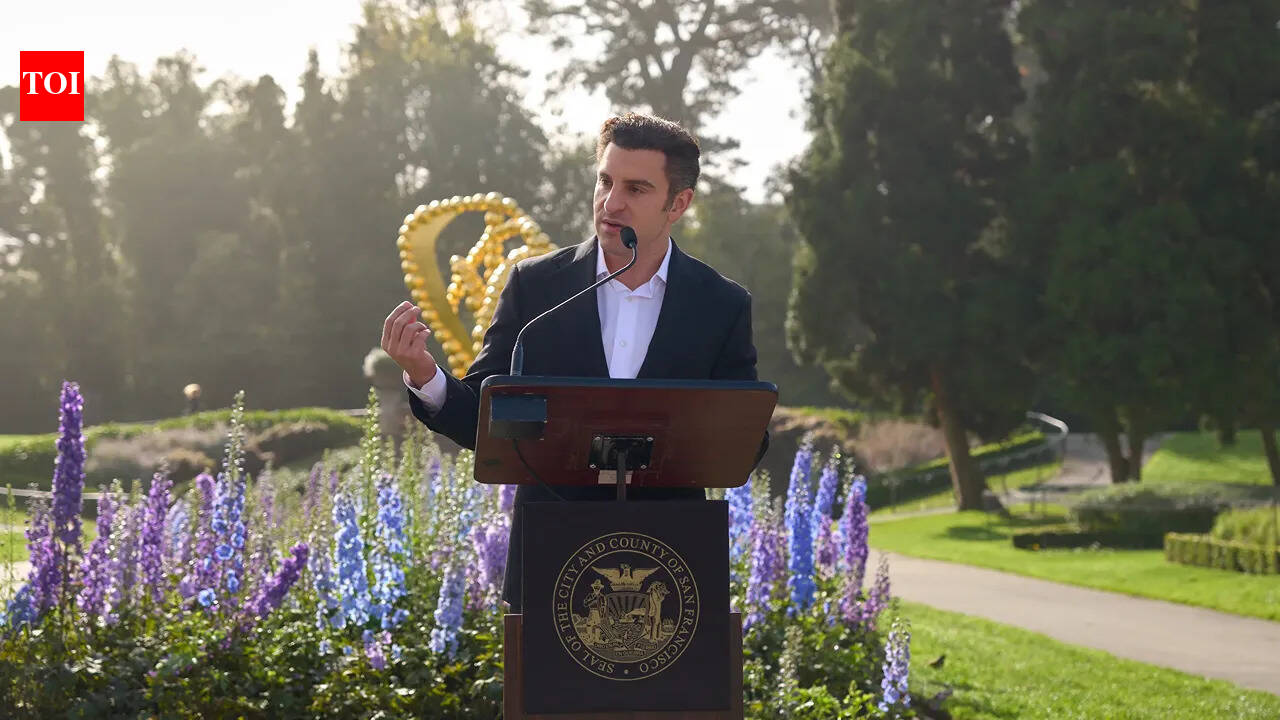
Airbnb CEO praised Chinese AI models; US may ask to share china preference
Full Article
Original Source
Read the full article at Timesofindia →KhanList aggregates and links to publicly available news content. We do not host full articles from third-party sources. Always verify important information with original sources.