
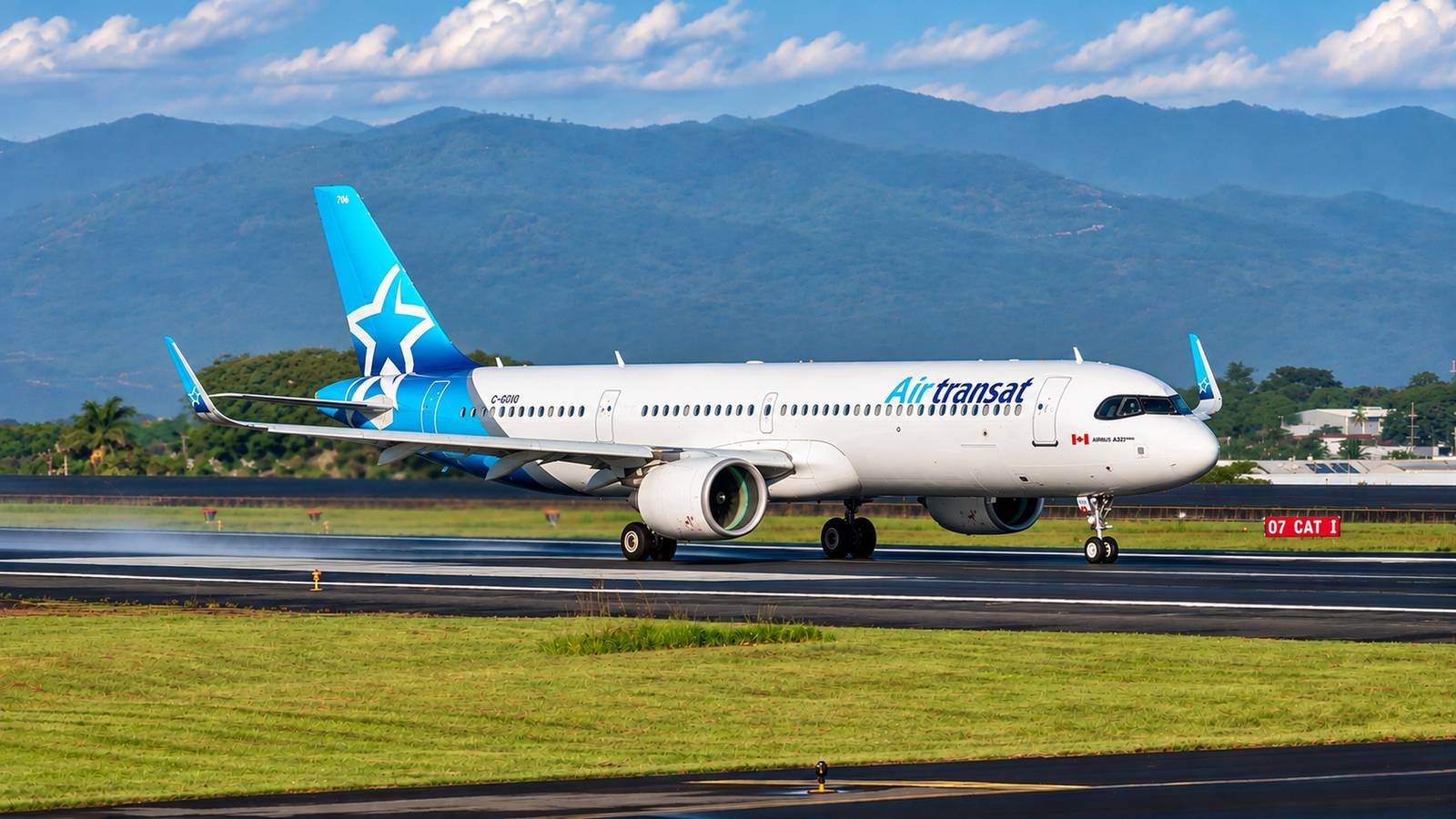
Published Nov 4, 2026, 10:15 AM EST Paul has had a career of 25+ years focused on the international technology sector, which has taken him to over 100 countries. Along the way, he developed a deep love for aviation, with a travel bucket list measured by aircraft types flown rather than destinations reached. Now he brings that avgeek passion, along with the journalism experience he accumulated early in his career, to write insightful pieces for Simple Flying. Air Transat has canceled its seasonal service from Toronto Pearson International Airport (YYZ) to Berlin Brandenburg Airport (BER) for summer 2027, ending a transatlantic route launched just two years earlier. The Canadian leisure carrier had planned to operate the approximately nine-hour Airbus A321LR service up to three times weekly. However, its latest schedule update removes the German capital entirely. The decision leaves Air Transat without any German destinations, and eliminates the only nonstop connection between Toronto and Berlin. However, the airline is simultaneously adding five European routes for summer 2027, while preparing for the arrival of its first Airbus A321XLR aircraft. Air Transat Abandons Berlin After Just Two Years Credit: sockagphoto | Shutterstock Air Transat's withdrawal from Berlin marks another retreat from Germany, a market it only returned to in June 2025 after an 11-year absence. The carrier previously served several German cities, including Frankfurt, Düsseldorf, Hamburg and Munich, but had discontinued its last Frankfurt services in 2014. The service saw its scheduled departures double in 2026, but according to AeroRoutes, Toronto–Berlin was scheduled to resume on May 1, 2027, with twice-weekly flights, increasing to three weekly between June 14 and October 2. The approximately 4,050-mile (6,520-km) route was allocated the A321LR, with a westbound block time of eight hours and 50 minutes. Canceled route First operated Significance Toronto–Berlin 2025 Exit from Germany Ottawa–London Gatwick Earlier service Ottawa loses Gatwick link Montreal–Reykjavik 2026 Withdrawn after first season The route's disappearance means Air Transat will no longer serve Germany, although Berlin does retain a Canadian nonstop connection after Air Canada restored flights from Montréal-Trudeau International Airport (YUL) earlier this year. Berlin therefore retains a Canadian connection, but Toronto passengers lose their nonstop option. Credit: GCMap The cancellation comes amid wider changes to Air Transat's European network, with Ottawa Macdonald-Cartier International Airport (YOW) to London Gatwick Airport (LGW) and Montreal to Reykjavík's Keflavik International Airport (KEF) also disappearing from its 2027 schedule. The latter only began operating in 2026, making its withdrawal particularly notable. Together, the three cuts highlight the challenges of sustaining relatively thin transatlantic markets, even with smaller aircraft. Air Transat Is Adding Five New Narrowbody Transatlantic Routes Credit: Liner | Shutterstock Air Transat's existing narrowbody network demonstrates how extensively it already relies on long-range single-aisle aircraft. According to Cirium, an aviation analytics company, 32 transatlantic routes will operate with the A321LR through October 2027. Montreal accounts for 19 of these routes, Toronto 11, and Quebec City two. The airline has now announced five additional European routes, beginning in June 2027. Geneva and Birmingham represent entirely new destinations, while Lyon, Barcelona and Faro expand service from existing Canadian gateways. Quebec City's European network will consequently reach five destinations, including Paris, Marseille and Nantes. New route Launch date Weekly flights Quebec City – Lyon June 8, 2027 1 Quebec City – Barcelona June 14, 2027 1 Montreal – Faro June 14, 2027 1 Montreal – Geneva June 19, 2027 2 Toronto – Birmingham June 22, 2027 2 These additions underline Air Transat's growing emphasis on underserved regional markets, rather than simply competing between major international hubs. Barcelona-El Prat Airport (BCN) becomes Quebec City's first nonstop Spanish destination, while Birmingham International Airport (BHX) offers Toronto passengers a fourth UK gateway. The strategy also supports the carrier's partnership with Porter Airlines, which provides connecting traffic from elsewhere in Canada. Could The Airbus A321XLR Unlock More Unusual European Destinations? Credit: Emptywalls.uk | Shutterstock Air Transat is preparing to introduce four Airbus A321XLRs, leased from Air Lease Corporation, with deliveries scheduled across 2027 and 2028. The aircraft offers a maximum range of approximately 4,700 nautical miles (5,400 miles; 8,700 km), a 17% increase in range over its current narrowbodies. Crucially, the XLR could replace larger A330s on selected routes, improving capacity flexibility and potentially extending seasonal services. The opportunity extends beyond flying farther. Airbus markets the XLR as an aircraft capable of opening thinner long-haul markets while reducing the financial risks associated with widebody capacity. Air Transat could pursue an approach comparable to United Airlines' narrowbody transatlantic strategy, developing routes where the novelty of the destination and the lack of competition make it economically viable. Its existing services to Agadir, Nantes and Porto demonstrate that this philosophy is already underway. That raises an intriguing question: could future XLR destinations include Mediterranean leisure markets such as Ibiza, or more distant cities like Dubrovnik or Catania that are currently beyond the practical reach of Air Transat's A321LRs? No such routes have been announced yet, but with smaller long-haul aircraft and an increasingly adventurous network, Air Transat's next European additions could be considerably more interesting than another major capital.
Air Transat Cancels This 9-Hour Transatlantic A321LR Route: See Map Now
Full Article
Original Source
Read the full article at Simpleflying →KhanList aggregates and links to publicly available news content. We do not host full articles from third-party sources. Always verify important information with original sources.