
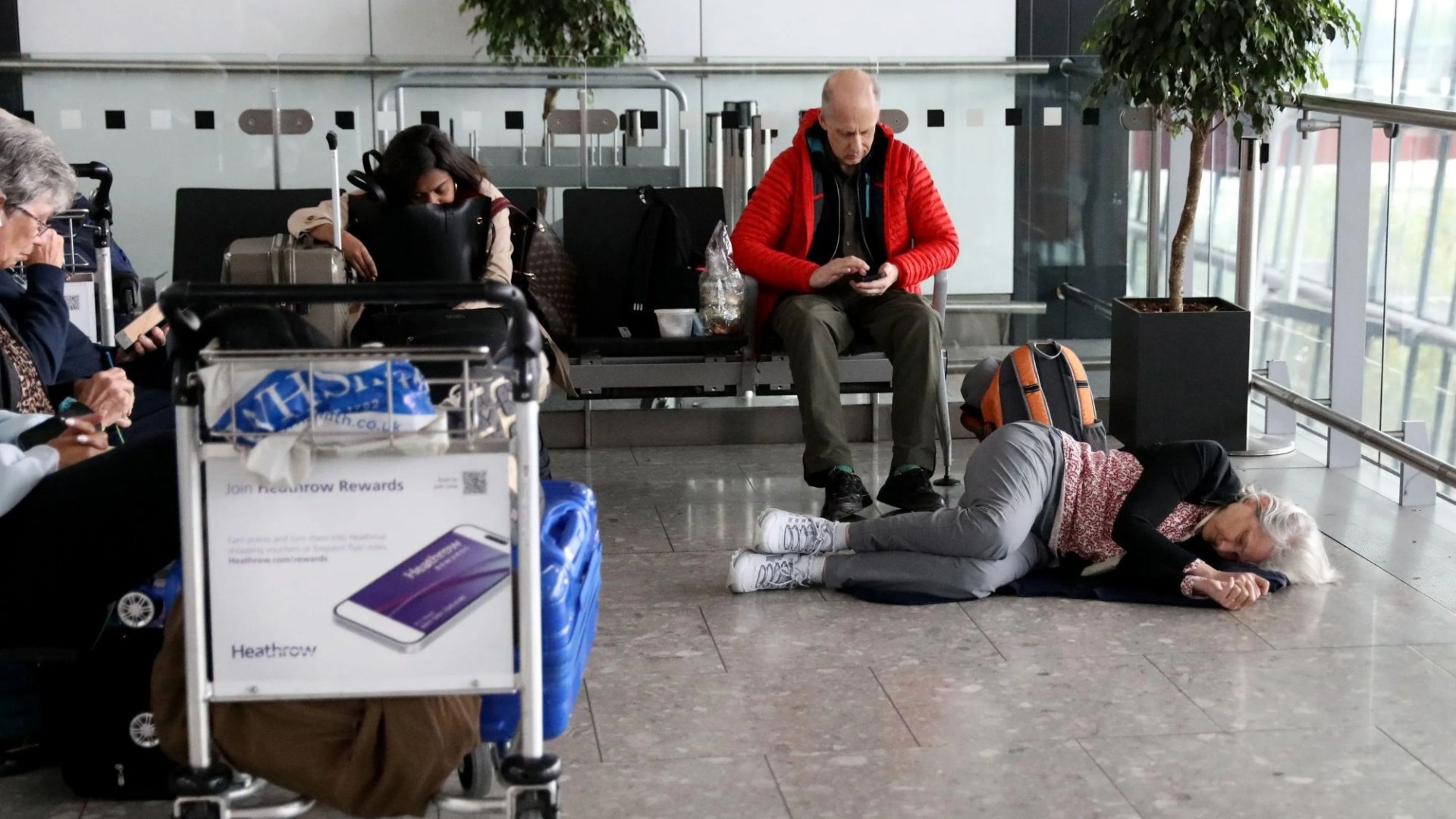
A “SOFTWARE issue” sparked the airport chaos that saw thousands of planes grounded and more than 500,000 passengers stranded. Over 2,000 flights were cancelled following the National Air Traffic Services (NATS) meltdown last week. Over 2,000 flights were cancelled following the National Air Traffic Services (NATS) meltdown Credit: Alamy A ‘software issue’ sparked the major airport chaos across the UK Credit: PA:Press Association NATS has since confirmed it was caused by a defect in the National Airspace System, which allocates codes to individual aircraft. Transport Secretary Heidi Alexander demanded an urgent review and told MPs she did not believe the fault was “unavoidable.” Sign up for The Sun newsletter Thank you! But a preliminary report released today said the issue, which emerged at around 1pm on September 8, was not caused by “incorrect actions”. Martin Rolfe, 51, the NATS senior executive is now facing pressure to quit after the disruption, which marked his third catastrophic failure as chief. NATS has confirmed the chaos was caused by a defect in the National Airspace System Credit: Shutterstock Editorial Experts warned the disruption could drag on for weeks Credit: AFP Writing in the report, Rolfe said the incident was not related to an outage in 2023 or a radar issue last July. “I can also confirm that it was a software issue and not caused by any incorrect actions by either military or civil operators,” he said. Experts warned the disruption could drag on for weeks after the major technical failure at the NATS Swanwick control centre. The fault caused flights both in and out of the UK to be axed, impacting hundreds of thousands of passengers. Most read in The Sun Many had to sleep on terminal floors among piles of suitcases at airports including Heathrow, Gatwick, Manchester and Stansted. Meanwhile, hotels ripped off stranded tourists and the Civil Aviation Authority warned compensation was “unlikely”. The CAA report is due to be published within six months. Rolfe was paid £1.5 million, including £871,000 in bonuses, last year, but is now facing questions over his future. He has been accused of overseeing a “litany of failures” during his time as CEO of the UK’s air traffic control services. He previously faced turbulence in 2023 when he oversaw his first failure in air traffic control which affected more than 250,000 passengers. Another incident under Rolfe’s leadership affected hundreds of flights in July 2025 and was blamed on a radar-related failure. On the day of the latest failure, Ryanair chief operations officer Neal McMahon said the NATS boss must resign. In a statement issued online he said: “They have a crap system and they don’t invest in it. “Instead of investing in the system, they pay big bonuses to management and they pay huge dividends to the shareholders.” While the boss of Wizz Air UK Yvonne Moynihan suggested Rolfe had finally struck out following the third failure. She told BBC Radio 4: “I think in any industry, when you’ve had three failures, you need to consider that three strikes and you’re out.” But Downing Street says Rolfe still has the confidence of the Government, despite the recent disaster. Rolfe previously vowed a “very, very thorough investigation” into the technical problem behind the widespread disruption. He also “ruled out” a cyber attack as the cause of the outage. Speaking to BBC Radio 4’s Today programme, he said: “We have at this point ruled out cyber, we don’t believe it was a cyber attack. “My focus and that of the team has been on both getting our system operating back up normally, which it is now. “But there’s obviously a huge tail to the disruption and we’ll be working on that.” 1 comment1
Air traffic bosses reveal cause of mass UK airport chaos after over 2,000 flights axed & 500k passengers left stranded
Full Article
Original Source
Read the full article at Thesun →KhanList aggregates and links to publicly available news content. We do not host full articles from third-party sources. Always verify important information with original sources.