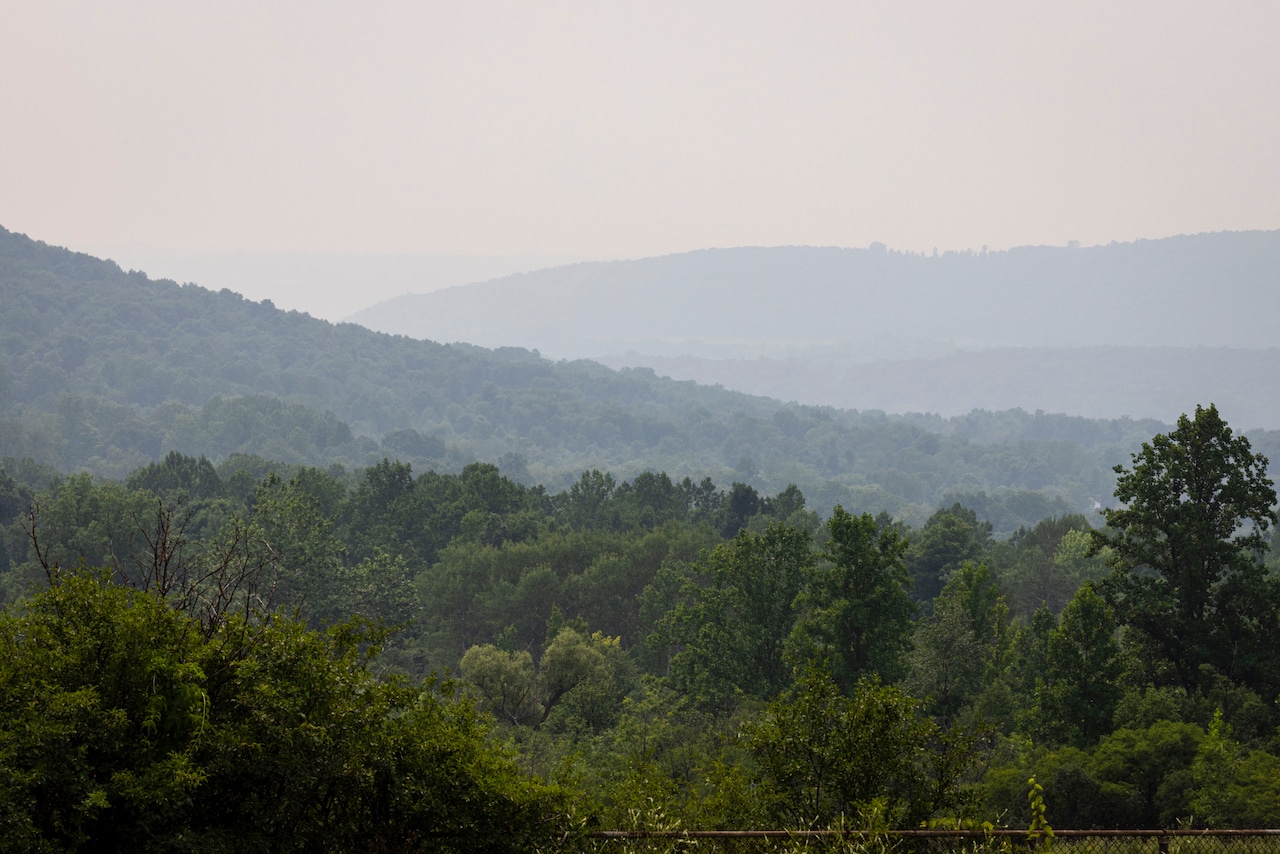
NewsThis July 16, 2026, file photo shows wildfire smoke from Canada and Minnesota drifting across Upstate New York. (Chloe Trofatter | ctrofatter@syracuse.com)Chloe Trofatter | ctrofatter@syracuse.comBy Geoff Herbert | gherbert@syracuse.comAir quality alerts have been issued for multiple states in the U.S. as wildfire smoke returns.According to AirNow.gov, the U.S. Air Quality Index is expected to be at “red” level, or unhealthy with an air pollution AQI between 151 and 200, in parts of Oregon and Washington on Friday. The EPA’s index for reporting air quality will also be at “orange” level, or unhealthy for sensitive groups with an AQI between 101 and 150, in parts of Arizona, California, Colorado, Idaho and Utah, including major cities like Los Angeles, Phoenix, and Denver.Parts of Oregon, Washington, Idaho and Utah are also expected to be at “orange” or “red” levels Saturday, according to AirNow.gov.According to The Weather Channel, the poor air quality is being caused by wildfire smoke from western Canada and parts of the Pacific Northwest region. Almost three dozen large wildfires were burning in Oregon and Washington on Thursday, according to InciWeb, largely due to thunderstorms and extreme heat in a drought-plagued plains area.TWC reports wildfire smoke could soon travel to the Midwest and Northeast U.S., but it is not likely to be as severe as last week’s air quality problems. Most of the smoke is higher above the ground and further away, though it could still lead to hazy skies and colorful sunsets.How to check air quality levels in your areaYou can check air quality levels where you live at airnow.gov by entering your city or zip code. The website will show levels of air pollution and one of six colored categories showing different levels of health concerns, as well as a forecast where potential times of day may be better for outdoor activities.Note: Air quality levels may change frequently throughout the day and are updated by the EPA (U.S. Environmental Protection Agency) at airnow.gov.What are air quality levels?The U.S. Air Quality Index (AQI) measures air pollutants with six color-coded categories to indicate outdoor air quality and potential health concerns. Air quality levels of “green” (0-50 AQI) or “yellow” (51-100 AQI) are considered safe or acceptable, with little risk.“Orange” (101-150 AQI) air quality levels are considered unhealthy for sensitive groups. Those with health issues may experience effects, while the general public is less likely to be affected. Affected groups should make outdoor activities shorter and less intense, or take more breaks.“Red” (151-200 AQI) air quality levels are considered unhealthy for all. Some members of the general public may experience health effects, while sensitive groups may experience more serious health effects. Sensitive groups should consider rescheduling or moving activities indoors, while everyone else should reduce long or intense activities. “Purple” (201-300 AQI) air quality levels are considered “very unhealthy” for everyone. The risk of health effects are increased for everyone. Sensitive groups should avoid all physical activity outdoors, while healthy people should consider rescheduling or moving activities indoors.“Maroon” (301 or higher AQI) air quality levels are “hazardous,” according to the EPA. Health warnings of emergency conditions are issued as this is the highest level of danger. Everyone should remain indoors and keep activity levels low. Geoff "DeafGeoff" Herbert is a Reporter and Content Supervisor for Advance Local. He covers a wide range of topics including entertainment, national news and trending topics, plus specializes in search engine...
Air quality alerts issued for multiple states as wildfire smoke returns
Full Article
Original Source
Read the full article at Cleveland →KhanList aggregates and links to publicly available news content. We do not host full articles from third-party sources. Always verify important information with original sources.