
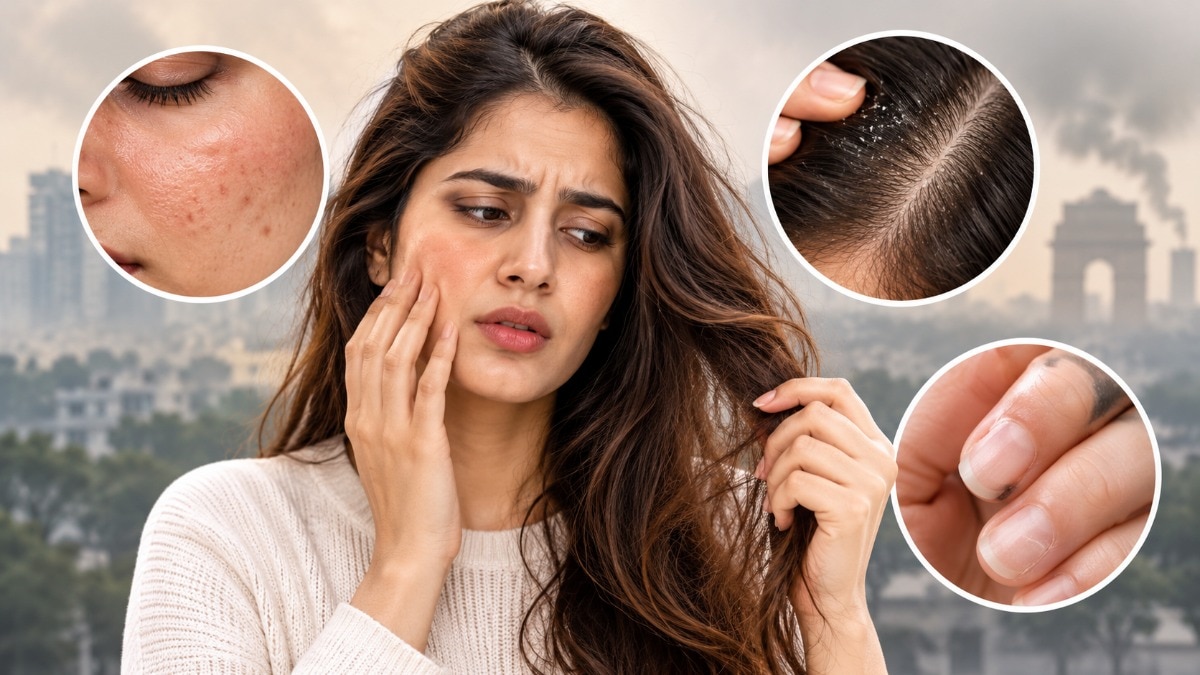
Air pollution is no longer just a respiratory health concern. Prolonged exposure to polluted air may also affect your skin, hair and nails, contributing to dryness, irritation, premature ageing, hair damage and changes in nail health.As air quality deteriorates across several parts of India, people are increasingly exposed to pollutants such as PM2.5, PM10, dust, soot and other harmful chemicals. These pollutants can come into contact with the skin, settle on the scalp and hair, and potentially affect the body's natural protective barriers.According to Dr Anil KV Minz, Senior Dermatologist at Marengo Asia Hospitals and Genesis Skin and Hair Clinic, Faridabad, prolonged exposure to air pollution can affect skin and scalp health through oxidative stress, inflammation and damage to the body's natural protective barriers.While the effects of air pollution on the lungs and heart have been widely studied, its impact on the skin and other external parts of the body also deserves attention. Oxidative stress, inflammation and damage to protective barriers are some of the mechanisms through which environmental pollution may affect skin and hair health. Here's how prolonged exposure to polluted air may affect your skin, hair and nails.HOW AIR POLLUTION AFFECTS YOUR SKINYour skin is the body's first line of defence against environmental pollutants. However, prolonged exposure to particulate matter and other air pollutants may weaken its protective barrier. Fine particulate matter, particularly PM2.5, can settle on the skin's surface and contribute to oxidative stress. This occurs when harmful molecules called reactive oxygen species (ROS) accumulate beyond the body's antioxidant defence capacity.This process may damage skin cells, trigger inflammation and affect the skin's natural ability to retain moisture.Some potential effects include:- Dryness and irritation: Pollution may compromise the skin barrier, increasing moisture loss and causing dryness, itching and sensitivity.- Premature ageing: Oxidative stress may damage collagen and elastin, proteins that help maintain skin firmness and elasticity. This can contribute to fine lines, wrinkles and loss of skin elasticity.- Acne and breakouts: Pollutants, dirt and excess sebum may contribute to clogged pores and aggravate existing acne.- Pigmentation: Oxidative stress and inflammation may contribute to uneven skin tone and the appearance of dark spots.- Worsening of skin conditions: People with sensitive skin, eczema or other inflammatory skin conditions may experience increased irritation during periods of high pollution.CAN AIR POLLUTION DAMAGE YOUR HAIR AND SCALP?Yes, prolonged exposure to polluted air may affect scalp health and hair quality. Pollutants such as dust, soot and particulate matter can settle on the scalp and accumulate on hair strands. This build-up may contribute to scalp irritation, oxidative stress and inflammation.Over time, these processes may affect the hair shaft and the cells responsible for healthy hair growth.Some possible effects include:- Increased hair fall: Experimental research suggests that particulate matter may affect the viability of human hair follicle cells and contribute to cellular damage.- Dry and dull hair: Pollutants may affect the hair cuticle, the outer protective layer of the hair shaft, making hair appear rough and lifeless.- Scalp itching: Pollutant buildup and inflammation may aggravate scalp sensitivity.- Dandruff and flaking: Pollution may worsen existing scalp irritation and inflammatory conditions.- Hair breakage: Damage to the hair shaft's protective layer may make strands more vulnerable to friction and breakage.However, air pollution is not an established independent cause of baldness. Hair loss is multifactorial and can also be associated with genetics, hormonal changes, nutritional deficiencies and medical conditions.HOW DOES AIR POLLUTION AFFECT YOUR NAILS?While the effects of air pollution on skin and hair have received growing scientific attention, research examining its direct impact on nail health remains limited.However, prolonged exposure to dust, soot and environmental pollutants may affect the appearance and cleanliness of nails.Some possible concerns include:- Surface discolouration: Repeated contact with dust, soot and pollutants may cause external staining or discolouration.- Dryness: Environmental exposure and frequent washing to remove dirt may contribute to dryness around the nails and cuticles.- Cuticle irritation: Contact with pollutants and other environmental irritants may aggravate sensitive skin around the nails.- Nail brittleness: Dryness and repeated exposure to harsh cleaning products may make nails more prone to splitting and breakage.It is important to note that there is currently insufficient evidence to establish air pollution as a direct cause of weak or brittle nails.HOW TO PROTECT YOUR SKIN, HAIR AND NAILS DURING HIGH-POLLUTION DAYSReducing exposure to pollutants and following a consistent personal-care routine can help protect your skin and hair.Here are some precautions:1. Cleanse your skin: Wash your face with a gentle cleanser to remove accumulated dirt, dust and pollutants.2. Moisturise regularly: Use a suitable moisturiser to support the skin barrier and prevent excessive dryness.3. Apply sunscreen: Use broad-spectrum SPF 30 or higher sunscreen to protect against ultraviolet radiation. Sunscreen does not replace protection against air pollution.4. Wash your hair when needed: Shampoo your scalp depending on oiliness, sweating and outdoor exposure to remove accumulated pollutants.5. Cover your hair outdoors: Use a clean scarf or head covering while travelling through heavily polluted areas.6. Avoid excessive heat styling: Limit frequent use of straighteners, curling irons and blow dryers, which can add to hair damage.7. Keep your nails clean: Wash your hands regularly and gently clean beneath your nails without aggressive scraping.8. Moisturise your hands and cuticles: Apply hand cream and moisturiser around your nails to prevent dryness.9. Maintain indoor air quality: Keep windows closed when outdoor pollution is high, where practical, and consider using a properly sized HEPA air purifier.Air pollution is not just a problem for your lungs. Prolonged exposure may also affect your skin barrier, scalp health and hair quality through oxidative stress, inflammation and environmental damage.Although the evidence linking pollution to skin and hair problems is growing, its direct impact on nail health remains less understood. Reducing exposure, maintaining personal hygiene and following a consistent skincare and hair-care routine can help minimise some of these effects.Persistent skin irritation, unusual hair fall or changes in nail health should be evaluated by a dermatologist rather than automatically attributed to pollution.- Ends
Air pollution can affect your skin, hair and nails: Here's how
Full Article
Original Source
Read the full article at Indiatoday →KhanList aggregates and links to publicly available news content. We do not host full articles from third-party sources. Always verify important information with original sources.