
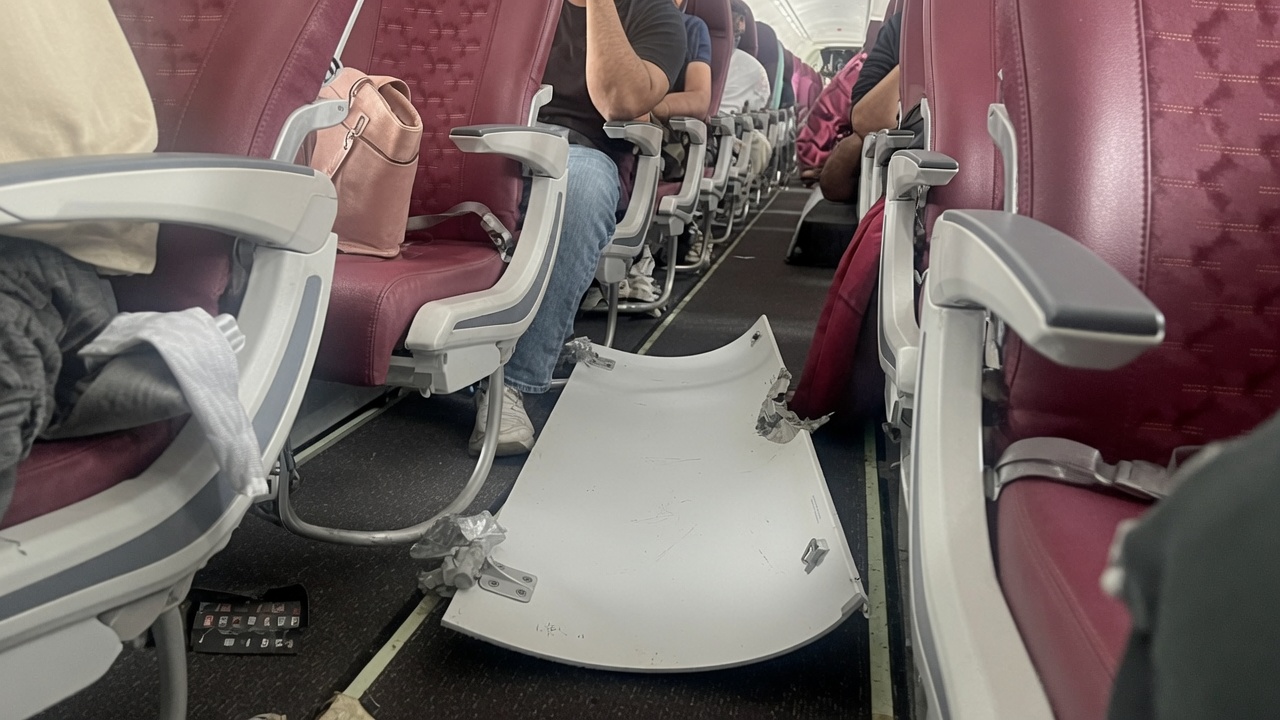
An Air India Airbus A320neo flying from Phuket to Delhi suddenly lost about 300 feet on Tuesday, throwing passengers and flight attendants into the ceiling and damaging the cabin. Seventeen people were injured. The incident was immediately reported as severe turbulence, but this may not have been turbulence at all. Air India flight AI2379 was carrying 137 passengers, including three infants, and eight crew members. The aircraft landed normally in Delhi at 11:07 a.m. Thirteen passengers and four of the six cabin crew were injured; five passengers were discharged later that day, while eight passengers and four crew remained hospitalized in stable condition. One flight attendant’s injury is being categorized as severe. #WATCH | Delhi: Several passengers injured after Air India flight encounters severe air turbulence while travelling from Phuket to Delhi pic.twitter.com/OM1lXKRKcm — ANI (@ANI) August 4, 2026 One passenger says the seatbelt sign was off and he was drinking coffee when he hit the ceiling and then the floor. His wife and two-year-old were thrown into the aisle. Another passenger watched her sister go airborne while their mother suffered a head injury. One passenger shares, What I felt was strange was that, just before the drop, there was a loud rumbling noise and shaking/vibrating (almost like the sensation you get during takeoff or landing). I remember thinking, “Why is it making that sound? We’re already up in the air.” Then the plane suddenly dropped. And then it dropped again. Thank God I was wearing my seatbelt, because I saw other passengers being thrown through the cabin, hitting their heads and suffering injuries. I’m honestly still very traumatized. I can’t believe how close to death it felt. The Official Explanation Has Shifted Air India’s first statement called this a “brief in-flight turbulence-related event.” Its subsequent update used different language: a “sudden loss of altitude.” The Indian government’s account described a “momentary altitude variation.” According to India’s Directorate General of Civil Aviation, the cause was actually a “suspected transient technical fault.” The flight data recorder and cockpit voice recorder have been secured, the aircraft was moved to a hangar after arrival, and Airbus has been brought into the investigation. Airbus would be involved in examining a serious event involving one of its aircraft in any case. But it means that severe clear air turbulence is only one hypothesis at this point. A 300-Foot Drop Alone Isn’t That Dramatic A reported altitude change sounds dramatic but doesn’t actually measure how violent an event was. It’s the rate and direction of acceleration, how quickly altitude changes, that causes harm. Singapore Airlines flight SQ321 was probably the biggest turbulence event I’ve written about, and in that case the aircraft lost only 178 feet but its vertical acceleration swings were huge (+1.35G to -1.5G and then +1.5G). One passenger died, and there were ultimately 56 serious and 23 minor injuries. Images have emerged from inside SQ321 after hitting severe turbulence while enroute to Singapore, killing one passenger. https://t.co/sPhFfVr1Tb pic.twitter.com/IngvtijtAD — Breaking Aviation News & Videos (@aviationbrk) May 21, 2024 This flight belongs in the upper-middle tier of serious cabin events, with no fatalities, the aircraft landing normally, but with 17 injuries including four of the six cabin crew. Flight attendants work in the cabin, and aren’t belted much of the time. Passengers have the opportunity to remain belted into their seat for most of the flight. Use that opportunity. Whether turbulence or a technical fault, the effect on those in the cabin was the same. Topics on this page
Air India Flight Dropped 300 Feet, Injuring 17. It May Not Have Been Turbulence
Full Article
Original Source
Read the full article at Viewfromthewing →KhanList aggregates and links to publicly available news content. We do not host full articles from third-party sources. Always verify important information with original sources.