
Published Nov 5, 2026, 9:00 AM EST Luke Diaz is a freelance military writer with experience with active duty experience in the US Navy as well as defense and industrial engineering. He is a former Naval Flight Officer who performed tactical air control on the carrier-based E-2 Hawkeye. Air Canada has gone all in on the extra-long widebody Airbus A350-1000, with an order for eight examples that will begin to arrive in 2030. The introduction of the A350-1000 marks a monumental shift for the airline, breaking a decades-long reliance on Boeing 777-300ERs for its long-haul operations. The A350 has a maximum range of 9,000 nautical miles (16,668 km), compared with 1,630 nautical miles for the 777-300ER. This allows Air Canada to freely expand its destination list. Air Canada already flies to Delhi, Tokyo, Sydney and Brisbane, so its order for eight Airbus A350-1000s is not simply a ticket to new cities. While the 777-300ER has been highly successful as a twin-aisle aircraft, the A350-1000 offers significant performance advantages. On existing long routes like Vancouver to Delhi, the 777 often faces strict weight restrictions. This forces the airline to leave behind passengers or cargo to carry enough fuel, but the new A350 removes that limitation. With the prolonged certification of the next-gen 777X still ongoing, the A350 offers a much faster path for fleet renewal. Powered by Rolls-Royce Trent XWB-97 engines and built with a 70% composite airframe, the A350 is dramatically more efficient than the 777. It also has a lower 6,000-foot (1,828.8 m) altitude, 25% lower than legacy jets, and enhanced humidity controls to reduce jet lag on grueling 17+ hour flights. The A350 will become Air Canada's flagship, complementing the new A321XLRs now joining the fleet. How Russian Airspace Reshaped The Great Circle Map Credit: Airbus Among the numerous technical and economic reasons that make the A350 a powerful new platform for the Air Canada fleet, geopolitical considerations have also made long-haul flying even longer in recent years. Following Russia’s invasion of Ukraine in February 2022 Canada, the US, the UK, and the EU banned Russian aircraft from their skies. In a reciprocal move, Russia barred NATO-aligned nations from its airspace, cutting off access to Siberian corridors. The shortest distance between North America and Asia or South Asia isn't a straight line across the Pacific, but a Great-Circle route that arcs upward through the Arctic and down through eastern Russia. Losing this airspace complicated Air Canada’s flight paths and forced significant operational changes. According to ch aviation, Air Canada responded by adding a fuel stop in London to its Vancouver to Delhi service. That layover makes a 14-hour nonstop journey into two flights of about nine and eight hours with a stop of one to two hours. Origin Destination Great Circle Range Current Route Distance Pre-2022 Block Time Current Block Time Route Status Lester B. Pearson International Airport (YYZ) Indira Gandhi Delhi International Airport (DEL) 7,230 mi (11,636 km) 8,230 mi (13,245 km) ~14 hours ~16.5 hours Nonstop Vancouver International Airport (YVR) Delhi Airport (DEL) 6,920 mi (11,137 km) 7,610 mi (12,247 km) ~14 hours ~15.5 hours Nonstop Pearson Airport (YYZ) Chhatrapati Shivaji Maharaj International Airport (BOM) 7,760 mi (12,489 km) 8,760 mi (14,098 km) ~15 hours 20 to 22 hours Previously operated with a layover at Frankfurt Airport (FRA) or London Heathrow Airport (LHR), now axed. Vancouver Airport (YVR) Hong Kong International Airport (HKG) 6,390 mi (10,284 km) 7,030 mi (11,314 km) ~12.5 hours ~14.5 hours Nonstop Pearson Airport (YYZ) Incheon International Airport (ICN) 6,610 mi (10,638 km) 7,270 mi (11,700 km) ~13.5 hours ~15 hours Nonstop Vancouver Airport (YVR) Narita International Airport (NRT) 4,680 mi (7,532 km) 4,910 mi (7,902 km) ~9.5 hours ~10.5 hours Nonstop Flights to India from Toronto and Montreal stayed nonstop, the same report said. For flights bound for East Asia, such as Vancouver to Hong Kong or Tokyo, Air Canada had to shift its paths drastically eastward. Planes are forced to fly over Alaska and trace a narrow international airway skirting just 30 miles outside Russian territory over the Bering Sea. These routes typically add 10% to a trip's distance. This translates to multiple hours of extra time in the air each way. Carrying the extra fuel needed for a 1,000-mile detour significantly increases the plane's takeoff weight. Because aircraft have strict maximum takeoff weights, Air Canada frequently faces payload penalties. It also drastically increases crew labor costs and shortens engine maintenance cycles. Why A Long Route Costs Seats & Profits Credit: Airlinephoto | Shutterstock Ultra-long-haul routes operate on razor-thin margins, and detours decimate profitability. While Air Canada must absorb these costs and charge higher ticket prices for longer, less convenient flights, competitors unaffected by the bans continue to fly direct. An extra two hours of flight time burns thousands of additional gallons of fuel, which is an airline's single largest expense. Increasing fares in response drives price-conscious passengers away, destroying the route's economic viability. When a flight path is stretched by 1,000 miles due to airspace bans, the plane must carry tons of additional fuel just to stay airborne for the extra two hours. Because the MTOW cannot change, every extra pound of fuel loaded into the tanks directly forces a pound of payload off the aircraft. To save weight, the airline must implement severe weight-restriction caps. Air Canada is forced to block out seats, leaving them empty and unsold, and refuse lucrative belly commercial cargo. Carrying massive fuel loads makes the plane much heavier for the first half of the flight. The plane uses significantly more fuel just to carry the extra weight of its own fuel, all while generating less revenue from a half-empty cabin. A 777 packed to its absolute weight limit with detour fuel cannot climb directly to its optimal fuel-efficient cruising altitude around 35,000 feet because the air is too thin for the extra weight. The plane is forced to spend the first several hours of the flight at lower altitudes, like 29,000 feet, where the air is denser, creating significantly more aerodynamic drag and increasing fuel burn and engine wear. The longer itinerary also requires paying the flight deck and cabin crew for extra block hours. This often triggers mandatory crew rest rules that require putting up relief crews in expensive destination hotels. Additionally, adding two hours to every leg pushes an aircraft into heavy maintenance checks months ahead of schedule. For an older fleet of Boeing 777s already midway through their service lives, this relentless compounding of flight hours drastically shortens the calendar years they can remain in service. Air Canada's Fleet Shift Credit: Airlinephoto | Shutterstock The A350-1000 was designed long after the 777, specifically tailored for the realities of modern ultra-long-haul flying. Over 50% of the A350's airframe is built from lightweight carbon-fiber composites instead of traditional aluminum. This drastically lowers the empty weight of the aircraft; thus, it can carry extra fuel without being forced to cut passenger seats or cargo on almost any ultra-long-haul route. The A350 provides Air Canada with the raw performance capability to restore axed routes like Toronto to Mumbai and protect the profitability of routes to Delhi and Hong Kong. The Rolls-Royce Trent XWB-97 engines operating on the A350-1000 are optimized for high-altitude efficiency. Combined with an advanced morphing wing design, the aircraft can climb quickly to optimal cruising altitudes even when heavily loaded, burning roughly 25% less fuel per seat than the 777. Beyond the balance sheet, the A350 delivers a superior premium passenger experience that protects its brand on grueling flights. Traditional aluminum airframes limit how much a cabin can be pressurized and humidified without causing structural rust over time. The Airbus jet's composite fuselage does not corrode, allowing the cabin altitude to be set much lower with significantly higher ambient humidity. Passengers step off an 18-hour flight experiencing far less physical fatigue, headaches, and dehydration. Air Canada Did Not Order The 777X Credit: Coby Wayne | Shutterstock While the A350-1000 is an incredibly efficient leap forward, replacing the Boeing 777-300ER isn't a flawless victory. Air Canada is making concrete trade-offs, and several distinct physical attributes, operational realities, and sensory experiences unique to the 'Triple Seven' will be lost. The Boeing 777-300ER features an incredibly wide internal cross-section at 19 feet, three inches (5.87 m). The A350-1000 is physically narrower at 18 feet, five inches (5.61 m). Because of the 777's massive, boxy upper fuselage cross-section, its overhead pivot bins are structurally deeper and taller. The 777 is also top of the class when it comes to revenue-generating belly cargo. It handles a standard underfloor capacity of up to 44 cargo containers. The A350-1000 maxes out closer to 40 containers. Given these traits, it begs the question: why didn't Air Canada order the 777X instead of the next-gen Airbus? Air Canada's decision to pass on the 777-9 in favor of the A350 came down to a mix of persistent engineering delays and operational constraints. While the 777-9 was the expected successor within Air Canada's heavily Boeing-dominated system, its design did not align with the airline's immediate technical and operational requirements. More importantly, timing was the critical driver because Air Canada’s current fleet of 19 Boeing 777s is rapidly aging, with an average age now over 16 years. The 777-9 is a super heavy twinjet, with an MTOW of 775,000 pounds. Its folding carbon-fiber wings make it highly efficient on normal routes. However, its size works against it on Air Canada's longer routes through Russian airspace compared with the A350. Worse still, the 777X program has notoriously suffered from years of rolling setbacks and testing delays, pushing it to 2027 or later. Air Canada simply could not risk waiting on an unstable timeline after so many years.
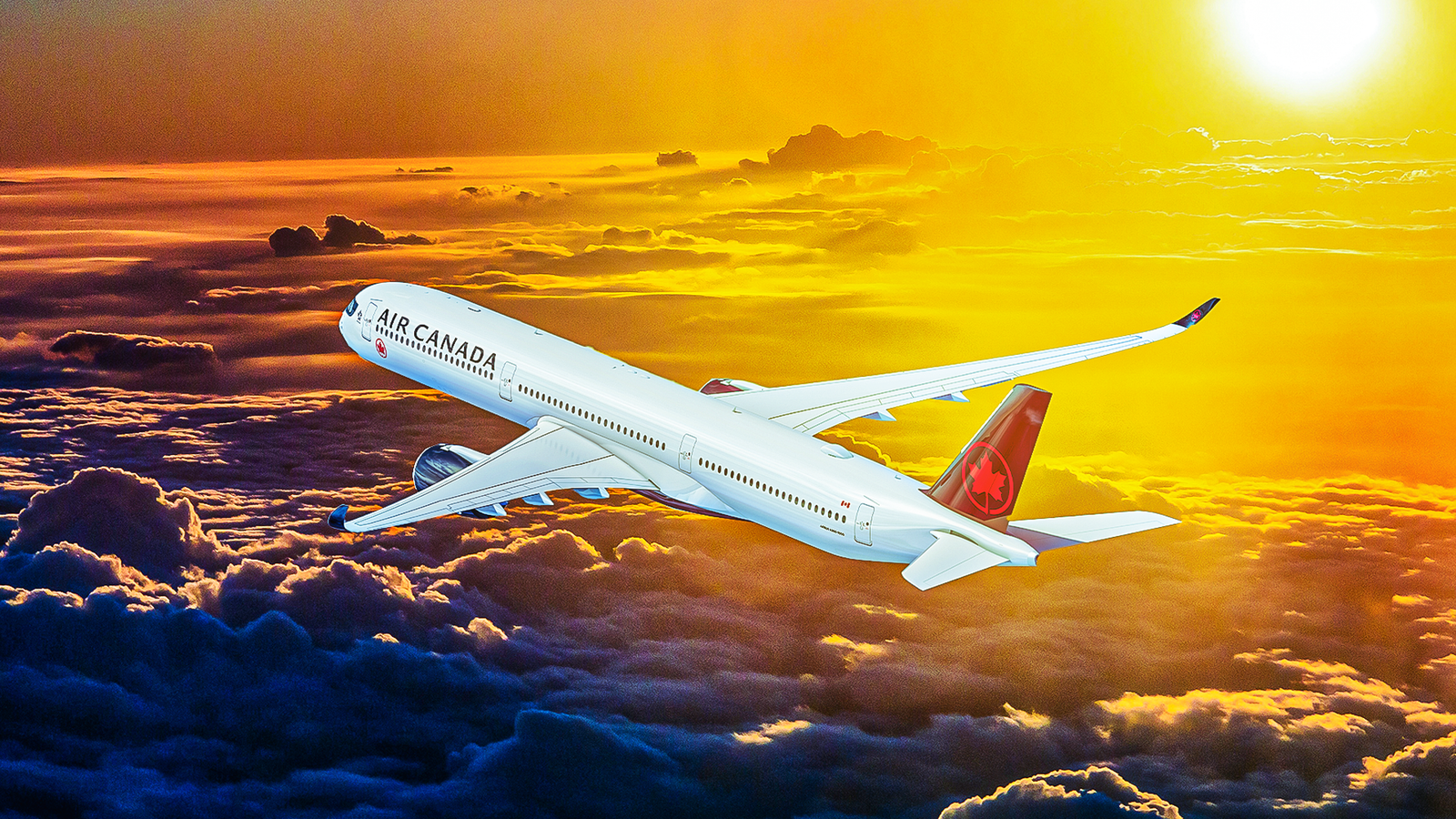
Air Canada Ordered 8 Airbus A350-1000s To Fly Nonstop Where Its Boeing 777-300ERs Cannot
Full Article
Original Source
Read the full article at Simpleflying →KhanList aggregates and links to publicly available news content. We do not host full articles from third-party sources. Always verify important information with original sources.