
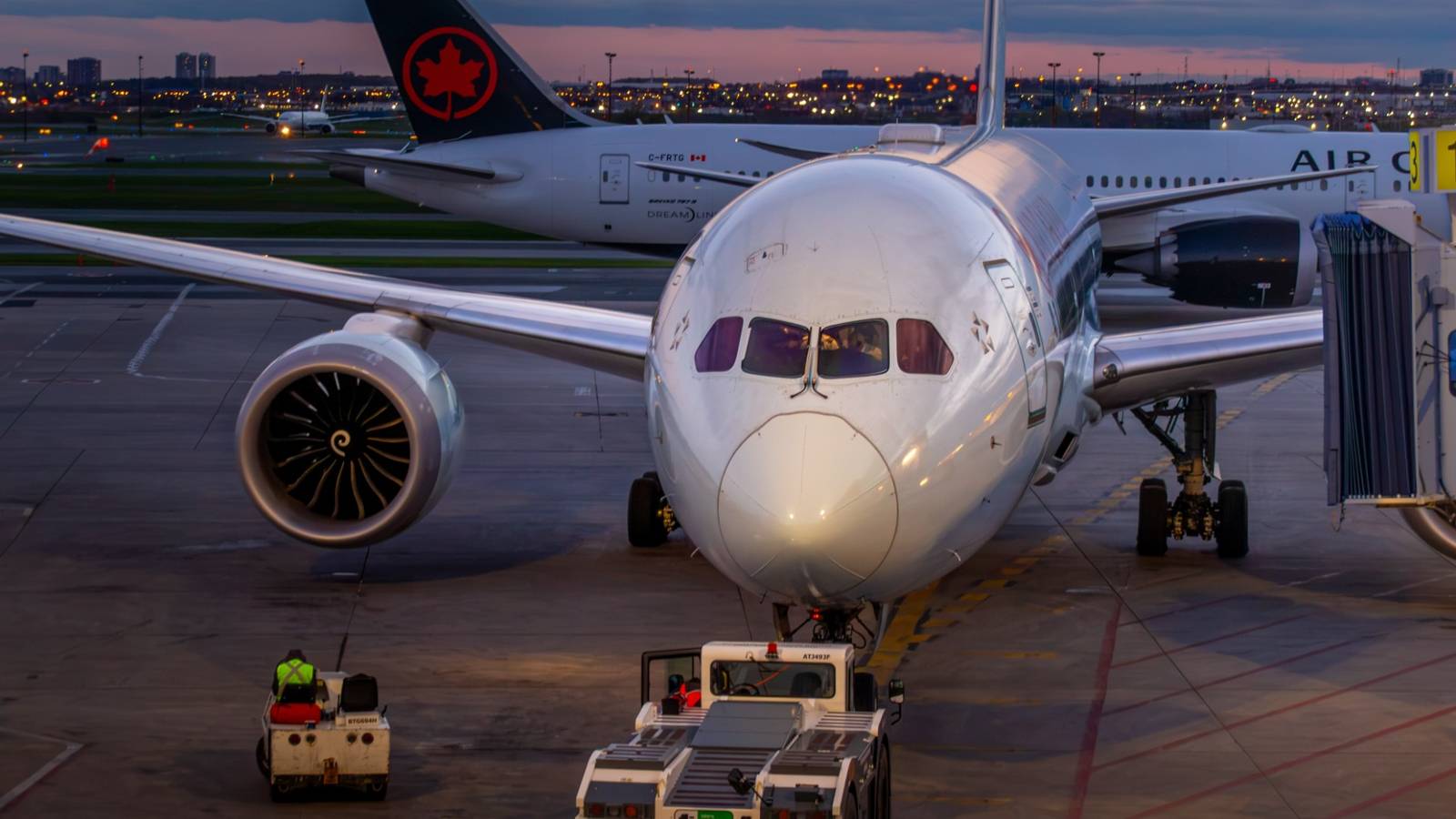
Published Oct 27, 2026, 12:01 PM EDT Luke Diaz is a freelance military writer with experience with active duty experience in the US Navy as well as defense and industrial engineering. He is a former Naval Flight Officer who performed tactical air control on the carrier-based E-2 Hawkeye. Air Canada has drastically reshuffled its fleet deployment for international, long-haul routes as it pulls back the Boeing 787 Dreamliner to maximize efficiency. In its place, Air Canada has opted in favor of Legacy airframes like the Airbus A330 or Boeing 777 and, in many cases, the new single-aisle Airbus A321XLR. The overarching theme is a shift away from transatlantic destinations, with the Dreamliner being redeployed as the airline's transpacific flagship. The crown jewel of this redeployment is a year-round gateway linking Vancouver directly to Guangzhou, marking a major milestone as Air Canada becomes the only North American carrier to offer nonstop service. Air Canada's Hemispheric Strategy Shift Credit: Markus Mainka | Shutterstock The simplest explanation as to why Air Canada has made the strategic decision to redeploy its 787-8 and 787-9 Dreamliners from European destinations to Asia boils down to simply matching aircraft performance to the itinerary. The two Dreamliners are some of the longest-range commercial aircraft currently in production. Loading map… Drag to explore This not only means that they are designed to fly exceptionally long distances, but also that the cabin is optimized for long-haul travelers. In the absence of the 787, on thinner, highly seasonal leisure routes like Toulouse, Berlin, Edinburgh, Porto, and Ottawa to London, the departure of the Dreamliner means a shift from a widebody to the single-aisle Airbus A321XLR. On high-density trunk routes like Zurich, Paris, Venice, Casablanca, and Calgary to London, the 787 has been replaced by larger, older widebodies like the Airbus A330-300 and the Boeing 777. Replacing the 787 with the larger A330 or 777 means stepping into an older generation of aircraft interiors, which presents a unique mix of pros and cons. On the other hand, while downsizing from a widebody to a narrowbody sounds like a step backward, the A321XLR is packed with next-generation technology that mirrors the 787 experience. As such, while flyers may see some aging in-flight entertainment or climb aboard a smaller jetliner, each of these substitute planes has its own charm as well as quirks to look out for for anyone planning a trip across the pond. What It's Like Inside Air Canada's A321XLR? Credit: Philip Pilosian | Shutterstock If you are flying on one of the itineraries where Air Canada pulled off its Dreamliners in favor of Airbus's next-gen, long-range, single-aisle, the only real difference is the physical size of the airplane. The long-haul variant of the European plane maker's staple A321neo line packs many of the same features found in the 787. The A321XLR incorporates Airbus's newest Airspace cabin architecture, featuring 787-style environmental controls. It boasts advanced LED ambient lighting to fight jet lag, significantly quieter engines, and oversized overhead bins that allow every passenger to roll on a carry-on. From To New Aircraft Calgary International Airport (YYC) London Heathrow Airport (LHR) A330-300 Toronto Pearson International Airport (YYZ) Zurich Airport (ZRH) 777-200LR, 777-300ER Montreal Pierre Elliott Trudeau International Airport (YUL) Toulouse Blagnac Airport (TLS) A321XLR Ottawa Macdonald-Cartier International Airport (YOW) London (LHR) A321XLR, A330-300 Montreal (YUL) Francisco Sa Carneiro Airport (OPO) A321XLR Montreal (YUL) Copenhagen Airport (CPH) A321XLR, A330-300 Montreal (YUL) Paris Charles de Gaulle Airport (CDG) A330-300, 777-300ER Toronto (YYZ) Venice Marco Polo Airport (VCE) A330-300, 777-300ER Montreal (YUL) Edinburgh Airport (EDI) A321XLR Montreal (YUL) Casablanca Mohammed V International Airport (CMN) A330-300 Montreal (YUL) Berlin Brandenburg Airport (BER) A321XLR In the front, the lie-flat Signature Class pods offer a highly private, cutting-edge corporate space. In the back, the brand-new, ergonomically sculpted economy seats feature the latest high-definition seatback screens and fast-charging Bluetooth connectivity. For travelers, the tech upgrades and factory-fresh interiors effectively offset the smaller size of the airframe, delivering a mainline widebody feel on a single-aisle jet. The Veteran Widebody Fleet: A330 Versus The Triple-Seven Credit: Soos Jozsef | Shutterstock It is true that the A330 and the 777 are flagships of the previous generation and therefore lack much of the advanced tech that defines the experience of a 787 or Airbus A350; however, the older airframes are also laid out more generously, which offers its own benefits. Because these cabins were designed before airlines maximized density strategies, they offer superior spatial breathing room. On the Airbus A330, the economy cabin is arranged in a highly desirable 2-4-2 layout. This is a major upgrade for couples who get a private pair of seats by the window, completely avoiding a middle-seat stranger. Even on the 777, the wider fuselage translates to broader aisles and less claustrophobia than modern jets. Still, the most immediate disadvantage is aging cabin infrastructure. Passengers will encounter older in-flight entertainment screens, slower USB charging, and smaller overhead bins. Furthermore, these older aluminum hulls lack the advanced cabin pressurization and high-humidity systems of the composite 787, often leading to increased jet lag and dry air. In business class, certain unrefurbished A330 configurations lack direct aisle access for every seat.
Air Canada Cancels 11 Long-Haul Boeing 787 Routes: See Full List Now
Full Article
Original Source
Read the full article at Simpleflying →KhanList aggregates and links to publicly available news content. We do not host full articles from third-party sources. Always verify important information with original sources.