
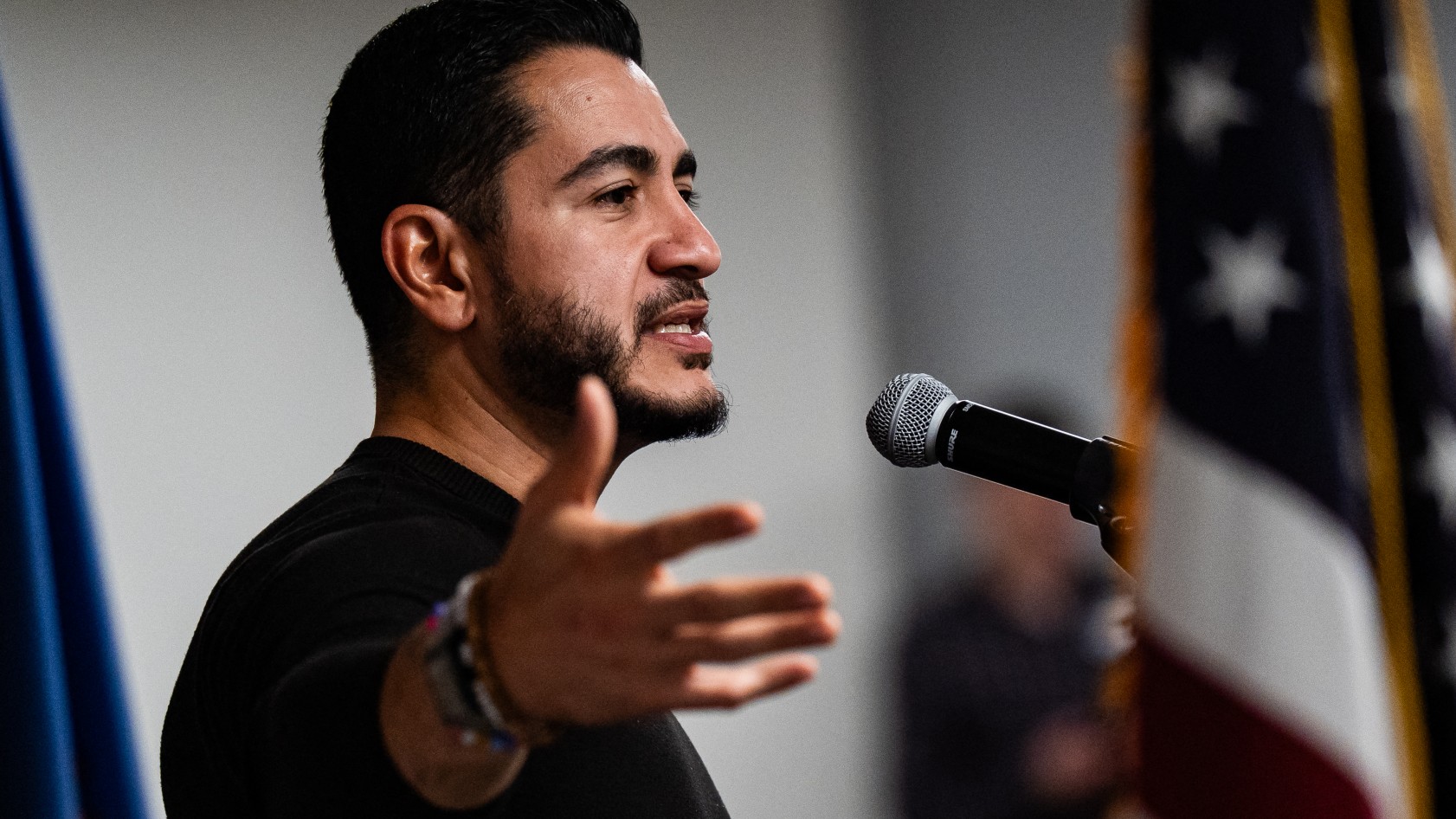
“A lobby is like a night flower: it thrives in the dark and dies in the sun.” So said Steve Rosen, former foreign policy director of the American Israel Public Affairs Committee (Aipac) in a memo to a fellow staffer. Rosen would later be fired amid a major scandal involving espionage in passing classified US information to Israel. Rosen was correct about the danger to a lobbying organisation that publicity poses. But in December 2021, Aipac decided to test that theory by creating two political action committees (Pacs) that enabled it to take part directly in political campaigns. The results were mixed, and Aipac recently announced that it was closing one of the Pacs it had set up. Aipac had been an advocacy organisation, promoting Israel’s interests, but it did not fund campaigns directly, nor did it endorse or fund political candidates. In many ways, that made it more effective. It could do things like issue a congressional report card which rated every member of Congress’s support of Israel. Then other groups that were actual Pacs could use those reports to decide which candidates they should be contributing to. New MEE newsletter: Jerusalem Dispatch Sign up to get the latest insights and analysis on Israel-Palestine, alongside Turkey Unpacked and other MEE newsletters Aipac’s non-profit status allows it to lobby Congress on behalf of Israel while claiming it acts strictly in support of the wishes of pro-Israel Americans. It thus avoids having to register as an agent of a foreign government. Meanwhile, Aipac’s sister organisation, the American Israel Education Fund, which is registered as an education non-profit, refrains from direct lobbying but offers vacation tours to Israel for members of Congress, under the rubric of “education”. This strategy was effective for decades. Aipac’s bipartisan reach was strong, and it was often remarked by a credulous media how Israel was, somehow, the one subject Democrats and Republicans could come together on. Changing opinion That began to change in recent years. The reasons are complicated, but the result was that presidential and congressional candidates, mostly among Democrats, were suddenly accepting the idea that annual military aid to Israel, which had risen to $3.8bn annually, should be conditioned on Israel conforming to the requirements of United States law and adhering with United States policy. It’s a mark of how successful Aipac had been that such obvious conditions, which were already mandated by US law, were considered controversial. But a growing awareness of the conditions that Palestinians were living under in the West Bank and Gaza Strip was changing the minds of many of Israel’s liberal supporters. Aipac decided to take the step of getting more directly involved in political campaigns to try to stifle the number of advocates for Palestine in Congress while the number of them was still very small. They created two Pacs: Aipac-Pac could contribute directly to candidates’ campaigns; and the United for Democracy Project (UDP), a super Pac, which cannot directly fund campaigns, but can spend an unlimited amount on advertising and other public advocacy to support their chosen candidates. Aipac has long been known for its lobbying, but now, its support for individual candidates could be tracked in a measurable way, making it the perfect symbol of money in politics. Aipac was attacked for its influence in Washington and was more easily assailed than other lobbying groups because it advocated for the interests of a foreign country. AIPAC spent millions to unseat me. Here’s why they’re now losing: Ex-congressman | Jamaal Bowman Read More » Aipac’s argument that it was an American group representing the interests of America’s pro-Israel community has worked for decades to protect the organisation from the limitations it would face as a registered agent of a foreign government. But in the court of public opinion, that technical argument holds little weight. People understand that Aipac defends and promotes the interests of a foreign country. Now that it was openly spending on campaigns and giving money to candidates, it could be caught up in the general distaste the American public has for the role of big money in politics. And the Aipac name started becoming toxic. Much of this was led by Bernie Sanders, who was among the first to recognise how vulnerable Aipac was to this sort of public shaming. Instead of impacting American politics with its newfound ability to spend great amounts of money, Aipac only further tarnished Israel’s once popular image in the United States. This was especially true for Democrats, whom Israel, under Prime Minister Benjamin Netanyahu, had been alienating for years, even though most American Jews are Democrats. Battleground state The decline of Israel’s image and the toxicity of Aipac were most clearly on display in the election campaigns this year in the battleground state of Michigan. In the upcoming election, Democrats have long been expected to win back the House of Representatives and now have a good chance of winning the Senate too. One of the key states in the election is Michigan. The Republican candidate in Michigan, Mike Rogers, is a known quantity, a staunchly right-wing man whose candidacy is backed by big corporations, extremist Christian groups, and Donald Trump. Mike Rogers’ campaign quietly asked Aipac to refrain from supporting Rogers. That is a mark of how toxic Aipac has become Abdul El-Sayed became the Democratic nominee after overcoming huge obstacles related to his views on Israel and Palestine, the war on Iran, and, most of all, the simple fact of his being a Muslim. He won a bruising primary against Congresswoman Haley Stevens, who had been an Aipac candidate for years. Stevens defeated Andy Levin in 2022, with a great deal of help from Aipac. Levin, who comes from a Michigan political dynasty and is a prominent leader in his Jewish community, was a self-identified Zionist, but a liberal one who believed in a two-state solution. But that was nothing compared to Aipac’s support for Stevens against El-Sayed. In total, Stevens outspent El-Sayed in the campaign by a 12-to-one margin. Aipac and other pro-Israel groups spent more than $30m between their own advertising and donations to Stevens’ campaign. Stevens kept a distance from some of the often vicious anti-Muslim rhetoric aimed at El-Sayed by her supporters, including Aipac. But she was not forceful in denouncing it, and this was noted and would only grow worse when El-Sayed faced a Republican. El-Sayed eventually defeated Stevens in a closely contested primary. Even as she denied that her association with Aipac might have hurt her chances of winning, Stevens inadvertently hinted that it did. “I think that there [were] a lot of people talking about it, and they didn’t love it because maybe they don’t understand what the group is. Aipac is a group of six million Jewish Americans… a lot of people are deeply frustrated that [Israeli Prime Minister Benjamin] Netanyahu has failed to give us peace,” she said. Over the weekend, a dramatic turn of events took place when the Michigan Democratic Party kicked Stevens out of its ranks, after she endorsed Michigan’s GOP Senate nominee, Mike Rogers - over Democrat Abdul El-Sayed. "Congresswoman Stevens is not a current member of the Michigan Democratic Party, nor will she be in the future," the state party’s chair, Curtis Hertel, said in a post Sunday on X. Islamaphobic rhetoric Meanwhile, El-Sayed’s Republican opponent turned up the Islamophobic rhetoric, consistently and falsely accusing El-Sayed of working with the Muslim Brotherhood, and of saying that the United States “deserved” the attacks of 11 September 2001. Yet despite that level of mudslinging, Rogers’ campaign, soon after the primaries ended, quietly asked Aipac to refrain from supporting Rogers. That is a mark of how toxic Aipac has become. From Michigan to Missouri: Democratic primaries deliver mixed bag on Israel and Gaza Read More » Eventually, Rogers, whose base of support includes some of the most zealous and extreme supporters of Israel from the evangelical Christian community, publicly welcomed and received support from Aipac. But his reluctance to initially accept Aipac money despite his very proud right-wing views shows how ubiquitous hostility toward Aipac is. The saga of Abdul El-Sayed and the Michigan Senate race is only one example of the toxicity of Aipac’s brand. The widespread distaste for the group explains why it is pulling itself out of the game of direct financing of candidates. Aipac will maintain the UDP super Pac, in the hope that it can continue to influence races quietly, with few people noticing that it is Aipac behind attack ads which often have nothing to do with Israel but serve to denigrate candidates who might have the slightest tendency toward advocacy for the rights of Palestinians. But if UDP can also be dragged into the light, it - like Aipac-Pac - will also wither and die. Aipac works tirelessly to portray an apartheid regime that is committing genocide as a warm, friendly country. Like a lobby, that effort cannot withstand the sunlight, and even Aipac’s own officials know it. The views expressed in this article belong to the author and do not necessarily reflect the editorial policy of Middle East Eye.
Aipac and the Michigan Senate race: How the Israel lobby became toxic
Full Article
Original Source
Read the full article at Middleeasteye →KhanList aggregates and links to publicly available news content. We do not host full articles from third-party sources. Always verify important information with original sources.