
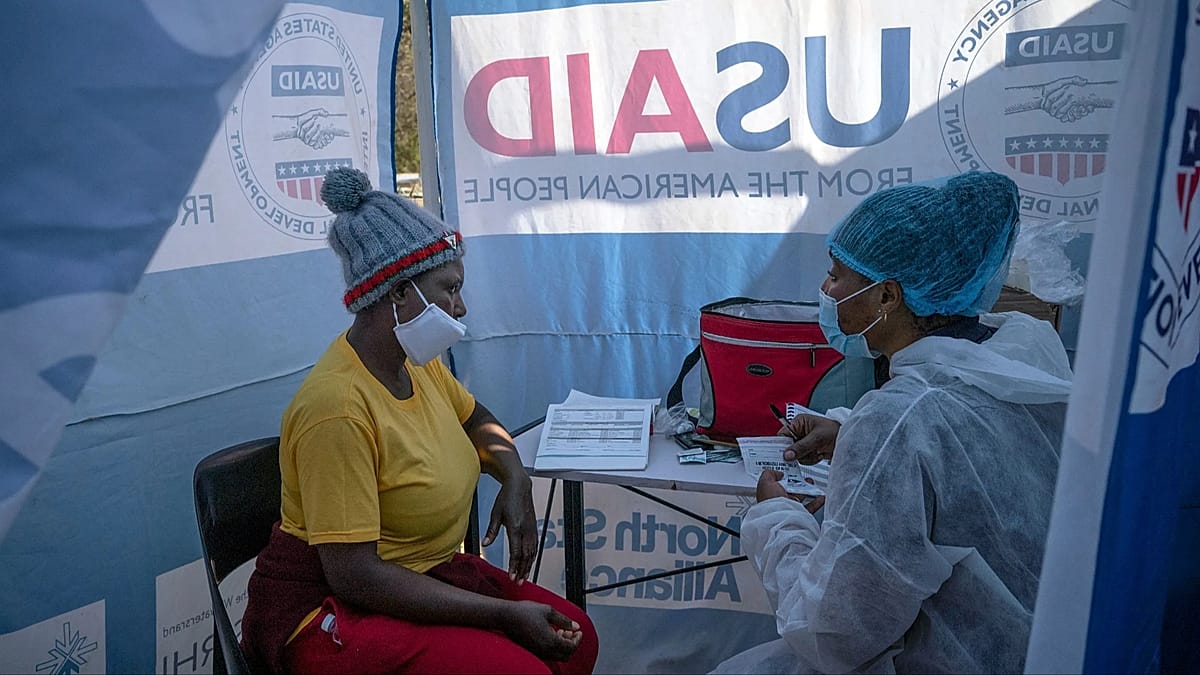
Hundreds of thousands of people lost access to HIV prevention drugs after wealthy countries cut foreign aid last year, according to the UN agency dedicated to HIV/AIDS. ADVERTISEMENT ADVERTISEMENT The United States, United Kingdom, France and other major donors all slashed funding for global health programmes in 2025, which decimated HIV treatment and prevention in lower-income countries. About 41 million people globally had HIV in 2025, with 1.2 million new infections. Overall, foreign aid to fight HIV fell by 18% in 2025 — the largest decline in almost two decades — while domestic funding increased by 4%, according to the Joint United Nations Programme on HIV/AIDS (UNAIDS). Countries in Western and Central Africa rely on foreign funding for about 90% of their HIV treatment services. But even countries with bigger domestic budgets still depend on donors to fund HIV prevention programmes. Since the 2025 cuts, the number of people with access to pre-exposure prophylaxis (PrEP) — an HIV prevention drug that protects people from infection if they are exposed to the virus — has fallen sharply, the UNAIDS report found. About 446,000 fewer people were on PrEP in 2025 than in 2024, though uptake increased in a few countries, including Brazil, Uganda and Tanzania. UNAIDS estimates that only 2.6 million people worldwide had access to PrEP last year, while more than 20 million could benefit. PrEP use plummeted among groups at higher risk of HIV infection: it fell by 59% among sex workers, 58% among people who inject drugs, 23% among transgender people and 17% among gay men and other men who have sex with men, the report found. “We know what happens when HIV prevention collapses. People become infected, treatment needs rise, costs soar and lives are lost,” UNAIDS Executive Director Winnie Byanyima said. “Every clinic that closes, every outreach worker who loses their job and every young woman turned away from prevention services today risks becoming a new HIV infection tomorrow,” she added. PrEP is typically taken as a daily pill, which can make it difficult to access or stay on. Over the past year, countries have begun rolling out lenacapavir, an injectable form of PrEP that only has to be taken twice per year. By October, 175,000 people in nine sub-Saharan African countries had started on lenacapavir, UNAIDS said, and cheaper, generic versions are expected to become available next year. Researchers are also developing other long-acting forms of PrEP, such as a once-monthly pill. But HIV experts have warned that global aid cuts will limit who can actually access these new medicines. “It is unconscionable that just as the world has breakthrough prevention technologies capable of dramatically reducing new infections, funding cuts are putting those tools out of reach for the people who need them most,” Byanyima said. Global health cuts are having an impact beyond HIV prevention, UNAIDS data shows. Fewer HIV tests are being done, making it harder to detect infections quickly and funnel people into treatment. Fewer HIV patients are starting antiretroviral therapy (ART), which suppresses their viral loads. And HIV surveillance has also taken a hit. As a result, the ripple effects of last year's funding cuts will be felt for years to come, UNAIDS said "The world is sleepwalking into a preventable crisis," Byanyima said.
Aid cuts leave 446,000 fewer people on HIV prevention drugs, UN agency warns
Full Article
Original Source
Read the full article at Euronews →KhanList aggregates and links to publicly available news content. We do not host full articles from third-party sources. Always verify important information with original sources.