
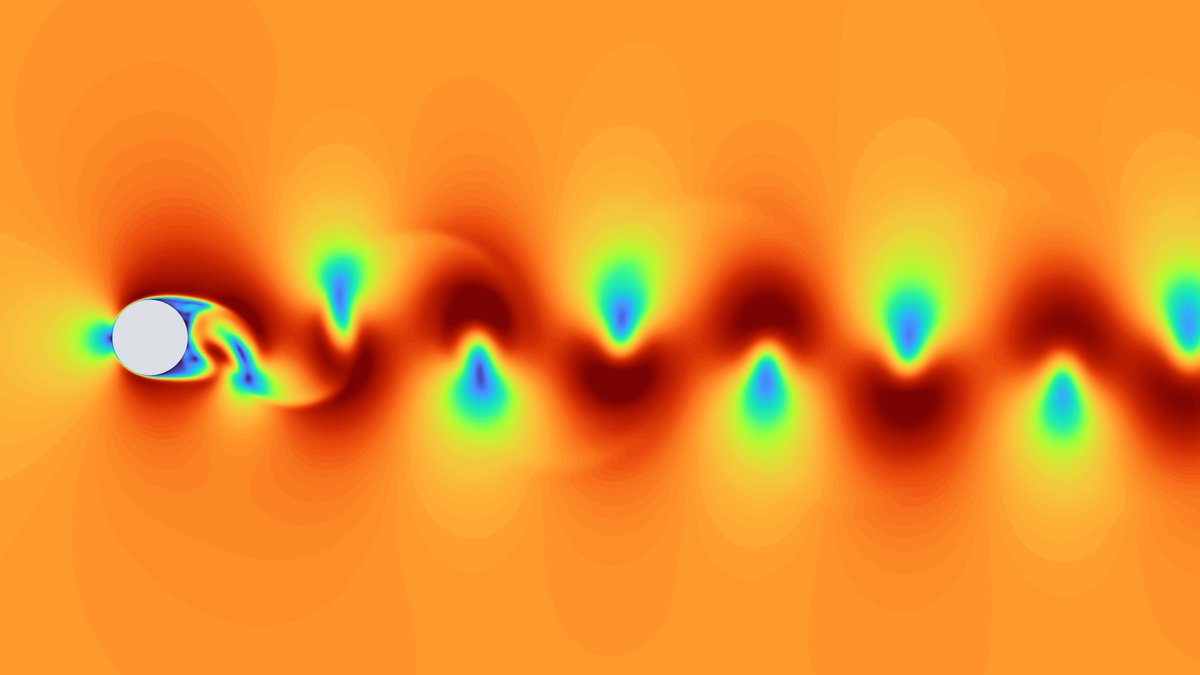
November 20, 20262 min read Add Us On GoogleAdd SciAmAfter months of controversy, AI finally solved the ‘real’ Navier-Stokes problemTwo months after getting scooped by OpenAI, N.Y.U. professor Tristan Buckmaster and Anthropic employee Levent Alpöge are back with a new AI-aided proof of Navier-Stokes blowupA visual representation of fluid dynamics. Researchers from New York University and Anthropic claimed to have solved the “real” version of the Navier-Stokes equations, which model fluid movement. teerawut_0/ShutterstockIt looks like Anthropic employee Levent Alpöge was not satisfied with one blockbuster math proof today. Right after Alpöge’s announcement of a claimed proof of the Riemann hypothesis—math’s most famed open problem—has come the news that he and New York University professor Tristan Buckmaster believe they have closed a controversial loophole in OpenAI’s September solution of another million-dollar problem.The Navier-Stokes equations, dating back to the early- to mid-19th century, model how fluids swirl and eddy. In September OpenAI proved that the equations “blow up,” meaning they occasionally claim that a fluid’s speed becomes infinite—something real fluids cannot do.But while the September solution technically satisfied the conditions for the Clay Mathematics Institute’s $1-million prize, many experts were left unsatisfied with how it did so. OpenAI’s proof imagined an unrealistic, finely tuned force that “stirs” the liquid in just the right way to produce infinite velocity—an approach many consider a loophole in the wording of the problem.On supporting science journalismIf you're enjoying this article, consider supporting our award-winning journalism by subscribing. By purchasing a subscription you are helping to ensure the future of impactful stories about the discoveries and ideas shaping our world today.The proof was also the subject of controversy because Buckmaster claimed it was a deliberate attempt on the part of OpenAI to scoop his and Alpöge’s progress on the problem. Buckmaster publicly aired his suspicions that the company even stole his user data in its mad race to beat him to the punch. (OpenAI denied allegations of foul play, and early reports suggest the company’s proof may have taken a different route to the solution than Buckmaster and Alpöge’s work.)Now the pair claims to have taken back the lead on the problem, closing the loophole OpenAI left open and providing the solution to Navier-Stokes that experts have long sought.On Mastodon at 8:37 A.M. EST this morning, Buckmaster posted a dense, artificial-intelligence-aided proof and noted that the write-up was unpolished because, “after last time,” he and Alpöge “couldn’t risk waiting” because of concerns over getting scooped. In the rush, the two also did not release the certificate of the result. In the report, they claimed it would be released soon.Subscribe to Support Independent JournalismGreat science journalism requires human expertise, time, effort and creativity. And it costs money. That’s why I and the journalists here at Scientific American hope you’ll join our community.When you subscribe, you are supporting staff and freelance journalists who are passionate about telling science stories that are true, important and compelling. Our editors and reporters are often experts in their fields, which means they understand the nuances of big discoveries and can untangle the breakthroughs from the hype. With a subscription, you are also supporting rigorous fact-checking to ensure the words we publish are precise and accurate. And you’re supporting original illustrations, graphics and photos that bring you closer to an advanced laboratory, an ice sheet in Antarctica or a space mission in orbit. You’re helping us craft other types of high-quality journalism as well: Our newsletters are carefully written, edited and curated by staffers you have or will come to know and love. Our Science Quickly podcast is based on original reporting, collaboration with editors and scientists and exacting production.Subscriptions keep this engine running so we can continue to deliver thoughtful, rigorous and independent science journalism to you. In an era of viral misinformation, this work is crucial. If you value what we do, I hope you’ll consider joining us as a subscriber
AI just solved the ‘real’ Navier-Stokes problem
Full Article
Original Source
Read the full article at Scientificamerican →KhanList aggregates and links to publicly available news content. We do not host full articles from third-party sources. Always verify important information with original sources.