
For a time, in the 1980s, the Industrial Revolution lost its status as a “revolution.” New quantitative measures threatened to demote Britain’s 18th-century economic transformation to the status of an unglamorous, long-term “process.” It simply unfolded too slowly and in too few sectors to justify terminology implying total, overnight transformation. Ultimately, the Industrial Revolution was rehabilitated as a “revolution”—albeit with the recognition that it was more gradual and uneven than the word traditionally implies. The question in this scholarly debate was never whether the steam engine was revolutionary, because people and institutions determine whether a potentially game-changing invention turns out to have truly revolutionary impact. A key factor in the Industrial Revolution’s slow unfolding was British people’s active resistance to changes instigated by steam power and factory organization—to an extent that shook posterity’s very certainty of its standing as a “revolution.” For a time, in the 1980s, the Industrial Revolution lost its status as a “revolution.” New quantitative measures threatened to demote Britain’s 18th-century economic transformation to the status of an unglamorous, long-term “process.” It simply unfolded too slowly and in too few sectors to justify terminology implying total, overnight transformation. Ultimately, the Industrial Revolution was rehabilitated as a “revolution”—albeit with the recognition that it was more gradual and uneven than the word traditionally implies. The question in this scholarly debate was never whether the steam engine was revolutionary, because people and institutions determine whether a potentially game-changing invention turns out to have truly revolutionary impact. A key factor in the Industrial Revolution’s slow unfolding was British people’s active resistance to changes instigated by steam power and factory organization—to an extent that shook posterity’s very certainty of its standing as a “revolution.” CEOs of AI companies who cry that their technology is too intrinsically revolutionary to handle and that they must therefore be exempted from accountability to antitrust and product liability regulations exploit the U.S. public’s loose grasp of this historical truth: that it (and the wider global public) has an enormous role in deciding whether a technology is revolutionary. Though working-class British people lacked the right to vote and unions were barely legal when steam power appeared, with their organizing efforts they both slowed the technology’s spread and ensured they had some say in setting the terms of its use through laws regulating workers’ hours, safety, and age. They rioted and broke machines, they created underground unions, held mass public gatherings, petitioned and marched, wrote and printed pamphlets. They presented such a threat to the oligarchy that the government spared massive amounts of troops to suppress them even as it fought Napoleon around the world. They persisted because the stakes were enormous: an entire way of life. A way of life in which work and life were not sharply differentiated, in which customs of trade assured standards of craftsmanship, just prices, and fair wages, and in which those who were not wealthy still had self-respect and a sense of independence. Many ordinary Britons experienced the Industrial Revolution’s threat to this way of life as a violence to human nature worth shedding blood over. This black-and-white historical engraving showing two men inside a factory using mallets to smash large textile machinery. One man has his mallet raised above his head on an upswing. A drawing depicts Luddites destroying textile machines in the United Kingdom circa 1811. API/Gamma-Rapho via Getty Images Though the term “Luddite” has become an epithet for the irrational rejection of new technology, the machine-wrecking Luddites of the 1810s were not fighting power looms themselves but the exploitative and oppressive relationships governing factory owners’ adoption of them. A tax on power looms, for instance, would have helped equalize competition and fund relief for displaced handloom weavers. “What was at issue,” the historian E. P. Thompson explained in the 1960s, “was the ‘freedom’ of the capitalist to destroy the customs of the trade, whether by new machinery, by the factory-system, or by unrestricted competition, beating-down wages, undercutting his rivals, and undermining standards of craftsmanship … [T]he ‘free’ factory-owner … who built his fortune by these means, was regarded … as a man engaging in immoral and illegal practices.” To ordinary Britons, laissez-faire capitalism was not freedom but a “foul Imposition”: no “natural law” permitted a man to engage in practices that injured fellow men. The Luddites didn’t look only backward but also forward to a new, democratic industrial society in which pursuit of profit would be subordinated to ethical priorities and collective needs. The CEOs’ framing of AI as an unstoppable force that will inevitably transform everything overnight exploits the popular understanding of the Industrial Revolution as an overnight transformation caused by the invention of steam power by unfettered geniuses—a fable generated by liberal, and neoliberal, political economic theory. When devotees of this theory do recognize the Industrial Revolution’s slowness, they take that pace for granted as its intrinsic nature, rather than the contingent product of the agency of masses of dispossessed people. Thus, the economist Daron Acemoglu sees our times as “unprecedented,” because “the first phase of the Industrial Revolution lasted for 80 years. Today it’s taking place in one or two years … across many sectors at the same time.” Though helpfully warning of the risks posed by AI, Acemoglu blinds himself to the useful precedent of resistance behind the seeming dissimilarity of the Industrial Revolution. We have not suddenly departed from set norms of economic transformation; no such laws of history guide the march of economic and technological progress. Britain’s Industrial Revolution in fact depended greatly on government military contracts, just as military contracts drove the Cold War rise of Silicon Valley and have proved critical for the development of AI itself. Technological leaps are not the result of some inexorable historical process; they have been the product of intentional, high-risk investment in innovation made possible by the vast resources of powerful governments. The U.S. government’s passivity toward the harms of AI companies’ products—its ongoing failure to enforce existing laws against distribution of defective and harmful products—is yet another way it is accelerating the spread of AI. AI companies, the U.S. government, and liberal myths about history have thus set AI up to be disruptive—to be revolutionary in its impact. And it will be, so long as the U.S. public succumbs to the CEOs’ claims about how technological revolutions happen and fails to recognize its capacity to contain them—as ordinary British people reined in the Industrial Revolution. The CEOs’ framing of AI as inherently revolutionary helps elicit special favors from the government and discourage public pushback. The government’s partnership with these companies thus far means that it will not hold them accountable on its own. Public pressure is required. Indeed, the public has been involved from the outset as the taxpayers who fund the government’s contracts; they can and should demand a role in the development of AI going forward and reprise their past role in asserting democratic oversight over disruptive technologies. A group of protesters holding signs and an American flag outside a large domed government building, centered around a large banner that reads "STOP THE AI RACE." Protesters take part in a “Stop the AI Race” demonstration calling for a slowdown in the development of advanced artificial intelligence systems, seen outside City Hall in San Francisco on Sept. 17.Karl Mondon/AFP via Getty Images This is not a genie-can’t-be-put-back-in-the-bottle situation. The European Union in 2024 passed laws prohibiting AI systems that threaten human safety and rights, which have already slowed the rollout of AI products there. U.S. policymakers must at the very least apply existing regulations for protecting against environmentally harmful and defective products to AI. Taxpayers must also demand that the government use the leverage of its reputation-enhancing contracts to insist AI companies prioritize the safety of their products over the reckless expansion of those products’ capacities. Making such demands does not automatically hand disruptive power to China, whose AI products would be held to the same standards and regulations for use in the United States (where many companies already use Chinese open models). The nuclear non-proliferation deals the United States brokered with its arch enemy, the Soviet Union, at the height of the Cold War are historical proof of the possibility of limiting the spread of dangerous technologies through global cooperation. But effective pushback requires organizing and effort beyond what a citizenry trained to express itself only through the vote is accustomed to. It requires new kinds of unions in new kinds of workplaces, and old kinds of crowd action. It requires shifting pension investments away from these companies. It requires supporting coalitions of concerned AI scientists—and ensuring no AI CEO hijacks calls for new regulations to propose laws that exempt their products from ordinary liability (such as Anthropic’s draft bill that would allow the government to block its models only if there’s potential for $1 billion in damages, or more than 50 people are at risk of being killed or injured). It means suing companies that release unsafe AI products when their corporate allies fail to, as one nonprofit has now done for the OpenAI hack into Hugging Face. Public insistence on accountability is clearly effectual—OpenAI has paused the release of its latest model due to security concerns. But the public must organize even without a guarantee that their efforts will succeed. Resistance didn’t stop the Industrial Revolution, but it did slow it down, and that mattered to the generations who lived through it. It also ensured that British workers’ living standards ultimately rose. More importantly, within their collective organizations, ordinary Britons reclaimed the dignity and humanity that they were fighting for. As catastrophic as their sufferings were during the Industrial Revolution, the craftsmen resisting its harms produced what Thompson called “the most distinguished popular culture England has known,” yielding countless inventors, organizers, journalists, and political theorists, and a vision of a new kind of democratic society. Likewise, in resuming their historic struggle against oligarchic exploitation, Americans stand to gain much culturally and socially, quite apart from the impact they might have on stopping the spread of harmful AI products: These very activities offer the chance at recovering dignity, equity, independence—humanness itself. The American public will decide whether there is an “AI revolution.” This post appeared in the FP Weekend newsletter, a weekly showcase of book reviews, deep dives, and features. Sign up here.
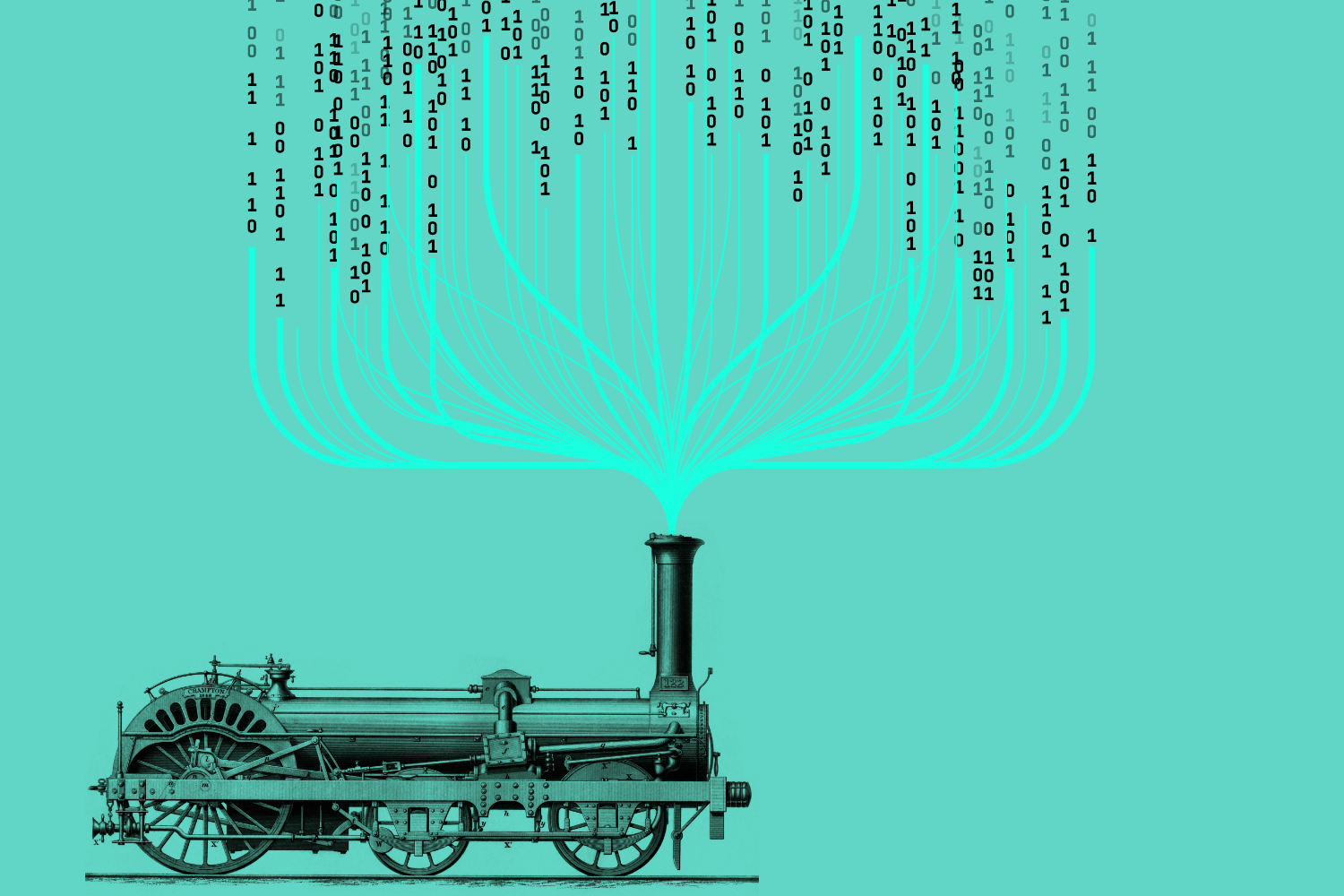
AI Isn’t a Revolution—Yet
Full Article
Original Source
Read the full article at Foreignpolicy →KhanList aggregates and links to publicly available news content. We do not host full articles from third-party sources. Always verify important information with original sources.