
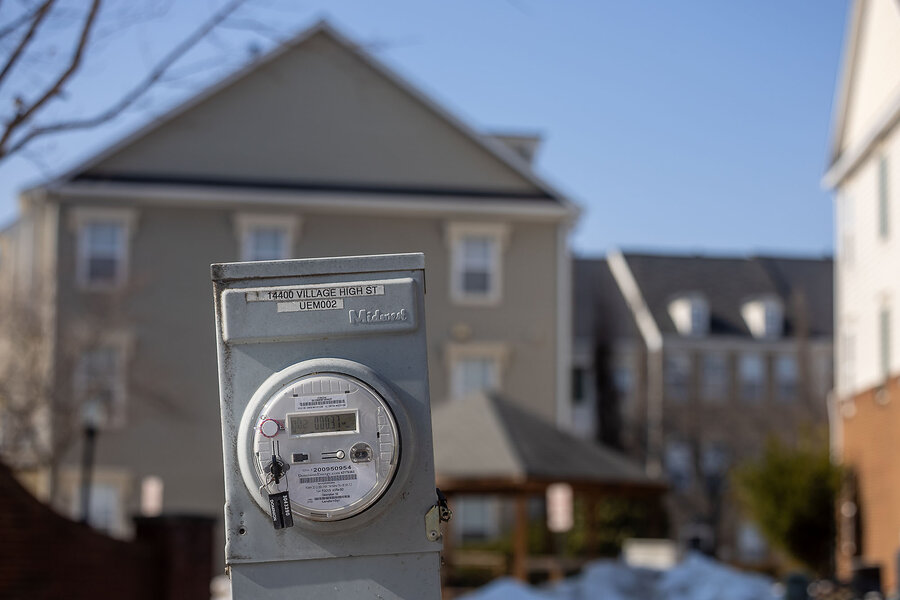
Call it the artificial intelligence paradox: AI is supposed to make goods and services cheaper in the long run, but right now, it’s making them more expensive. The headlong rush by companies to lead the AI revolution is increasing demand for everything from computer chips to software to electricity, pushing prices higher.If the boom continues, inflation could continue to rise, frustrating central bankers’ efforts to rein it in.In July, inflation rose by 3.4% from a year ago, the U.S. Bureau of Labor Statistics reported Wednesday. The core index, which excludes volatile food and energy prices, rose 2.5%. That’s 0.5 percentage points above the Federal Reserve’s longtime 2% target. It’s also the exact amount Goldman Sachs estimated in July that the AI price explosion would add to core inflation by the end of the year. Why We Wrote This The AI boom is proving complicated for everyday Americans. It’s raising the cost of living and stopping the Fed from lowering interest rates. It is making some things faster and easier, but it is also changing how we live. If other inflation drivers, such as tariffs and the Iran war, don’t drive prices higher from here, many economists think the inflation picture could brighten.“Inflation remains uncomfortably high, but it’s moving in the right direction,” says Mark Zandi, chief economist of Moody’s Analytics.But AI’s impact on inflation is trickier to trace.AI is increasing demand by gobbling up energy and key computer components. The associated Wall Street boom has bolstered stock portfolios, spurring spending by the well-to-do, which is also increasing demand. It might also increase supply one day by making workers more productive and, thus, lowering the costs of goods and services.So far, though, there is plenty of evidence of AI’s continuing inflationary effects and little evidence of the deflationary ones.The price of powerTake electricity costs. Over the past six years, the price of power has risen 43%, easily outpacing overall inflation of 29%. A study this year by the Federal Reserve Bank of Dallas found that AI had already pushed up average wholesale electricity prices nationwide by 2% to 6%. In some areas, the effect was more than 10% – including northern Virginia, home to the nation’s largest concentration of data centers, which are needed to power AI’s computing capacity.Those wholesale prices have trickled down to homeowners, with electricity prices outpacing inflation since the end of the pandemic (see chart).“It was $60 more” this month than at the same time last year, says Heidi Smith, a Charlottesville, Virginia, mother and homeschooler of two, about her July electric bill. SOURCE: U.S. Bureau of Labor Statistics | Jacob Turcotte/Staff Utility bills could climb even higher. The Federal Reserve Bank of Dallas’ study also found that if proposed data-center construction proceeds under a moderate scenario, wholesale prices could rise another 20% through 2028. In the high-buildout scenario, they could rise 50%.A similar picture emerges for computer components. The AI boom has created shortages of certain chips and pushed up prices. The biggest challenge: dynamic random access memory chips. DRAM prices will have quintupled by the end of the year compared with 2004 levels, J.P. Morgan Global Research estimated last week. The price of storage chips is also soaring.The chip squeeze is hitting home with Americans: After years of decline, the cost of laptops and other consumer electronics is also rising (see chart). In recent months, Apple, Samsung, Dell, and others have announced price increases on everything from iPads to laptops. Microsoft is raising prices on its Xbox gaming consoles.The longer such shortages go on, the more inflation they fuel. This week, J.P. Morgan strategist Jay Kwon predicted the memory-chip shortage would last another two years.Another higher cost: software. As companies incorporate AI into their software, prices are rising, according to Goldman Sachs’ July report.Worker productivityAt the same time, there are hints that AI is helping make some workers more productive. In a March U.S. Census survey, just over half of workers said they had used AI for at least one of 11 everyday tasks. Of those, nearly 1 in 3 said AI saved them an hour or two on the job.But if previous technological revolutions are any guide, it will take years – or perhaps decades – for the impact of new tools to show up in other kinds of national economic data, such as worker productivity and efficiency. Adding a new tool to old habits only helps a little. Real progress happens only when companies change how they do their daily work, analysts say.AI is also making life tougher for central bankers. It’s unclear how long the AI boom and the resulting inflation will continue. No one knows when the production-enhancing, cost-lowering phase of AI will kick in. That makes it more complicated to fine-tune monetary policy.“By moving demand and supply at the same time, AI blurs the cyclical signals on which central banks rely,” concluded a July bulletin from the Bank for International Settlements.“Confusion reigns,” says Mr. Zandi of Moody’s Analytics. The effects of the Iran war and tariffs have been to slow growth, which would argue for lower interest rates. But they also raise prices, which would argue for higher rates.“Then you throw in the mix AI with these shifting demand [and] supply effects,’’ says Mr. Zandi. “Right now, it’s clearly inflationary, but that could shift quickly and be disinflationary. So, that adds to the confusion.”
AI is making daily life more expensive, at least for now. Here’s why.
Full Article
Original Source
Read the full article at Csmonitor →KhanList aggregates and links to publicly available news content. We do not host full articles from third-party sources. Always verify important information with original sources.